
What is a trophy car investment?
A trophy car investment is the purchase of a rare, collectible luxury or classic automobile with both passion and financial intent. You're not just buying a car. You're acquiring a tangible asset that may appreciate over time while delivering something no stock certificate ever could: the experience of ownership.
Financial planners describe this as "enjoyment yield," the personal satisfaction that comes alongside any potential financial gain. That dual nature is what separates trophy cars from ordinary collector vehicles and from traditional investments alike.
Three criteria define whether a car qualifies as a true trophy investment:
- Rarity: Low production numbers, limited editions, or "last of a kind" models create supply constraints that support long-term value.
- Provenance: Documented ownership history, matching numbers, original paint, and complete service records are non-negotiable for investment-grade status.
- Condition: Original, unrestored examples consistently command premiums over modified or rebuilt cars.
Cars like the Ferrari F40, Porsche 911 Carrera RS 2.7, and McLaren F1 fit this profile. They're rare, historically significant, and emotionally magnetic. Butterclassics works directly in this space, offering a curated marketplace where collectors and investors can find investment-worthy classic vehicles with the documentation and provenance serious buyers demand.
Table of Contents
- How classic car investment funds work
- Financial and ownership costs you need to plan for
- When is the right time to buy a trophy car?
- What Butterclassics knows about evaluating trophy cars
- How trophy cars have performed against traditional assets
- Butterclassics makes finding your next classic car smooth as butter
- Key Takeaways
How classic car investment funds work
Classic car investment funds operate as private equity vehicles that assemble portfolios of blue-chip automobiles on behalf of investors. Rather than owning a single car outright, fund investors gain exposure to a diversified collection managed by specialists. Funds in this space have assembled fleets valued between $50 million and $75 million, targeting models believed to appreciate over multi-year holding periods.
The appeal is real, but so are the trade-offs. Here's how fund-based ownership compares to direct purchase:
- Diversification: Funds spread risk across multiple models and marques, reducing single-car exposure.
- Access: Fund managers often have manufacturer relationships that individual buyers can't replicate.
- Liquidity: Both routes are illiquid, but fund investors also surrender control over exit timing.
- Costs: Management fees, sourcing fees, and a cut of gains reduce net returns meaningfully below the headline appreciation of the underlying cars.
- Fractional platforms: Services offering fractional shares in individual cars let investors participate at lower price points, though fee structures and thin secondary markets deserve careful scrutiny before committing capital.
For most individual investors, direct ownership of a well-chosen classic offers cleaner economics and the added benefit of actually enjoying the asset.
Financial and ownership costs you need to plan for

Trophy car ownership carries high carrying costs that can quietly erode returns if you don't model them before purchase. Think of it like owning rental property: the gross appreciation number looks great until you subtract taxes, maintenance, and vacancies.
Here's what you're looking at on an ongoing basis:
- Insurance: Specialized agreed-value policies run approximately 1–2% of the car's value annually. Standard auto policies only reimburse market value, not replacement value, so a specialist policy through providers like Hagerty or Lockton is the right call.
- Climate-controlled storage: Preserving leather, paint, and seals requires proper facilities. Skipping this step is one of the fastest ways to damage both the car and its resale price.
- Maintenance: Even cars that rarely move need regular attention. Fluids degrade, seals dry out, and batteries drain. Neglecting a parked car creates expensive problems.
- Restoration risk: This is the big one. Improper restorations can reduce value by 30–50% compared to original, untouched examples; for specialist advice on maintaining collectible car value through expert dent repair, see Dent Repair for Collector Cars: The Specialist's Guide. A bad restoration shop can destroy in weeks what took decades to build.
- Auction fees: If you exit through a major auction house, expect fees of 10–15% at sale.
Pro Tip: Before you wire funds on any trophy car, build a full spreadsheet: purchase price, annual carrying costs, projected holding period, and estimated exit fees. If the net return after all costs doesn't beat a simple index fund, the "investment" case rests entirely on enjoyment yield.
The driving question matters too. A car treated as a "curbside princess," shown at events but never driven hard, tends to preserve value best. Adding miles isn't automatically disqualifying, but excessive mileage on a low-production model will hurt your exit price.

When is the right time to buy a trophy car?
Timing a trophy car purchase well can make a significant difference in your eventual return. The concept of the "trough of disillusionment" describes the period 3–5 years after a model's release, when initial speculative premiums have faded but the car's long-term collectible status hasn't yet been fully recognized by the broader market. The Porsche Carrera GT's drop to around $300,000 during the 2008–2012 period is a clear modern example of this window opening.
Several factors influence when to move:
- Production quantity: Models built in batches of 499 to 1,000 units create long-term supply constraints that support appreciation.
- Model redesigns: A new generation often pushes down values on the prior version, creating a buying opportunity before the older model gains collectible status.
- Emerging collectible signals: Manual transmissions, naturally aspirated engines, and analog driving experiences are being phased out across the industry, which tends to boost the value of surviving examples over time.
- Macroeconomic cycles: Trophy car values correlate with high-net-worth discretionary spending. Downturns can create buying opportunities for patient investors.
- Holding period: Realistic investment horizons run 7–15 years for meaningful appreciation. This is not a short-term trade.
Exit options include major auction houses, private sales through specialist dealers, and consignment arrangements. Each carries different fee structures and timelines. Private sales through trusted networks often deliver better net proceeds than auction, where competitive bidding can also work in your favor depending on the car.
What Butterclassics knows about evaluating trophy cars
The rarest trophy cars are rarely available to the general public. Investment-grade exotics are typically allocated through manufacturer or dealer relationships that require documented brand loyalty and purchase history. Simply having the capital isn't enough. First-time buyers often end up with standard production cars that depreciate, while veteran collectors with established relationships access the allocating assets.
Butterclassics operates at the intersection of passion and practicality, helping buyers navigate this reality with a curated inventory and real expertise. Here's what the evaluation framework looks like for any serious trophy car candidate:
| Evaluation Factor | What to Look For |
|---|---|
| Production numbers | Under 1,000 units strongly preferred |
| Provenance documentation | Original window sticker, service records, matching numbers |
| Condition | Unrestored originals command premiums over rebuilt examples |
| Ownership history | Single-owner or short chain of custody supports value |
| Brand loyalty access | Manufacturer or dealer relationship required for top allocations |
| Restoration quality | Any restoration must be documented and performed by marque specialists |
The collector car evaluation process starts with provenance and works outward. A title history, matching component numbers, and original paint tell you more about a car's investment potential than glossy bodywork ever will. Avoid auction fever by setting firm budgets before you walk onto any show floor or bidding platform.
Butterclassics also emphasizes the importance of understanding what makes a car collectible before committing capital. Rarity, historical significance, and originality aren't just talking points. They're the variables that determine whether your car appreciates or sits flat for a decade.
How trophy cars have performed against traditional assets
The historical record for top-tier collectible cars is genuinely compelling, with important caveats. The HAGI Top Index reports classic cars have delivered approximately 8% nominal annual appreciation since 2007, and after adjusting for high holding costs, net returns are closer to 4–5%. While select individual trophy models may outperform average, most investors should factor costs realistically before expecting headline gains.
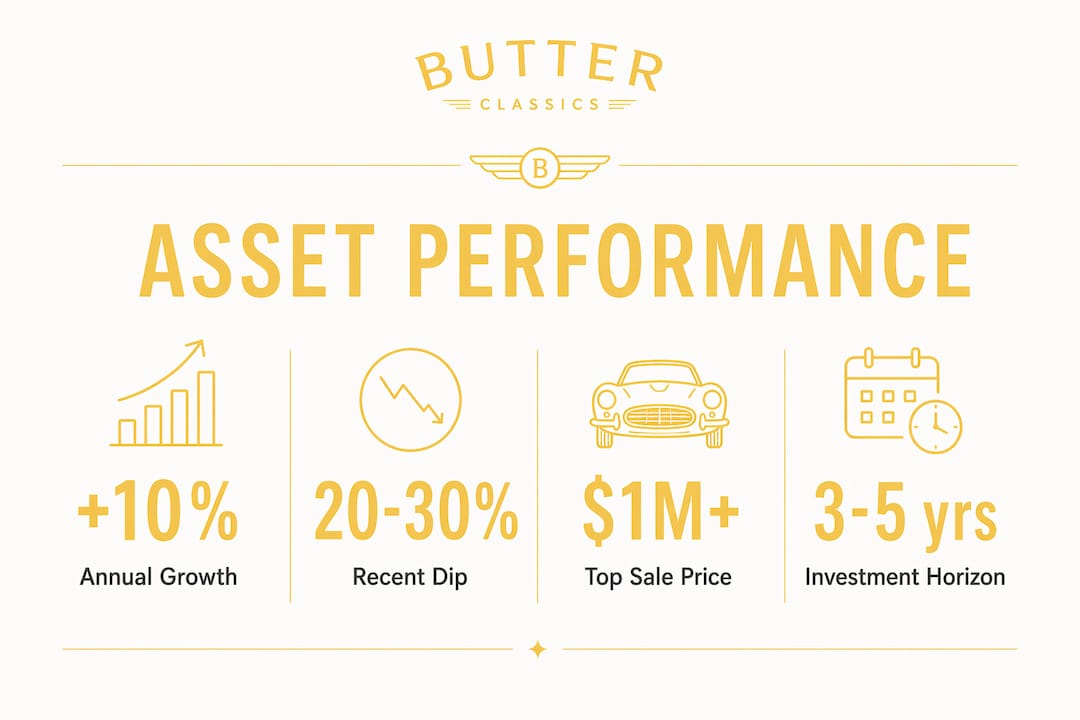
Two structural advantages make trophy cars worth considering as part of a diversified portfolio. First, classic cars show low correlation to traditional equities, meaning they don't move in lockstep with stock market swings. Second, physical scarcity makes them a credible inflation hedge in a way that financial instruments aren't.
The honest caveat: 2022–2024 was a down cycle, with many models losing 20–30% of their value. The market is cyclical, liquidity is limited, and past index performance doesn't guarantee your specific car will follow the trend. For a deeper look at how the numbers stack up, the classic car vs. stock market comparison is worth your time before making any purchase decision.
Butterclassics makes finding your next classic car smooth as butter
Ready to move from research to ownership? Butterclassics is your direct path to a hand-picked inventory of classic and vintage vehicles, from muscle cars and Corvettes to rare Broncos and investment-grade collectibles. Every listing comes with detailed specs, high-quality photos, and the kind of transparency that serious collectors expect.
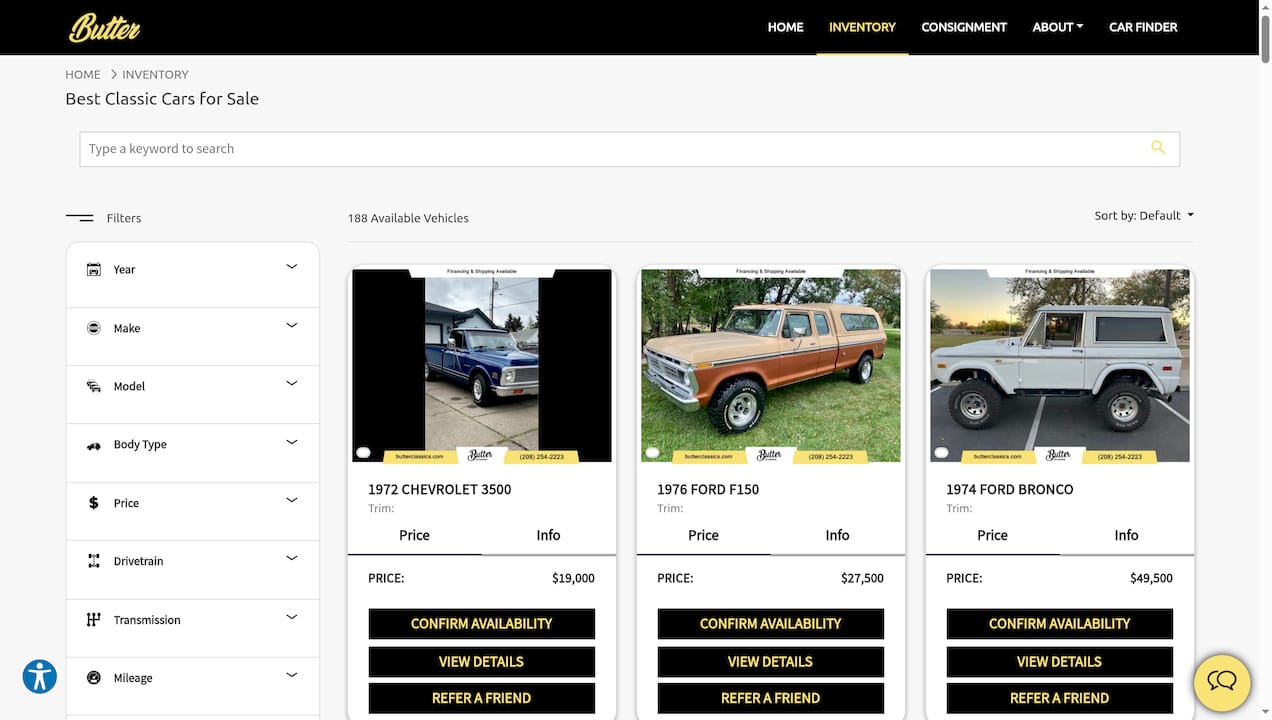
You can browse by price, get financing pre-qualification, or consign a vehicle you're ready to move. Whether you're buying your first collectible or adding to an established collection, Butterclassics offers the tools and inventory to make the process feel exactly like the brand name suggests. No guesswork on condition, no surprises on documentation. Just great cars, presented honestly.
Browse the current inventory or check out Butter Certified vehicles for listings that have cleared our quality standards. Your next trophy car is waiting.
Key Takeaways
Trophy car investments deliver real appreciation potential, but only when you buy the right car, account for all carrying costs, and commit to a long holding period.
| Point | Details |
|---|---|
| Enjoyment yield matters | Financial planners advise that personal enjoyment should be the primary motivation, with appreciation as a secondary benefit. |
| Net returns after costs | The HAGI Top Index shows approximately 8% nominal annual gains since 2007; after carrying costs, net returns land closer to 4–5%. |
| Restoration risk is serious | Improper restorations can reduce a car's value by 30–50% compared to original, untouched examples. |
| Access requires relationships | Investment-grade trophy cars are typically allocated through manufacturer or dealer relationships, not open-market purchases. |
| Butterclassics for buyers | Butterclassics offers a curated marketplace of classic and vintage vehicles with detailed provenance and Butter Certified quality standards. |