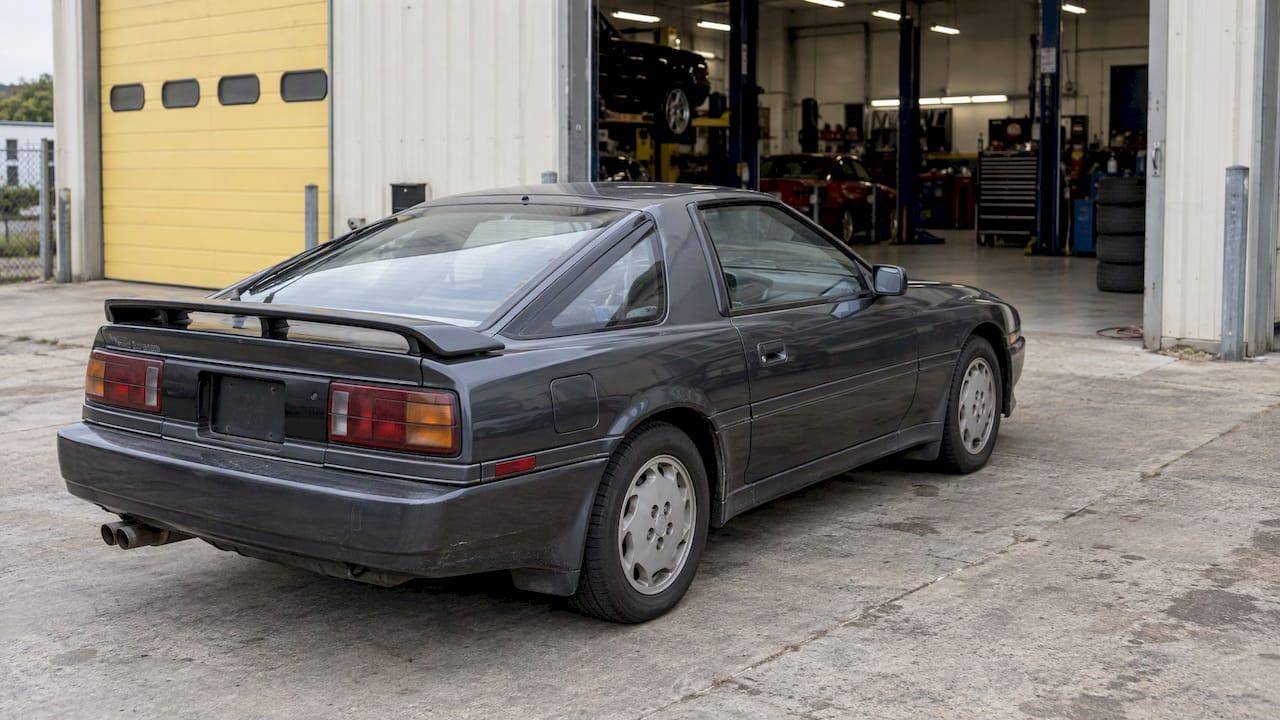
The Toyota Supra Mk3 (A70) is a great classic to buy right now, as long as you go in knowing three things: which engine you want, where the rust hides, and whether the 7M head gasket has been dealt with. Get those right and you have a quick, good-looking 1980s coupe that is still a fair bit cheaper than its famous successor. Here's how we'd shop for one.
TL;DR
- The Mk3 was built for the U.S. from 1986.5 through 1992. The turbo 7M-GTE (232 hp) arrived in 1987, and the naturally aspirated 7M-GEU makes 200 hp.
- The big mechanical question is the head gasket. Ask for proof it has been replaced or upgraded, with the head bolts properly retorqued.
- Check for rust at the battery tray, wheel arches, rear sill welds and the spare-tire well, and for leaks around the hatch.
- Prices run from about $10,000 for non-turbo cars up to roughly $30,000 for well-kept turbos, and a documented, low-mile example can go higher.
- Paperwork, a cold-start drive and a pre-purchase inspection tell you more than photos ever will.
Table of Contents
- Which Mk3 Supra Is Right for You
- What Mk3 Supras Cost Today
- Rust: Where to Look First
- The 7M Head Gasket Question
- Other Things to Check
- Records, Mods and a Pre-Purchase Inspection
- What It Costs to Own One
- Find Your Next Classic with Butter Classics
- FAQ
- Sources
Which Mk3 Supra Is Right for You
The Mk3 is the first Supra that was fully separated from the Celica, and the 2JZ engine did not show up until the Mk4 in 1993. So if you see a "2JZ Mk3" listing, that is a swap, not a factory car.
U.S. cars came with two engines, both 3.0-liter inline-sixes:
| 7M-GEU (naturally aspirated) | 7M-GTE (turbo) | |
|---|---|---|
| Power | 200 hp | 232 hp |
| Torque | 196 lb-ft | 254 lb-ft |
| Availability | From 1986 | From 1987 |
| Transmissions | Five-speed manual or four-speed automatic | Five-speed manual or four-speed automatic |
Those figures come from MotorTrend's Mk3 feature. One detail worth knowing: turbo cars got the stronger R154 manual gearbox, while naturally aspirated cars used the lighter W58. If you plan to add power later, that matters.
Year-by-year differences
The car changed little over its run, but a few details help you date a car and spot parts that don't belong:
- 1989: a new front bumper with an integrated lower grille, new turn indicators, updated mirrors and fog lamps. The White Exterior Appearance Package also debuted, with white moldings and white saw-blade wheels.
- 1991: a five-spoke alloy wheel replaced the saw-blade design, the Toyota oval logo moved to the front fascia, and the Sport Roof became optional on the turbo only, according to the same Hagerty guide.
- 1992: the final year, with very few changes. Hagerty counts just 1,193 sales for the year, so late cars are scarce.
A Sport Roof on a 1990 turbo is not a mistake, and neither is a missing one, but be careful with a 1991-92 car that has a Sport Roof and no turbo badges. Check the VIN and the engine bay against the listing.
Turbo or non-turbo?
If you want the car's full character, the turbo is the one most buyers chase. Turbo cars tend to carry a premium over naturally aspirated ones, and manuals often bring 15 to 35% more than comparable automatics. The non-turbo is still a fun, comfortable grand tourer and a cheaper way in. A clean, well-documented naturally aspirated manual can be a better buy than a tired, modified turbo at the same money.
What Mk3 Supras Cost Today
Values vary a lot with condition, mileage and originality, so treat any single number as a marker rather than a rule.
- CarGurus puts non-turbo third-generation cars from around $10,000, with well-maintained turbos reaching about $30,000 (February 2026).
- A 1990 Supra Turbo with 63,000 miles and a Sport Roof sold for $34,650 on July 8, 2025. That shows what a low-mile, clean example can do.
- Classic.com data cited in May 2024 showed an average used price of $13,603, with 1991 the priciest model year on average ($22,750) and 1987 the cheapest ($12,335).
The gap between a $10,000 car and a $35,000 car is almost never the badge. It is rust, records, originality and how recently the engine was sorted. Spending more on a clean, documented car usually costs less than buying cheap and fixing everything.
Rust: Where to Look First
These cars are over 30 years old, and CarBuzz names corrosion as the first thing to look for, with extra attention on the rear arches, sills, strut towers and the lower edge of the windscreen.
Hagerty's guide adds specifics. Check the inner fender tray where the battery sits, the wheel arches, the door-sill weld where the rear fender meets the rocker panel, and the spare-tire well. The spare-tire well is vulnerable because of the rubber seal on the rear hatch. The same guide says Mk3s generally don't show badly rotted floors, rockers or lower doors, which is encouraging.
The hatchback body is also why leaks show up. Road & Track notes that rear leaks can be common and tells buyers to check the low points of the trunk, including the spare-tire well.
Here's a quick routine:
- Pull up the cargo-area carpet and lift the spare cover. Look for damp, rust flakes or a musty smell.
- Press gently on the bottom edge of each wheel arch and along the sills. Soft spots or bubbling paint mean more is underneath.
- Open the hood and inspect the battery tray and strut towers with a flashlight.
- Look at the hatch seal and the corners of the glass for signs of old leaks.
- Run your eye along the lower windshield edge for paint bubbles.
For more on telling cosmetic rust from the structural kind, read our guide to classic car rust spots and what to fix.
Once you own the car, keep the original-style wheels looking right. If it has the white saw-blade wheels or the later five-spoke alloys, non-acid wheel cleaners are a gentler way to keep coated wheels clean without harsh chemistry.
The 7M Head Gasket Question
This is the big one, and you should settle it before you talk price.
Road & Track calls blown head gaskets the biggest Achilles' heel of the third-gen Supra, blaming factory torque settings that were too low. PistonHeads goes further: replace the 7M-GTE head bolts and retorque them to 72 lb-ft, because Toyota's original spec of around 58 lb-ft was not enough. CarBuzz agrees that buyers should make sure the gasket has been replaced or upgraded.
What that means when you shop:
- Ask for the receipt. You want to see who did the head gasket job, when, and what bolts and torque were used.
- Be extra careful with low-mile, "never touched" cars. Hagerty's advice is to investigate head-gasket history especially on a low-mileage car with no engine work, since a car that has never had the job done is the one most likely to need it.
- Check fluids. PistonHeads suggests looking for coolant and oil cross-contamination and for smoke from the exhaust. Milky oil, an oily coolant or bubbling in the overflow tank are red flags.
- Watch the temperature gauge on the test drive, in traffic as well as on the highway.
A recently done gasket with the right bolts is a selling point, not a worry. It is exactly the kind of record that makes one car worth more than the next.
Other Things to Check
None of these is a deal-breaker, but each one saves you a surprise.
- Speedometer and odometer. Hagerty notes they are known to fail, thanks to a short cable, a long cable and a driven gear in the cluster. Make sure both work, because a dead odometer makes mileage impossible to verify.
- Knock sensor code 52. The same guide says it is almost always a frayed wire (about a $20 fix) rather than the $200 sensor.
- Power steering hose. The high-pressure hose was once around $1,000 from Toyota and is no longer available from the factory, though Hagerty says aftermarket replacements exist. Look for weeping at the fittings.
- Wiring and heater. Hagerty tells buyers to check the wiring and the heater, so run every switch, window and the climate controls.
- Transmission. Shift through every gear on the test drive. Notchy shifts or slipping deserve a question.
Our classic car test drive checklist covers the rest of the drive: cold start, brakes, steering feel and noises.
Records, Mods and a Pre-Purchase Inspection
A Mk3 with a thick folder is a safer car than one with a good story. Ask for:
- Invoices for the head gasket, timing belt, cooling system and any engine work.
- Evidence of where the car lived. Hagerty's guide and Road & Track both point to rust risk in wet climates, so a long history in a dry state is a good sign.
- A list of every modification, with receipts for parts and who installed them.
- The factory service manual for your generation. Owners on enthusiast forums recommend keeping one, and it is useful for torque specs and wiring diagrams.
On modifications, ask whether it can go back to stock and whether the original parts come with the car. Factory-correct cars with documentation tend to hold value best, and clean upgrades done properly are fine too. Be wary of a turbo car with boost increases and no record of the head bolts.
Then book an independent pre-purchase inspection with a shop that knows Toyota inline-sixes of this era. Have them do a compression or leak-down test, check the coolant for combustion gases, and put the car on a lift to look at the sills and underbody. The inspector's report also gives you a clear basis for pricing the car fairly. If you are buying out of state, ask for the inspection before you book travel or shipping.

If you want a model for how an inspection-first approach works on other cars, our guides on the BMW E30 and Porsche 944 follow the same logic.
What It Costs to Own One

Set aside a refresh budget when you buy. Timing belt service, coolant hoses, suspension bushings and brake parts can run $1,000 to $5,000 depending on scope, and the same source puts classic JDM insurance at roughly $600 to $2,000 a year depending on coverage and state. A collector-vehicle policy with agreed value is worth pricing out before you commit.
For a broader view, Torque News reports about $5,107 in maintenance and repairs over a Supra's first 10 years, though that is based on general model data and an old car with deferred work will behave differently. The best way to keep costs down is to buy a car that has already had its big jobs done.
Our Take on Buying a Mk3 Supra
We like the Mk3 because it is easy to love and easy to evaluate. The checklist is short: rust, head gasket, records. If a seller can show you all three, you are looking at a good car.
What we see in classic buying is that the right car matters more than the lowest price. That is why our listings come with detailed specs and plenty of photos, and why we offer Butter Certified vehicles backed by our Worry Free Guarantee. Nationwide inventory means you are not stuck with whatever is on one lot, and delivery or pickup can be arranged for you.
If you are on the other side of the deal and want to sell, consignment lets us put your car in front of serious collectors.
Tony
Find Your Next Classic with Butter Classics
Ready to shop? Browse our classic car inventory, sort by price or type, and check specs and photos before you ever leave the house. We can help with test drives, quotes and financing pre-qualification too.
Selling a car like this? Consign your vehicle with us and reach buyers across the country. If you are comparing other eras too, our classic 4x4 buying guide is a good next read.
FAQ
Is the Supra Mk3 a good first classic?
Yes, for a buyer who does the homework. The car is simple enough to check in an afternoon, it has strong enthusiast support, and values are still well below the Mk4. Buy the best-documented car you can afford, and budget for a refresh.
Do all Mk3 Supras have head gasket problems?
No, but it is a known weak point. Toyota's original head bolt torque was too low, so look for proof the gasket was replaced and the bolts retorqued to the higher spec. A car with that paperwork is in much better shape.
Is the turbo worth the extra money?
If you want the 232 hp engine and the stronger R154 manual gearbox, yes. The turbo cars typically cost more, as the price data above shows. A non-turbo car with clean records is a fine, cheaper way into the Mk3.
What year Mk3 Supra is best?
There is no single best year. 1989 added the revised bumper and fog lamps, and 1991 brought the five-spoke wheels and the turbo-only Sport Roof. Condition and records matter more than the model year.
Sources
- Toyota's Mk3 Supra (A70), MotorTrend
- Toyota Supra Buyer's Guide, Road & Track
- 1986-93 Toyota Supra (A70) buyer's guide, Hagerty
- Toyota Supra MK3 (A70), CarBuzz
- Toyota Supra (Mk3) used buying guide, PistonHeads
- Toyota Supra Buying Guide, CarGurus
- How much a Mk III Supra is worth, TopSpeed
- Toyota Supra Mk3 price and values, TheReadingTub