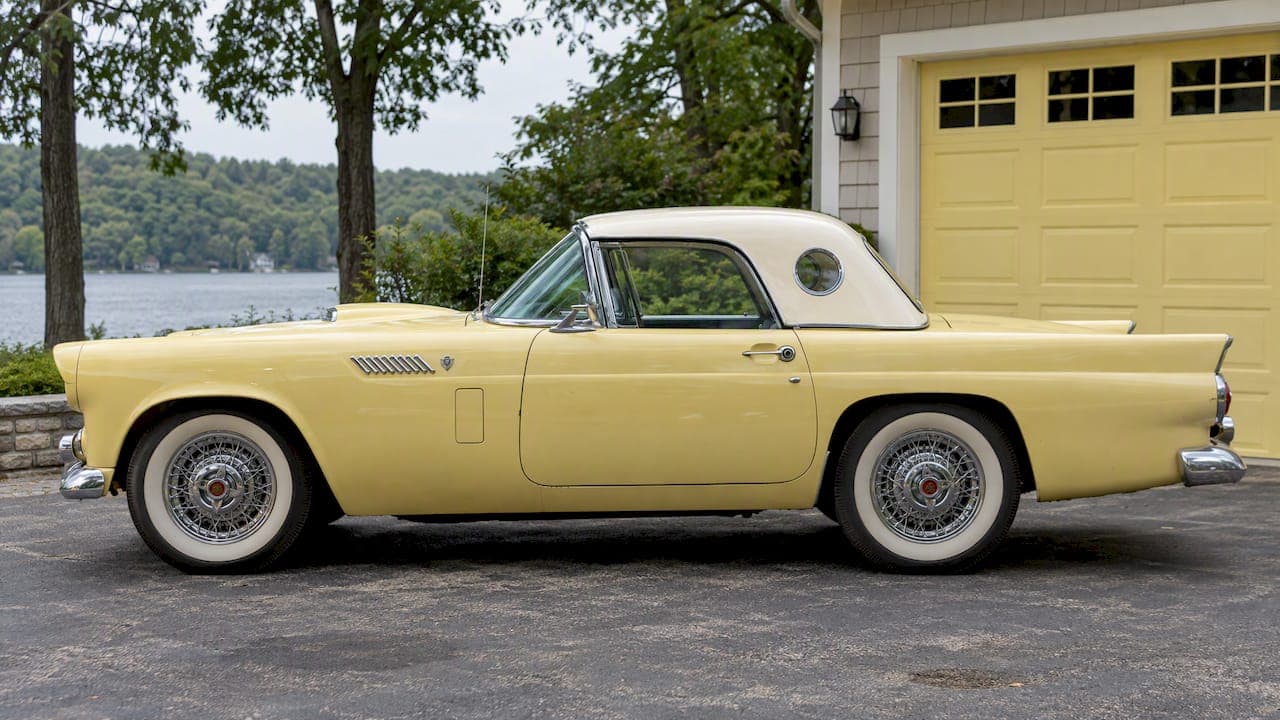
The best Thunderbird to buy is the one that matches how you plan to use it, and that has honest paperwork and a clean structure. Pick the generation first, since a two-seat 1950s car, a 1960s Square Bird, a 1970s Big Bird and a 2002 retro roadster are very different ownership experiences. Then inspect the frame and body before the shine, and have an independent mechanic look the car over. We walk through each step below.
TL;DR
- Choose your generation by how you want to drive and what you want to spend. Values swing widely between body styles.
- Body-on-frame cars need a hard look at frame rails and torque boxes. Retro 2002 to 2005 cars need a check of the hood mechanism and valve covers.
- Mechanical parts are often easier to find than trim, so budget for interior and brightwork first.
- Ask for build sheets, receipts and ownership history, run the VIN, and pay for an independent inspection.
- Buy from a seller who documents the car well and lets you test drive it.
Table of Contents
- How the Thunderbird changed over the years
- Which Thunderbird fits you?
- What values look like in the U.S. market
- Inspecting the body and frame
- Mechanical condition and the test drive
- Parts availability and ownership costs
- Paperwork and seller evidence
- A simple buying plan
- Our take on buying a Thunderbird
- Ready to find your Thunderbird?
- FAQ
- Sources
How the Thunderbird changed over the years
Ford's own history says the Thunderbird began with the 1955 model year as a two-passenger, canvas-topped car built on standard Ford components. Over time Ford added seats, interior space, safety equipment and luxury features. The nameplate came back in the early 2000s as a Heritage Edition and was discontinued in 2005.
That 50-year span is the first thing to understand. When people say "Thunderbird," they could mean any of these:
| Era | Character | What it means for a buyer |
|---|---|---|
| Original two-seat cars, from 1955 | Small, sporty, stylish convertibles | The collector favorites. Expect strong demand and an eye for originality. |
| Square Bird, 1958 to 1960 | Four seats, boxy lines, personal luxury | Convertibles command a big premium over hardtops. |
| Glamour Bird, 1967 to 1971 | Body-on-frame luxury coupes and sedans | Big-block power and a lot of car for the money. |
| Big Bird, 1972 to 1976 | Huge, plush, relaxed cruisers | Often the entry point price-wise. |
| Retro Bird, 2002 to 2005 | Two-passenger convertible, modern drivetrain | The easiest to live with, with its own known quirks. |
The in-between years brought more personal-luxury coupes and sedans, so you will see plenty of other Thunderbirds in listings. The same rule applies to all of them: decide what you want from the car before you fall for a specific one.
Which Thunderbird fits you?
Start with the way you will actually use it, not the way you picture it.
Weekend show and cruise car. The original two-seaters and Square Bird convertibles are the head-turners. They are also where originality matters most, so correct parts and good documentation carry real weight.
Comfortable long-distance cruiser. The 1960s and 1970s personal-luxury cars were built to be soft, quiet and roomy. If you want to put on miles with the whole family, these big coupes make sense.
Daily-ish driver with fewer surprises. The 2002 to 2005 cars are the most modern of the group. They bring a more conventional ownership experience, along with a few specific checks we cover below.
First classic. Pick a car that is complete and running, and one that already has been sorted. Buying someone else's finished work is almost always cheaper than finishing a half-done project. If this is your first classic, our classic car buying guide for first-timers is a good companion read.
What values look like in the U.S. market
Body style matters as much as year. According to Octane's guide to the second generation, Square Bird convertibles trade at roughly double the price of hardtops. That gap is common in classics: the open car costs more to buy, and the folding mechanism, the top and the body reinforcement all cost more to fix.
At the other end, Octane's estimate for a driver-quality 1972 to 1976 Big Bird is about $5,000. Treat that as a rough figure for a usable car, not a promise of what any given example will cost. A clean, low-mile, well-documented car will sit well above a tired one.
A few things move the price on any Thunderbird:
- Condition of the structure. Rust repair is expensive and often hidden.
- Originality. Matching numbers, original interior pieces and correct trim help.
- Restoration quality. A receipt-backed restoration by a known shop is worth more than a fresh paint job with no history.
- Body style. Convertibles, special editions and rare options sit higher.
- Documentation. A thick folder of paperwork lifts confidence and value.
For a wider view of where collector values are heading, see our classic car market trends checklist.
Inspecting the body and frame
Start outside, then go underneath. Do this in daylight, with the car cold.
- Walk the panels. Look down each side for uneven gaps, ripples and paint that changes texture. Those point to old accident repair or filler.
- Check the usual rust spots. Lower fenders, door bottoms, rocker areas, the trunk floor and around the windshield and rear glass. Bring a small magnet and a flashlight.
- Get it on a lift. A car that looks great from above can hide a lot underneath. Look at the floor pans, the frame rails and the suspension mounting points.
- Check the trim. Chrome, stainless and badges can be pricey to restore or replace. Dented or pitted pieces add up fast.
- Test the glass and seals. Cracked glass and dry rubber are small jobs on paper and annoying in practice.
If the car has had recent paint, ask to see photos from before the work. Good sellers keep them.
1967 to 1971 cars: frame rails, torque boxes and aging systems
These Glamour Birds are body-on-frame, which changes where you look. Octane Files' guidance says the focus shifts to the perimeter rails and torque boxes. The same page flags vacuum-operated headlamp doors, power accessories and vinyl roofs as the age-related trouble areas.
In practice, that means:
- Open and close the hidden headlamps several times. Slow or sticking doors usually mean vacuum leaks or worn actuators.
- Run every power window, seat and lock. A car with many tired accessories is a car that will need many small fixes.
- Press along the edges of the vinyl roof. Bubbles and soft spots can mean moisture trapped underneath.
The upside is the drivetrain. The same source notes that shared Ford big-block and C6 transmission components are comparatively available, which helps keep mechanical repairs reasonable.
If you plan to do some of the work yourself, a well-organized set of hand tools makes a project less painful. This overview of automotive tools for car projects is a good place to start when you are putting a kit together.
Big Birds: size, sag and upkeep
The 1972 to 1976 cars are enormous, and they shared a platform with the Lincoln Continental Mark IV, per Octane's Big Bird page. Check for tired suspension, sagging doors, worn bushings and a soft, wandering feel on the road. Look closely at the vinyl, the carpets and the dash, where years of sun do the most damage.

These cars also tend to live outdoors at some point in their lives, so paint and brightwork take a beating. If you are shopping for a driver and then plan to bring it back, learn how to keep the finish healthy. Our friends have a clear guide on safe bird dropping removal, which is handy when your Thunderbird is parked under a tree.
2002 to 2005 cars: hood, latches and valve covers
The retro car has its own short list. Octane's buying guide says to check for valve-cover oil leaks and to make sure the electric hood operates correctly, especially with the hardtop fitted. The same guide says repair kits are available for the fragile latches.
Cycle the top at least twice during your test. Listen for grinding, hesitation or uneven movement. A slow top is a warning, and an unfinished repair is a negotiating point.
Mechanical condition and the test drive
A good test drive tells you more than any brochure. Ask the seller to let the car sit cold before you arrive, so you hear the first start.
- Starting and idle. It should fire up without fuss and settle into a steady idle. Watch for smoke at startup.
- Transmission. Shifts should be clean, with no flare or harsh engagement from Park into Drive or Reverse.
- Brakes. The car should stop straight, with a firm pedal. Pulling to one side points to a hose, caliper or alignment issue.
- Steering and suspension. Listen for clunks over bumps. Excess play in the wheel means worn components.
- Cooling and electrical. Watch the temperature gauge, check the charging system, and test the lights, wipers and heater.
- Leaks. Look under the car after the drive, once it has warmed up and sat for a few minutes.
We built a longer walkthrough in our classic car test drive checklist. Print it and take it along.
Parts availability and ownership costs
The simple pattern with Thunderbirds is that mechanical parts tend to be easier to find than anything model-specific. Many engines, transmissions and chassis pieces were shared with other Fords of the same period, so they are often easier to source and service. Trim, interior pieces and body panels unique to the Thunderbird are where costs climb. We have seen that first-hand, though availability varies by year, so confirm the parts you need before you commit.
When you set your budget, plan for these categories:
- Immediate sorting. Fluids, belts, hoses, tires, brakes and a tune-up.
- Interior and trim. Often the surprise line item on a car that looks good from five feet away.
- Rust or bodywork. Get a written estimate from a restoration shop before you buy a car that needs it.
- Insurance. Ask an agent about classic or agreed-value coverage, which is usually quoted differently from a regular policy.
- Storage and upkeep. A dry, covered space matters for any car with vinyl, chrome and old rubber.
A useful rule: spend more up front on a car that is already sorted. A cheap car with a long to-do list rarely ends up cheaper than a good one.
Paperwork and seller evidence
Paperwork is the part buyers skip, and it is where a lot of regrets begin. Before you pay, ask to see:
- Factory build sheets and window stickers where they survive
- Dealer paperwork and original owner's manuals
- Restoration receipts and photos
- A clear ownership history
- Maintenance records
That list lines up with what classic Ford sellers and appraisers recommend reviewing, since documentation directly affects value.
Then verify the car itself. The National Insurance Crime Bureau recommends checking the VIN with the appropriate agencies, running a title search, using its VINCheck tool for theft, salvage or flood records, and having a certified mechanic inspect the car before you buy. The FTC's used car buyers guide gives the same practical advice: ask whether your mechanic can inspect the vehicle and get a vehicle history report using the VIN.
Older cars add a wrinkle. Many pre-1981 VINs are shorter and less standardized, so a history report may come back thin. Our guide to classic car history checks and pre-1981 VIN issues explains how to fill the gaps.
A simple buying plan
- Set a budget that includes sorting, insurance and transport.
- Choose the generation and body style that match your use.
- Shortlist cars with strong photos and documents. Walk away from listings with vague descriptions.
- Ask for a video of a cold start and a walkaround.
- Run the VIN and check the title.
- Book an independent inspection and a test drive.
- Negotiate with evidence. Use inspection findings, not hunches.
- Arrange transport and insurance before you hand over money.
If you are still comparing classic styles, our Mustang fastback buyer's guide walks through another Ford favorite using the same approach.
Our take on buying a Thunderbird
Thunderbirds reward patient buyers. The cars are comfortable, stylish and a lot of fun, and the right one is out there. The hard part is finding one that is honestly described.
That is why we put so much into our listings. We want you to see extensive photos and clear specifications before you ever spend a minute on the phone. Our inventory is nationwide, so you are not limited to whatever happens to be parked on one lot, and you can look at cars by price and type until something clicks.
We also built our process around confidence. Our Butter Certified vehicles come with our Worry Free Guarantee, and we offer personalized delivery or pickup so the car gets to you the way you want. If you are buying for the first time, we are happy to talk it through. If you are selling, we can help with that too.
Buy the car, not the story. Ask the questions in this guide, and enjoy the drive.
Tony
Ready to find your Thunderbird?
We list classic cars, vintage trucks, muscle cars and other collector vehicles from around the country, with detailed photos and specs so you can compare with confidence. You can browse our full classic inventory, ask about financing pre-qualification, and schedule a test drive or request a quote when a car catches your eye.
Thinking about selling instead? You can consign your vehicle with us and put it in front of buyers who know what they are looking at.
FAQ
When did Ford discontinue the Thunderbird?
Ford's official history says the Thunderbird nameplate returned in the early 2000s as a Heritage Edition and was discontinued in 2005. That means the 2002 to 2005 retro cars are the final generation, and the model has not been in regular production since.
Is a Thunderbird a good first classic car?
It can be, if you choose carefully. A complete, running, well-documented car from a generation with good mechanical parts support is a comfortable way to start. Avoid unfinished projects, and have an independent mechanic inspect the car before you buy.
Is the Ford Thunderbird a muscle car?
Not in the usual sense. The Thunderbird began as a two-passenger sporty car and grew into a personal-luxury model that favored comfort and style. Some later cars had big engines, but they were built to cruise rather than to race.
Which Thunderbird is the best value?
It depends on your goal. Octane's estimate puts a driver-quality Big Bird at about $5,000, while Square Bird convertibles sit at roughly double the hardtop price. Value usually comes from buying the best-documented example you can afford.
Sources
- The Ford Thunderbird, Ford Motor Company
- 5th Gen Ford Thunderbird (1967 to 1971), Octane Files
- 2nd Gen Ford Thunderbird (1958 to 1960), Octane Files
- 6th Gen Ford Thunderbird (1972 to 1976), Octane Files
- Used Car Buyers Guide, Federal Trade Commission
- Buying a Used Vehicle, National Insurance Crime Bureau
- How much is a 1969 Ford Thunderbird worth?
- Automotive tools for car projects
- Bird droppings removal