The best C3 Corvette purchase isn't about chasing a magic model year. It's about buying the best-documented, lowest-rust car you can afford, then matching your budget to what you actually want to do with it: early chrome-bumper cars for collectors chasing appreciation, later fastback cars for buyers who want a Saturday driver. Start every showing with the birdcage and the paper trail, and set your price expectations before you fall in love with the paint.
TL;DR:
- Rust in the birdcage and the underlying steel structure is the most critical flaw to identify, as repairs often cost thousands or more.
- Proper verification of engine and transmission authenticity relies on matching casting numbers, VIN stamps, and documented history, especially for high-value models.
- Suspension, steering, and brake systems should be inspected for wear, looseness, and corrosion, with steering play and underbody rust indicating potential safety issues.
- Detailed documentation, such as service records and repair receipts, is more important than paint quality for assessing a car's true value and condition.
Table of Contents
- What Should You Check First in a C3 Corvette Buyer Guide?
- How Do You Verify Engine and Transmission Authenticity?
- Are the Suspension, Steering, and Brakes Safe to Drive?
- What Does the Interior Reveal About a C3's History?
- Which C3 Corvette Years Should You Actually Consider?
- What Belongs on Your Pre-Purchase Inspection Checklist?
- What Should You Expect to Pay for a C3 Corvette?
- What Are the Most Common C3 Repairs You Should Budget For?
- How Do You Make the Final Call on a C3 Corvette?
- Butter Classics and Tony: Field Notes That Save Buyers Money
- The Bottom Line on Buying a C3 Corvette
- An Owner's Honest Take on Loving a C3
- Ready to Start Your C3 Search? Here's Where to Look
- Sources
- FAQ
What Should You Check First in a C3 Corvette Buyer Guide?
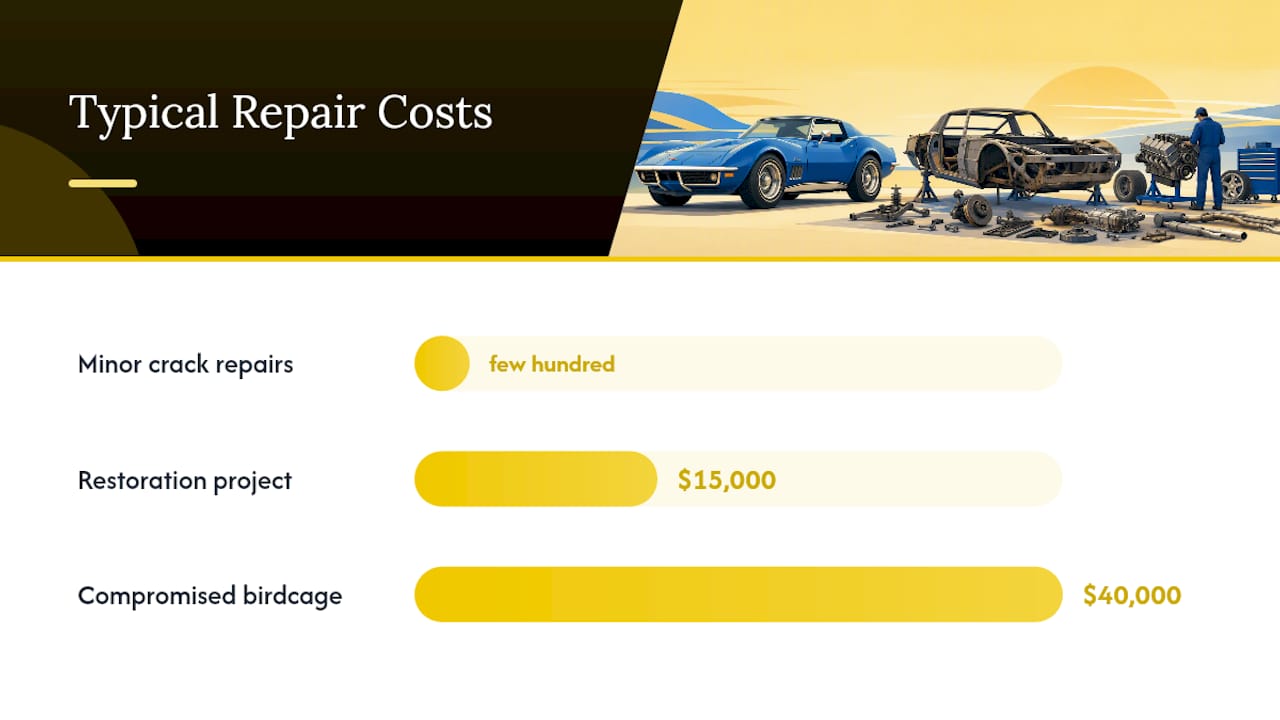
Rust hides where you least expect it, and on a C3 that means the birdcage, the steel structure supporting the windshield frame and A-pillars underneath all that fiberglass. This is the one component that turns a $15,000 restoration project into a $40,000 one, and it's usually invisible until you know exactly where to look.
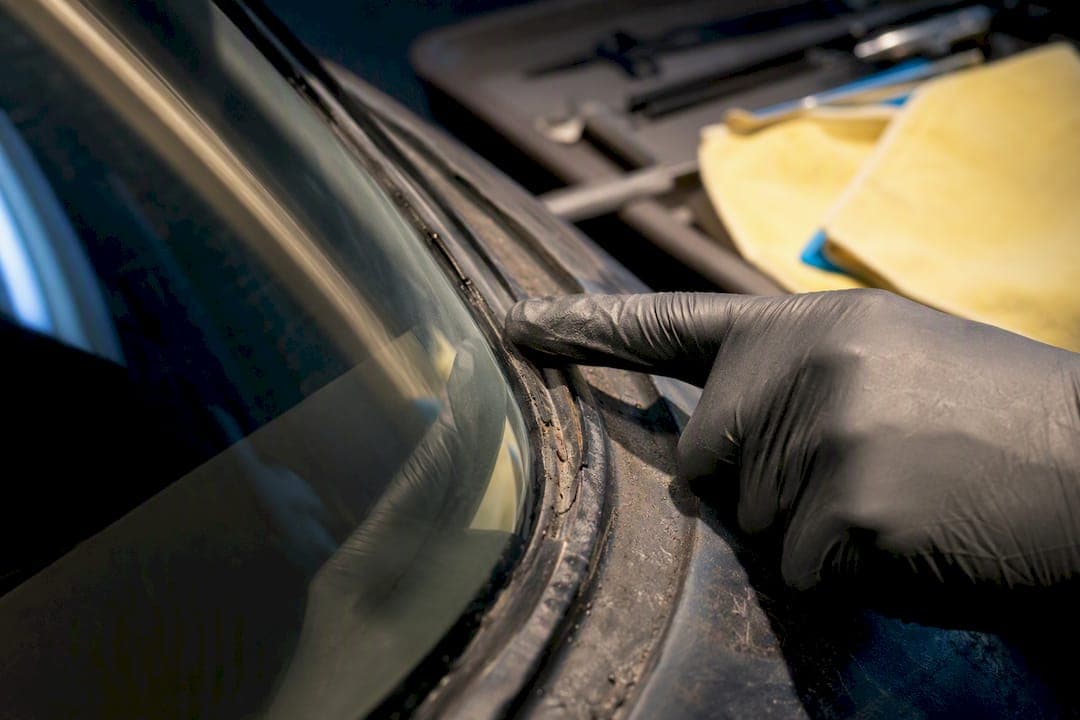
Start at the base of the windshield and run your fingers along the seam where glass meets frame for tips on how to keep this area well maintained with a clean engine bay: safe steps and ceramic protection. Bubbling paint, a spongy feel, or a gap that wasn't there on the passenger side are all warning signs. Check the door hinge pillars next. Doors that sag, drag on the sill, or won't close with a solid latch often point to a rusted or sagging birdcage rather than a simple adjustment problem.
The birdcage is the C3's most critical structural component, and hidden corrosion there routinely demands body-off surgery to fix properly. A quick field test costs nothing: lay a white towel in the footwell, slam both doors hard a few times, then check the towel for rust flakes that fell out of the pillar. Flakes mean active corrosion working inside a part of the car you cannot see from the outside.
Fiberglass tells its own story. Genuine stress cracks radiate in a spiderweb pattern from a stress point, usually near body seams or mounting bolts, and they're a normal cosmetic issue on a 50-year-old car. What should worry you is a smooth, slightly different-textured patch, uneven panel gaps, or a color mismatch under the trim. Those usually mean bondo covering a poorly repaired crash or rust-through.
- Press firmly on fender edges and rocker panels. Give beneath light pressure suggests filler, not solid glass.
- Compare panel gaps side to side. Uneven gaps often trace back to a prior collision repair.
- Check for fresh undercoating in isolated spots. It frequently masks rust rather than prevents it.
- Ask directly whether the birdcage has ever been repaired, and request photos if so.
Minor crack repairs run a few hundred dollars. A compromised birdcage, by contrast, can run into five figures once you factor labor, paint matching, and the teardown required to get at the steel underneath. If a seller can't explain a repair or won't let you inspect the pillars closely, treat that as your answer.
How Do You Verify Engine and Transmission Authenticity?
The C3 ran nearly every engine in Chevrolet's small-block and big-block catalog across its 14-year production run, and that spread is exactly why verification matters so much. A documented 1969 L88 or a genuine LT-1 commands a real premium over a car with a replacement engine of the same displacement, and only paperwork and casting numbers tell you which one you're looking at.
Cross-reference the engine block's casting number and date code, stamped on a pad near the front of the block, against the VIN derivative stamped into the block itself. The trim tag on the driver's door jamb lists the original engine code, body style, and paint and trim combination, and it should match what's actually under the hood. Cloned big-blocks are common enough in the collector market that casting numbers and a documented service history matter more than a seller's word.
Common mechanical red flags include:
- White or gray smoke on startup, often a sign of worn valve guides or a leaking intake gasket.
- Coolant that looks milky or smells sweet, both signs of a failing intake gasket or worse.
- Rear main seal leaks pooling under the transmission bell housing.
- Hesitation or stalling under load, which can point to a tired Quadrajet carburetor or, on 1982 cars, uneven fuel distribution from the Cross-Fire Injection system.
- Clunking or delayed engagement shifting into gear, a common sign of worn transmission bands or low fluid.
On the test drive, run the car until it reaches full operating temperature and watch the gauge closely. Overheating under normal driving conditions is one of the more expensive problems to chase down, since it can mean anything from a clogged radiator to a cracked head. Budget $200 to $600 for a straightforward cooling system refresh, and significantly more if a transmission rebuild turns out to be necessary.
Are the Suspension, Steering, and Brakes Safe to Drive?
Fifty-plus years of service take a toll on rubber, bushings, and steel, and the suspension is where a tired C3 tells you the truth fastest. Grab the steering wheel at the top and bottom and check for more than an inch of free play before the front wheels respond. Excess play usually points to a worn steering box or loose tie-rod ends, both of which affect how predictably the car handles at speed.
- Jack up each front wheel and check for looseness in the tie rods and idler arm by hand.
- Inspect brake lines and the master cylinder for rust streaks or fluid seepage, especially on cars that spent winters in road-salt states.
- Bounce each corner of the car. A shock that's lost its damping lets the body bounce more than once or twice before settling.
- Look at rubber bushings in the control arms. Cracked or crumbling rubber means the suspension geometry is no longer doing its job correctly.
Underbody corrosion around the suspension mounting points deserves a flashlight and a long look, particularly on cars that spent time in northern climates. A rusted mount isn't just a comfort issue. It changes how the suspension is actually attached to the frame.
Pro Tip: Bring a friend along for the steering check. Have them turn the wheel slowly back and forth while you watch the front tires from underneath. If the tires move noticeably later than the steering wheel does, the steering box or linkage needs attention before this car goes anywhere near a highway.
Brake corrosion is common enough on cars that sat for long stretches, and a full brake service including calipers, lines, and a master cylinder rebuild typically runs into four figures if everything needs replacing at once. That's a normal cost of C3 ownership, not a reason to panic, but it should factor into your offer.
What Does the Interior Reveal About a C3's History?
The dashboard and gauge cluster often tell you more about a C3's maintenance history than the paint job does. Mid-1970s cars in particular are known for dash circuit board failures that cause flickering gauges, dead warning lights, or a fuel gauge that reads whatever it feels like that day. Turn the key and watch every gauge sweep and every warning light illuminate before you even start the engine.
- Test every electrical accessory: power windows, wipers, headlight motors, climate controls, and the radio.
- On T-top cars, check the weatherstripping around both panels for cracking or gaps that let water in.
- Look for water stains on the carpet or headliner, a telltale sign of failed T-top seals letting moisture into the cabin.
- Check seats and dash pad for cracking consistent with age versus damage from sun exposure without protection.
Water intrusion from failed T-top seals doesn't just ruin carpet. It sits against the floor pan and accelerates the same kind of hidden rust you're already hunting for around the birdcage. A seller who can produce receipts for seal replacement, gauge repairs, or upholstery work is showing you a car that's been maintained rather than merely driven.
Which C3 Corvette Years Should You Actually Consider?
The C3's 14-year run covers three distinct eras, and knowing which one you're looking at changes what you should expect to find and pay.
- 1968 to 1972, the chrome-bumper era. These are the cars most collectors chase, prized for their aggressive styling and, in the earliest years, genuinely strong V8 performance before emissions regulations began sapping horsepower. Chrome-bumper cars are the standard pick for buyers focused on appreciation, but they're also the oldest cars in the lineup, so birdcage rust and decades of prior ownership changes deserve extra scrutiny. Verify VIN and trim tag numbers carefully here, since these are also the cars most likely to have been "cloned" into higher-value configurations.
- 1973 to 1977, the transition era. Chevrolet swapped the chrome front bumper for a urethane-covered unit in 1973 and the rear followed in 1974, softening the car's look while meeting new federal bumper standards. Horsepower kept dropping through this stretch as emissions controls tightened, and electrical gremlins, particularly those dash circuit board failures, show up more often in cars from this window. These years sit in the middle of the value range and make sense for buyers who want classic looks without paying chrome-bumper prices.
- 1978 to 1982, the fastback era. The 1978 redesign added a wraparound rear window and genuinely improved comfort and visibility, and these cars are widely considered the easiest C3s to live with day to day. Power output is the lowest of the three eras, and the final two years bring real complications: 1982's Cross-Fire Injection system is notoriously difficult to tune correctly, and the early 700-R4 automatic transmissions introduced that same year have a reputation for weak points that better-sorted later versions corrected.
If you're buying for investment potential, an early chrome-bumper car with solid documentation is the safer long-term bet. If you want something you'll actually drive on weekends without worrying about tuning a finicky dual-throttle-body fuel system, a well-kept 1978 or 1979 usually delivers more enjoyment per dollar than a 1982.
What Belongs on Your Pre-Purchase Inspection Checklist?
Work through a candidate car in the same order every time, and you'll catch the expensive problems before you catch the pretty paint.
- Paperwork first. Ask for the title, any past bills of sale, service records, and restoration receipts before you even walk around the car. A seller who hesitates here is telling you something.
- Exterior walk-around. Check panel gaps, paint consistency, and fiberglass texture under good natural light, not inside a dim garage.
- Birdcage and windshield frame. Run the towel test, check door alignment, and look closely at the A-pillar seams.
- Underbody inspection. Get the car on a lift if at all possible, and check frame rails, suspension mounts, and exhaust hangers for rust.
- Engine bay. Match casting numbers to the VIN, check for fluid leaks, and look at hose and belt condition.
- Interior and electronics. Cycle every gauge, switch, and accessory, and check the T-tops for seal condition.
- Cold start. Listen for knocking, watch exhaust color, and note how long the engine takes to idle smoothly.
- Test drive. Push the car through its full range: highway speed, hard braking from 40 mph in a safe area, and a few tight parking-lot turns to feel for steering slop.
On the drive itself, pay attention to whether the transmission shifts cleanly or hunts and slips, whether the temperature gauge climbs after ten minutes of steady driving, and whether the car tracks straight under braking rather than pulling to one side.
Ask the seller for close-up photos of the engine pad numbers, the trim tag, and the underside of the frame rails before you even schedule a viewing, since that alone can eliminate a car that isn't worth the drive.
Pro Tip: Once you're seriously interested, spend the money on an independent classic-specialist pre-purchase inspection before you sign anything. Request that the inspector specifically check birdcage integrity, compression on all cylinders, and transmission fluid condition, since a general mechanic unfamiliar with C3s can miss all three.
What Should You Expect to Pay for a C3 Corvette?
C3 prices span an enormous range, and the gap between a project car and a fully documented collector example often comes down to paperwork as much as condition. Market data puts project-grade later cars in the low five figures, while well-documented early big-blocks with matching numbers can reach into six figures.
- Project cars ($10,000 to $20,000): usually later fastback models needing mechanical or cosmetic work, best suited to buyers comfortable doing their own repairs.
- Solid drivers ($20,000 to $40,000): running, roadworthy cars with normal wear and a reasonable maintenance history.
- Documented collector examples ($40,000 and up, sometimes far higher): matching-numbers engines, verified production options, and a clean paper trail.
Original documentation, verified matching numbers, and rare factory options like an original big-block or a documented low-production paint code reliably push prices higher. Late-model options like power windows or air conditioning add convenience but rarely move the needle on resale value the way a clean birdcage and a matching engine do. Compare any asking price against recent completed sales of similar cars, not just other sellers' asking prices, which tend to run optimistic.
What Are the Most Common C3 Repairs You Should Budget For?
Birdcage rust repair and major engine or transmission rebuilds sit at the top of the cost ladder, often running from several thousand dollars for a partial repair into the tens of thousands for a full structural restoration. These are the repairs that should shape your offer price, not just your to-do list.
Below that tier sit the routine jobs nearly every C3 buyer faces within the first year of ownership:
- Cooling system refresh: new radiator, hoses, and thermostat, typically a few hundred dollars.
- T-top seal replacement to stop water intrusion before it causes hidden rust.
- Wiring repairs for dash gauges and accessory circuits, especially on 1970s-era cars.
- Brake system overhaul if the car has sat unused for an extended stretch.
If a seller's asking price doesn't leave room for a birdcage repair or a transmission rebuild you've already identified as necessary, walk away or renegotiate hard. Parts availability is one of the C3's biggest advantages here. Decades of high production numbers built a large owner community and strong aftermarket parts support, so most mechanical parts arrive within days rather than months, unlike rarer classics where a single missing part can stall a project for a year.
How Do You Make the Final Call on a C3 Corvette?
Buy the car with the cleanest documentation and the least structural risk you can find within your budget, and treat model year as a tiebreaker rather than the deciding factor. That single rule filters out more bad purchases than any spec sheet comparison ever will.
Before you make an offer, ask the seller direct questions: How long have you owned the car? Do you have service records? Has the birdcage or any structural rust ever been repaired? A seller who answers specifically, with dates and receipts, is a good sign. Vague answers or a sudden change of subject are not.
- Active structural rust anywhere near the birdcage or frame rails, regardless of how good the paint looks.
- VIN or engine numbers that don't match the trim tag or title without a documented explanation.
- Evidence of undisclosed body repair, like fresh undercoating in isolated spots or mismatched paint under trim.
- Missing or inconsistent title history, especially gaps in ownership the seller can't account for.
Pro Tip: If an inspection turns up a fixable problem rather than a dealbreaker, ask for an inspection credit against the price rather than asking the seller to make the repair themselves. You control the quality of the fix that way, and you know exactly what was actually done.
Butter Classics and Tony: Field Notes That Save Buyers Money
The towel test at the birdcage catches problems most buyers never think to check, and it takes thirty seconds. Beyond that, look at how a door closes on the first try. A door that needs a slam to latch is often telling you something about the structure behind it, not just the hinge.
Listings typically include documentation buyers can review before they ever schedule a visit, and it's worth requesting service history and casting-number photos directly if a listing doesn't already show them. Use the inventory search to compare candidates side by side, and lean on an independent classic-specialist inspection for anything you're seriously considering.
The Bottom Line on Buying a C3 Corvette
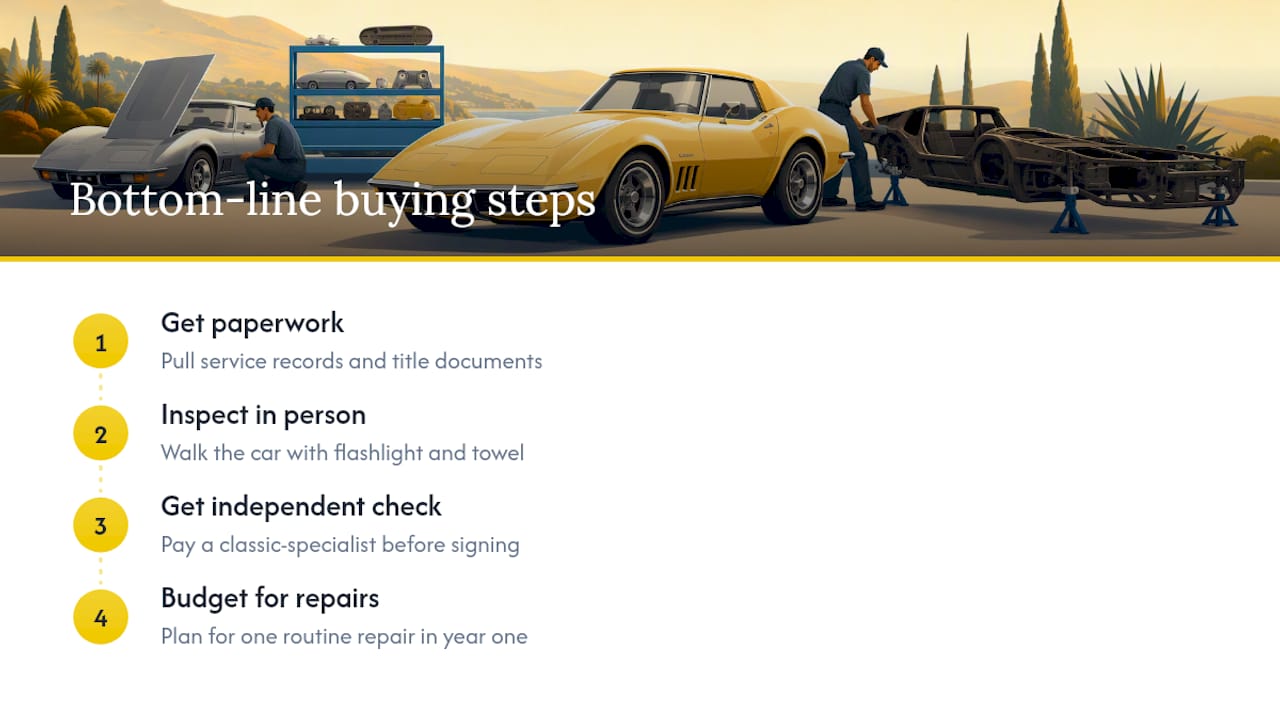
Condition beats badge every time. Before you commit, do three things: pull every service record and title document you can get, walk the car in person with a flashlight and a towel, and pay for an independent specialist inspection before signing anything. Budget honestly for at least one routine repair in year one, and let the paperwork, not the paint, make your final decision.
An Owner's Honest Take on Loving a C3
C3 owners fall for these cars because they're genuinely fun to drive and easy to find parts for, but that affection makes it tempting to overlook a rough birdcage under good paint. Patience pays off. The right car, with the right documentation, is worth waiting a few extra weeks to find.
— Tony
Ready to Start Your C3 Search? Here's Where to Look
Reading a checklist is one thing. Standing in front of the actual car with a flashlight is another, and that's where most buyers get stuck finding a candidate worth the drive. Butter Classics built its inventory around exactly this problem: detailed listings with the photos and history you need to shortlist a car before you ever leave your driveway.
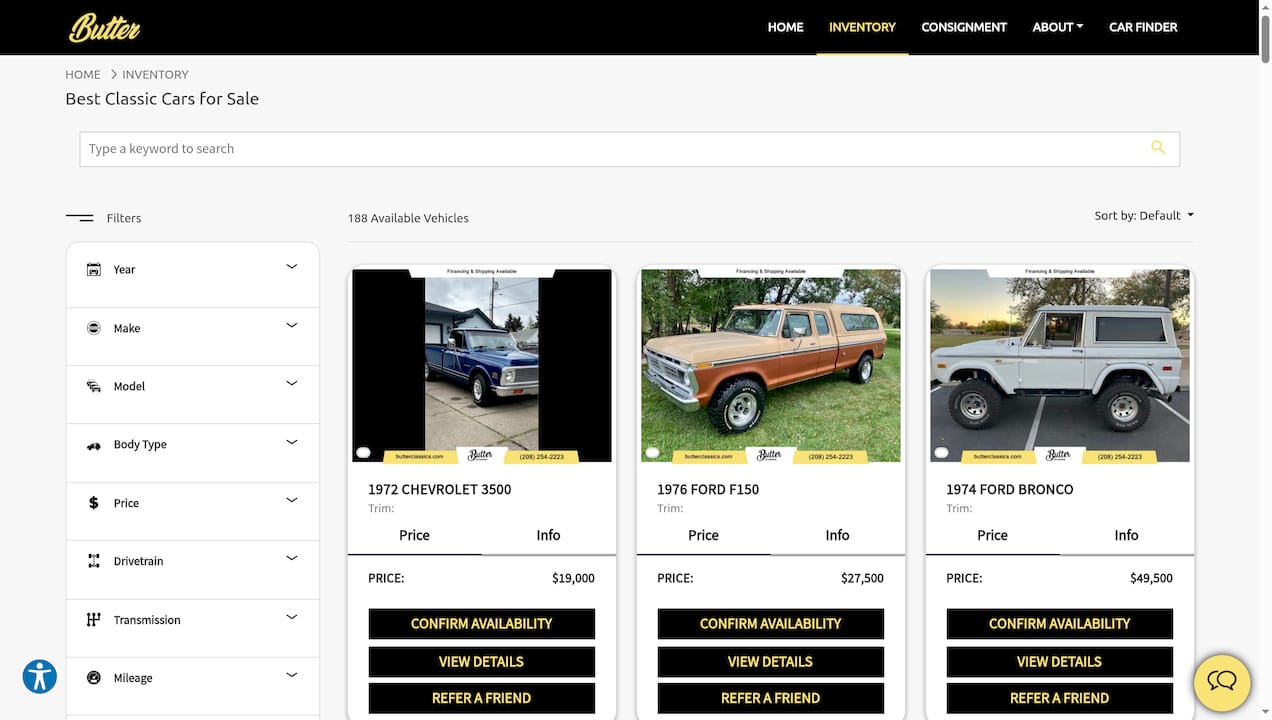
If you already know what you want, whether that's an early chrome-bumper car with matching numbers or a clean 1979 driver, the Car Finder service will track down a specific C3 that matches your criteria instead of leaving you scrolling listings for months. Once you find a candidate you're serious about, you can schedule a test drive directly, and financing pre-qualification is available if you'd rather know your number before you start negotiating. Selling instead of buying? Butter Classics also offers consignment services for owners ready to pass their C3 to its next caretaker. Start with the inventory page to see what's available.
Sources
- C3 Corvette: Buy one now? | Buyer's Guide | Classic Motorsports
- Vettefacts
- 1968–82 Chevrolet Corvette (C3) buyers guide - Hagerty Media
- Best and Worst Corvette C3 Years: What to Buy & Avoid – CarsCounsel
FAQ
Are C3 Corvettes Going Up in Value?
Well-documented early chrome-bumper cars, especially matching-numbers big-blocks, have shown the strongest long-term appreciation, while later driver-quality cars tend to hold steadier, more modest value.
What Is the Most Desirable C3 Corvette Year?
There's no single "best" year. Collectors generally favor 1969 to 1972 chrome-bumper cars for investment potential, while 1978 and 1979 fastback models are widely considered the easiest and most practical to drive daily.
What Was the Worst Year for the C3 Corvette?
1980 through 1982 tend to draw the most caution, largely because of 1982 Cross-Fire Injection system's tuning difficulty and early 700-R4 transmission weak points, though a well-maintained example from these years can still make a fine driver.
Why Are C3 Corvettes So Cheap Compared to Other Classics?
High original production numbers created a large surviving population and strong aftermarket parts support, which keeps supply healthy and ownership costs more predictable than rarer classics, even as documented, low-mileage examples still command real premiums.
What Should Be My First Move When Using a C3 Corvette Buyer Guide?
Start with the birdcage inspection and the paperwork. Structural rust and missing documentation eliminate more otherwise-tempting cars than any mechanical issue you'll find later in the process.