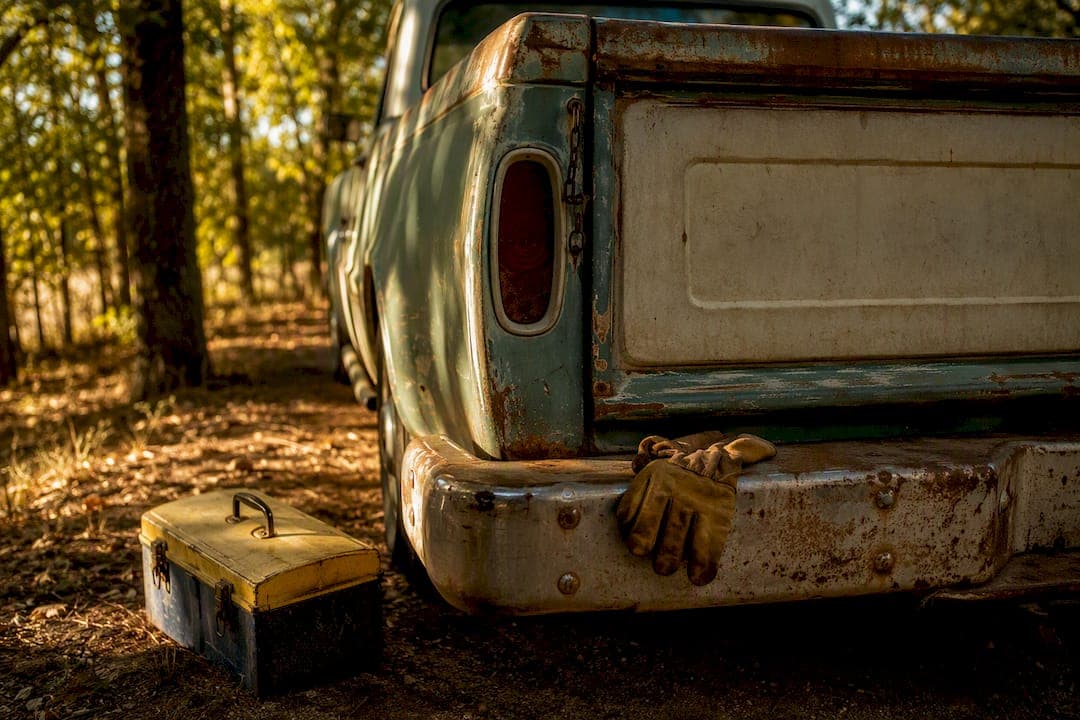
If you're chasing a show truck or a serious restoration, look hard at 1967 to 1972 C10s. If you want the easiest truck to live with and fix, the 1973 to 1987 square-body wins on parts availability and mechanic-friendliness. If period styling matters more than convenience, 1960 to 1966 trucks deliver it, but expect a longer parts hunt. Whichever year you land on, three checks come before any offer: structural or frame rust, a missing or altered VIN and SPID, and any sign of amateur structural repair or mismatched suspension parts.
None of those three are cosmetic problems. They're the difference between buying a truck and buying a liability.
- Frame and structural rust — check rails, crossmembers, and cab mounts, not just the visible sheet metal.
- VIN/SPID mismatch — the door tag and glovebox sticker should tell the same story as the title.
- Bad repair history — crooked panel gaps, fresh undercoating in one spot only, or suspension parts that don't match the era.
Once you've ruled those out, get a specialist to look it over in person, or start with a listing that's already been vetted, like the inventory on Butterclassics.
Key Takeaways
The safest Chevy C10 purchase prioritizes frame integrity, verified SPID documentation, and clean title history over generation, color, or restoration ambition.
| Point | Details |
|---|---|
| Match year to goal | Choose 1967 to 1972 for collector value, 1973 to 1987 for easier parts and repairs, 1960 to 1966 for rare styling. |
| Grade condition honestly | Use a Condition 1 to 6 framework and request frame, underbody, and engine bay photos before trusting a listing. |
| Verify before you travel | Confirm the SPID sticker, VIN match, and title status ahead of any in-person visit or deposit. |
| Budget for real repair categories | Rust scope, driveline wear, and wiring age drive most C10 repair costs, not cosmetics. |
| Use vetted channels | Butterclassics offers certified listings, a car finder tool, and scheduled test drives to reduce remote-buying risk. |
Table of Contents
- Chevy C10 Buyer's Guide: Comparing the Three Generations
- How Do You Grade the Condition of a Classic Truck?
- What Should You Inspect Before Buying a Chevy C10?
- What Are the Most Common C10 Problems and Repairs?
- Does Original Paint Matter More Than a Fresh Restoration?
- What Should You Expect to Pay for a Chevy C10?
- Where Can You Find a Good C10 for Sale?
- How Should You Test Drive a Chevy C10?
- Why Trust This Chevy C10 Buyer's Guide?
- Insurance Considerations for a Classic C10
- Registration and Emissions Rules for Classic Trucks
- Restoration Versus a Customized Build: Which Fits You?
- Are Aftermarket Parts and Upgrades Compatible With a C10?
- Common Scams and Pitfalls When Buying a C10
- What Actually Matters When Buying a C10
- Ready to Find Your C10? Here's a Lower-Risk Way to Start
- Sources
Chevy C10 Buyer's Guide: Comparing the Three Generations
Every Chevy C10 buyer guide worth reading starts with the generations, because your goal should drive your year, not the other way around. Chevrolet built the C10 across three distinct body styles, and each one rewards a different kind of buyer.
1960 to 1966 trucks carry the cleanest, most understated lines of the bunch. Wraparound windshields, simple dashboards, and a stance that looks right whether it's bone stock or lightly lowered. The catch is parts. Reproduction panels and trim exist, but the supply is thinner than later years, and a rough truck from this era can turn into a scavenger hunt for NOS door handles and glass trim.
1967 to 1972, often called the "Action Line" trucks, are the generation most collectors chase first. The styling hit a sweet spot between muscle-car aggression and utilitarian honesty, and the aftermarket noticed. Reproduction sheet metal, interior kits, and trim pieces are broadly available for this platform, which makes both restoration and resale easier than the earlier trucks. That combination of desirable looks and strong parts support is why values on clean 1967 to 1972 trucks have held up better than most other classic pickups.
1973 to 1987, the "square-body" generation, ran for 14 model years, longer than any C10 body style before or since. That long run means junkyards, salvage listings, and reproduction catalogs are stacked with parts, and any competent shop has seen a hundred of these trucks. It's frequently the recommended starting point for first-time C10 buyers for exactly that reason. The tradeoff: early square-bodies, especially 1973 to 1980 models, were prone to rust before GM improved its primers and plating, so cab corners and rocker panels need extra scrutiny on those years.
- 1960 to 1966: best styling-per-dollar, hardest parts hunt.
- 1967 to 1972: strongest collector demand and aftermarket support.
- 1973 to 1987: easiest to own, drive, and repair, with early-year rust caveats.
How Do You Grade the Condition of a Classic Truck?
Most serious C10 shoppers use some version of a Condition 1 to 6 scale, and it's worth learning before you read another listing. This isn't official Chevrolet terminology. It's an industry shorthand for translating "good condition" into something you can actually price.
- Condition 1 (Concours/Show): Frame-off restoration or better than factory new. Expect flawless paint, correct hardware, and documentation to back it up.
- Condition 2 (Excellent): A high-quality older restoration or a very well-kept original. Minor wear only, no needed mechanical work.
- Condition 3 (Good/Driver): Solid and usable, but with visible wear, some non-original parts, and small cosmetic flaws.
- Condition 4 (Fair): Runs and drives, but needs real work: paint, interior, maybe some mechanical attention.
- Condition 5 (Restorable): Complete enough to save, but expect rust repair, mechanical rebuilds, and a real budget.
- Condition 6 (Parts/Project): Not roadworthy. Value is mostly in the drivetrain, cab, or specific panels.
Sellers routinely round up. A truck advertised as "driver quality" often lands closer to Condition 4 once you're standing next to it. Ask for close-up photos of the frame rails, the underside of the bed, and the engine bay before you get excited about anything else. Our guide to evaluating vintage car condition walks through how to read those photos like an appraiser would.
Pro Tip: Every condition grade the seller drops usually costs or saves you money at negotiation time. A truck sold as Condition 3 but inspected as Condition 4 should come down in price by whatever it costs to close that gap, not by a token discount.
What Should You Inspect Before Buying a Chevy C10?
This is the part of the Chevy C10 buying guide that actually protects your money. Work through it in order, whether you're standing next to the truck or directing someone else who is.
1. Rust hotspots. Check drip rails above the doors, cab corners, the inside lip of the bed rails, and the frame rails themselves. Push a screwdriver gently into suspect areas. Solid metal resists; rotted metal gives.
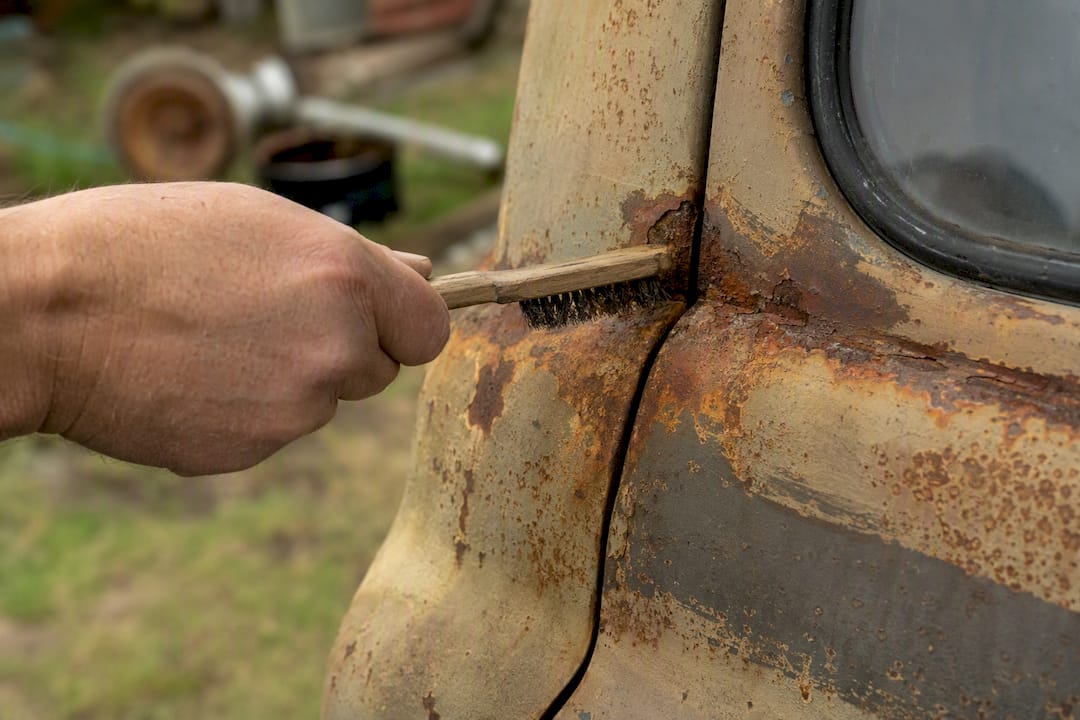
2. Frame condition and history. Look for fresh weld beads, mismatched paint along the frame, or a frame that doesn't sit level when viewed from behind. Twisting usually shows up as uneven panel gaps or doors that don't close cleanly.
3. F44 and heavy-duty options. If the truck carries a 454 big-block, it should have come with the F44 heavy-duty frame and suspension package from the factory. Confirming this through the SPID sticker in the glovebox tells you whether the frame and suspension actually match the drivetrain, or whether someone dropped a big engine into a truck never built to carry it.
4. Suspension and steering. Check for play in the steering box, worn bushings, and sagging leaf springs. Inspect U-joints and the driveshaft for looseness or excessive wear.
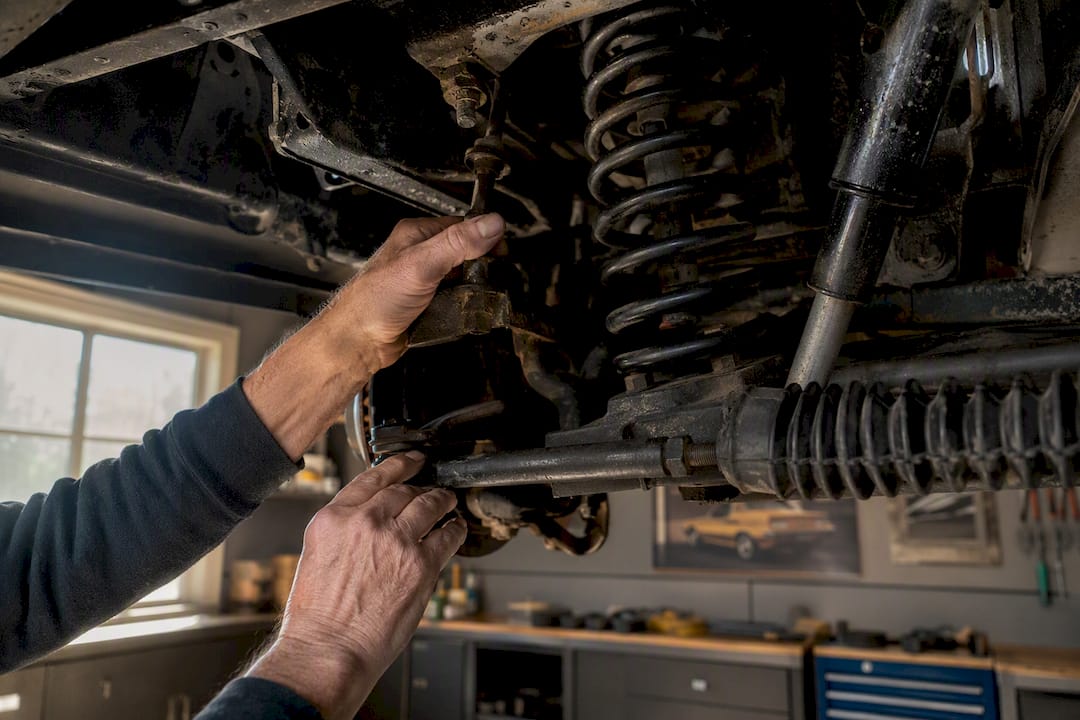
5. Brakes. Confirm pedal feel, check for fluid leaks at the wheel cylinders or calipers, and ask when the system was last serviced.
6. Engine and drivetrain. Determine whether the motor is original or swapped, since this affects both value and expectations. Check compression, cold-start behavior, and look for oil or coolant leaks around gaskets and seals.
7. Electrical and charging. Old wiring insulation cracks with age. Test the alternator output, headlights, and turn signals, and look for aftermarket wiring spliced in without proper connectors.
8. Cooling system. Check for a mix of coolant colors (a sign of a recent flush hiding a problem), a mushy upper radiator hose, or a fan clutch that doesn't engage.
9. Title and documentation. Confirm the VIN on the title matches the door tag and frame stamp. Ask directly whether the title is clean, salvage, or rebuilt, since a branded title can cut resale value dramatically even on an otherwise solid truck.
Parts availability softens the blow of most of what you'll find. Reproduction sheet metal and mechanical parts are widely available across the C/K platform, so a rust hole or a tired suspension isn't automatically a dealbreaker. It's a negotiating point and a line item, not a reason to panic.
- Bring a flashlight, a magnet, and a small pick or screwdriver.
- Photograph everything before you discuss price.
- Never skip the SPID check, even on a truck that looks perfect.
What Are the Most Common C10 Problems and Repairs?
Rust repair scope varies enormously. A surface patch on a rocker panel is a weekend job for a competent welder. Full cab-corner or floor-pan replacement runs into real labor hours. Frame rail rust that requires cutting and splicing sections is the most expensive category, and it's where a cheap project truck turns into a money pit.
Transmission and driveline wear shows up as slipping under load, delayed engagement, or whining from the differential. A rebuilt automatic or a clutch replacement on a manual is a predictable cost once you know it's needed. It's the trucks where the seller "just doesn't drive it much" that hide the worst surprises here.
LS and Vortec swaps are common on square-body trucks, and for good reason. They bring modern drivability, better fuel economy, and easier cold starts compared to the original small-blocks. The tradeoffs are real too: emissions compliance gets more complicated depending on your state, and a swap without proper documentation can make it harder to verify what you're actually buying. If you're set on originality, a swapped truck also breaks the numbers-matching story that matters for collector value.
Two other recurring items worth budgeting for:
- Sidesaddle fuel tanks on many square-body trucks sit outside the frame rails, which drew safety concerns over the years. Many owners retrofit a rear-mounted or replacement tank for peace of mind.
- Old wiring and worn brakes are near-universal on trucks that haven't been touched in a decade, and both are safety items, not cosmetic ones.
Pro Tip: Modern LED lighting is one of the cheapest, most owner-friendly upgrades you can make without touching originality debates. Upgrading dim factory headlights and taillights improves safety on a truck you'll actually drive at night.
Does Original Paint Matter More Than a Fresh Restoration?
It often does, and that surprises a lot of first-time buyers. A clean, original southern paint truck with honest patina can be worth more than one wearing a shiny recent repaint, because original finish reduces the odds that hidden structural rust got painted over instead of fixed. A repaint isn't a red flag by itself, but it does remove one of your best tools for judging the truck's real history.
Original paint tells you what actually happened to a truck over 50 years. A repaint can tell you the same story, or it can be hiding one. That uncertainty is exactly what you're paying to eliminate when you choose the patina truck over the shiny one.
Full restoration makes sense when you're chasing show points or building for eventual sale at the top of the market. Preserving originality or leaning into a restomod build makes more sense if you plan to drive and enjoy the truck for years.
When inspecting paint, look for:
- Overspray on rubber trim, weatherstripping, or inside door jambs.
- Panel gaps that suggest replaced quarter panels or a bed swap.
- Paint texture or color that doesn't quite match panel to panel, a common sign of prior collision repair.
Our guide to reading classic car paint and color codes covers how to decode factory tags against what you're actually looking at.
What Should You Expect to Pay for a Chevy C10?
Condition drives price more than generation does, which surprises buyers who assume a 1969 automatically costs more than a 1978. A rough Condition 5 project in either year lands in a similar range, and a beautifully sorted Condition 2 example in either year commands a real premium.
Broadly, expect three tiers: project trucks needing significant rust and mechanical work sit at the bottom, solid drivers with usable paint and mechanicals sit in the middle, and professionally restored or documented low-mile originals sit at the top, sometimes by a wide margin over a driver-quality truck of the same year.
Factory options move the needle more than most buyers expect:
- Big-block engines (396, 402, 454) add both performance and collector interest.
- The F44 heavy-duty package, confirmed through the SPID sticker, signals a truck built for towing or hard use, which appeals to a specific buyer.
- Cheyenne and Cheyenne Super trim packages bring nicer interiors and trim that boost both driving comfort and resale.
On the flip side, a handful of issues will tank a price fast regardless of generation: a salvage or rebuilt title, evidence of amateur frame repair, or a missing SPID sticker that leaves factory options unverifiable. Any of those should trigger a serious price cut, not just a passing mention in negotiation.
Where Can You Find a Good C10 for Sale?
Auctions move fast and can surface rare, well-documented trucks, but you're often bidding against emotion and limited inspection time. Online classifieds offer the widest selection at the lowest friction, but seller transparency varies wildly and scams are common. Specialist dealers and curated marketplaces cost more upfront but shift real vetting work onto someone with a reputation to protect.
Whichever channel you choose, treat the ad the same way you'd treat the truck in person. Ask for undercarriage photos, a clear SPID shot, and any service history before you get emotionally invested or book travel to see it.
- Auctions: fast, sometimes rare finds, limited inspection window.
- Classifieds: widest selection, highest scam risk, buyer beware.
- Specialist dealers/marketplaces: higher price floor, meaningfully lower risk.
A consignment or certified-listing marketplace makes the most sense when you can't personally verify a truck three states away, since someone with reputational stakes has already done the legwork you'd otherwise have to trust a stranger for.
How Should You Test Drive a Chevy C10?
Run through this before you sign anything, in this order:
- Start it cold. Watch the exhaust for smoke color, listen for knocking or ticking, and check that oil pressure and the charging gauge (or light) behave normally within seconds.
- Accelerate through the gears. Note hesitation, delayed shifts on an automatic, or a clutch that engages too high or too low on a manual.
- Brake hard at low speed in a safe area. Feel for pulling to one side, pulsation, or a soft pedal that sinks toward the floor.
- Check steering feedback. Excess play, wandering on straight roads, or clunking over bumps points to worn suspension or steering components.
- Pop the hood immediately after the drive. Look for fresh fluid weeping around the transmission, engine, or differential while everything is still hot and revealing.
Our full test drive checklist breaks each of these into more detail if you want a printable version to bring along.
Why Trust This Chevy C10 Buyer's Guide?
This guide draws on the same benchmarks specialist buyer resources like Hagerty and HotRod use to evaluate C10s: condition grading, SPID verification, and structural inspection first, cosmetics second. Tony's writing for Butterclassics leans on that same inspection-first approach across its buyer resources.
Butterclassics backs that approach with real tools: a searchable inventory, a car finder service for buyers hunting a specific year or trim, consignment for sellers, and scheduled test drives on listed vehicles. Certified listings cut a real amount of the guesswork out of buying sight unseen.
- Browse vetted inventory instead of anonymous listings.
- Request a specific year, trim, or condition through the car finder.
- Schedule a test drive before committing to travel.
Insurance Considerations for a Classic C10
Classic truck insurance works differently than your daily-driver policy, and it's worth understanding before you fall in love with a truck. Standard auto insurers price coverage based on expected claims on modern vehicles driven daily, which usually overvalues the risk on a C10 that sees limited mileage and careful storage.
Specialty classic vehicle insurers instead offer agreed value coverage, meaning you and the insurer settle on the truck's value upfront rather than letting an adjuster guess after a loss. That protects you from being paid out at a depreciated "market value" that ignores the money you put into rust repair or a fresh interior.
Most classic insurers also require:
- Limited annual mileage, often a few thousand miles a year, to qualify for reduced rates.
- Secure storage, typically a garage rather than street parking.
- A separate daily driver in the household, since these policies aren't built for commuting.
Premiums on a well-documented, garage-kept C10 tend to run noticeably lower than standard auto coverage for a comparable-value vehicle, precisely because the driving pattern is so much lower risk. Get a quote before you buy, not after. A truck with a salvage title or unverified modifications can complicate agreed-value coverage, which is one more reason a clean title and documented history matter well before you sign anything.
Registration and Emissions Rules for Classic Trucks
Every state handles classic vehicle registration differently, so check your local Department of Motor Vehicles before assuming anything transfers automatically from the truck's history. Many states offer a historic or classic vehicle registration tier, usually available once a truck reaches a certain age, often 25 years, though the exact threshold and paperwork vary by state.
That classic registration frequently comes with reduced fees and, in many states, an exemption from routine emissions testing, since low-mileage classics contribute little to regional air quality issues compared to daily commuters. But that exemption isn't universal. Some states still require an emissions test if the truck was built after a certain year, or if it's registered for regular road use rather than a limited-mileage historic tag.
An LS or Vortec swap complicates this further. Swapping in a newer engine can trigger emissions testing requirements in states that would otherwise exempt an older factory small-block, since the rules sometimes key off engine model year rather than truck model year. Before you finalize a swapped truck, confirm with your state's registration authority exactly how that engine will be classified.
Documentation matters here too. Keep the title, any past registration records, and build receipts together, since proving a truck's age and history smooths out registration disputes and speeds up the emissions-exemption process if your state offers one.
Restoration Versus a Customized Build: Which Fits You?
A full restoration aims to return the truck to factory-correct condition, right down to paint codes and hardware. It rewards patience and a bigger budget, and it tends to hold value best for buyers focused on collector appeal or eventual resale to other purists. The downside is cost. Correct reproduction trim, factory-matched paint, and numbers-matching drivetrain work add up fast, and a botched attempt at "restoration" done on the cheap often looks worse than an honest driver-quality original.
A customized or restomod build swaps originality for usability: modern brakes, an LS swap, air conditioning, updated suspension geometry. These trucks tend to drive better and cost less to maintain day to day, but they usually appeal to a narrower buyer pool at resale, since restomod tastes vary more than collector standards do.
Neither path is objectively better. It depends entirely on what you want from the truck:
- Chasing collector value or show points favors restoration.
- Building a truck you'll drive weekly favors a smart restomod.
- A tight budget often favors preserving what's already there over either extreme.
Whichever direction you lean, get the frame and structural inspection done first. No amount of customization or correct paint matters if the frame underneath is compromised.
Are Aftermarket Parts and Upgrades Compatible With a C10?
Parts compatibility on the C10 platform is one of its biggest strengths, especially on 1967 to 1987 trucks. Reproduction sheet metal, interior kits, brake upgrade kits, and suspension components are widely available and generally interchangeable across model years within a generation, though specifics shift between the 1960 to 1966, 1967 to 1972, and 1973 to 1987 platforms.
Common upgrades buyers consider include:
- Front disc brake conversion kits for trucks that came with factory drum brakes, a meaningful safety upgrade.
- Power steering conversions on trucks originally equipped with manual steering.
- LS or Vortec engine swap kits, widely documented for square-body trucks specifically.
- LED lighting upgrades, a simple safety improvement that doesn't compromise a factory-correct interior or exterior.
Before buying any upgrade kit, confirm it matches your specific generation and cab style, since a kit built for a 1968 short-bed won't necessarily bolt onto a 1985 long-bed without modification. Sellers of quality kits typically list compatible year ranges clearly. If a listing is vague about fitment, that's worth a direct question before you buy, not an assumption you make afterward.
Common Scams and Pitfalls When Buying a C10
The classic truck market attracts its share of dishonest sellers, and C10s are common enough that scammers know the script. A few patterns show up again and again.
Wire transfer requests before you've seen the truck are the single biggest red flag in remote purchases. Legitimate sellers understand a serious buyer wants to inspect or have someone inspect the vehicle before money changes hands.
Stock photos or reused listing images across multiple ads, sometimes for trucks supposedly located in different states, signal a listing that isn't what it claims to be. Reverse image search a suspicious photo before committing to anything.
Vague answers about the title deserve real suspicion. A seller who won't confirm clean versus salvage versus rebuilt status directly, or who claims not to know, is either hiding something or hasn't done basic homework on their own vehicle.
Freshly undercoated frames on an otherwise rough truck sometimes hide rust rather than protect against it. Ask when the undercoating was applied and why, especially if it looks newer than everything else on the truck.
Mismatched VIN and SPID information is the scam that costs buyers the most money after the fact, since it can mean a stolen vehicle, a title-washed salvage truck, or simply a truck that isn't what the RPO codes claim. Verify this before you're emotionally or financially committed, not after.
What Actually Matters When Buying a C10
Most advice around buying a Chevy C10 leans hard into romance: the styling era you fell in love with, the color you always pictured, the story you want to tell about the build. None of that is wrong exactly, but it puts emotional priorities ahead of structural ones, and that ordering causes most of the expensive mistakes buyers make.
The conventional wisdom treats generation choice as the first decision. It shouldn't be. Condition and documentation matter more than whether you land on a 1969 or a 1978, because a rough truck in either era costs you the same categories of money: frame work, wiring, brakes, and time. The generation debate is real, but it's a preference question. The frame and SPID check is a survival question.
If you take one thing from this guide, prioritize the inspection sequence over the shopping list. Decide your budget for problems before you fall for a paint job. A patina truck with clean documentation and an honest frame beats a shiny repaint with a fuzzy title, every time, regardless of which generation either one happens to be.
— Tony
Ready to Find Your C10? Here's a Lower-Risk Way to Start
Anonymous classifieds put all the vetting work on you: chasing down SPID photos, guessing at title status, hoping the seller answers honestly. Butterclassics flips that arrangement. Every listing on the platform comes with detailed photos, documented specs, and the option to pursue certified inspection status before you ever wire a deposit.
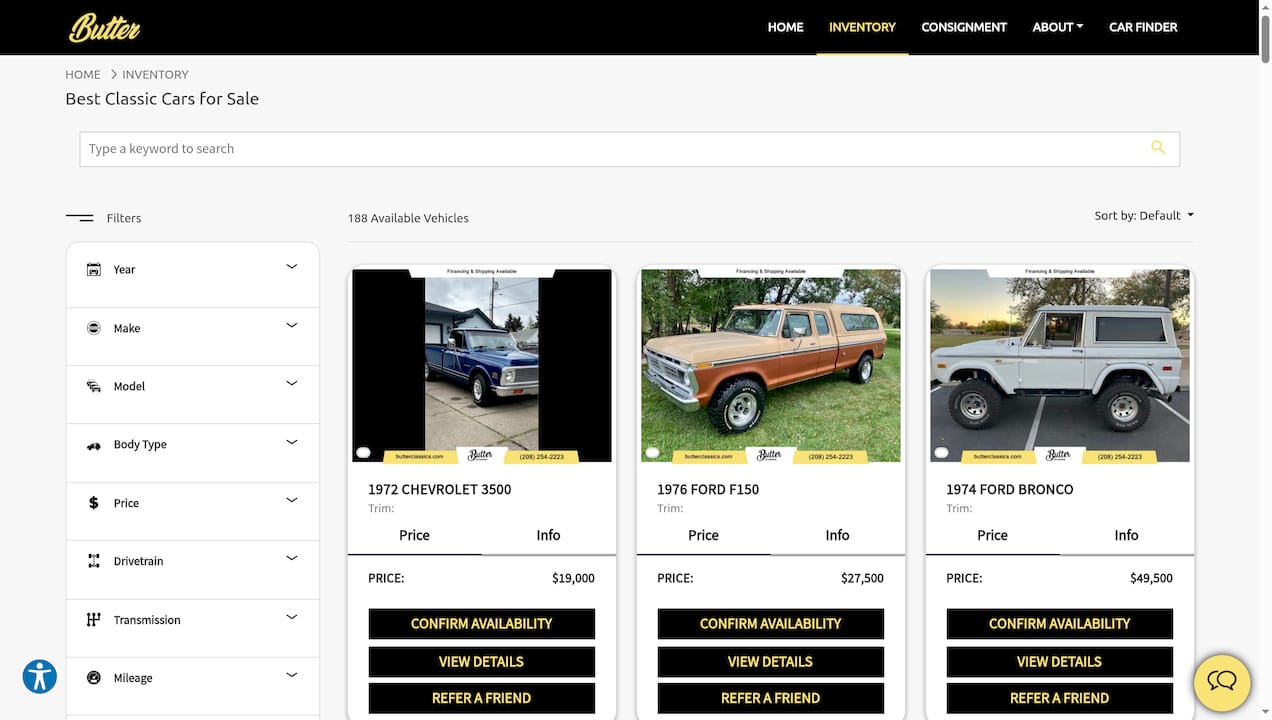
If you know exactly what you want, whether that's a numbers-matching 1969 or a clean square-body driver, the car finder tool lets you submit your criteria and lets the search come to you instead of scrolling classifieds for weeks. If you'd rather see what's already available, browse current C10 inventory and filter by price, year, and condition. Selling a truck instead? The consignment program handles the listing and buyer vetting for you. Start by browsing inventory or scheduling a test drive on a truck you're already eyeing.
Sources
- Your definitive 1967–72 Chevrolet C/K pickup buyer's guide
- 1973-1987 Chevy C10 and GMC Truck Buyer’s Guide
- Chevy C10 Buyer's Guide | Buying a Classic Truck