
If you want a first-generation Mustang fastback that holds real collector value, prioritize Shelby GT350/GT500, Boss 302/429, or verified Cobra Jet cars with documentation to match. If you just want a fun, usable driver, focus on late-1960s V8 fastbacks with solid floors and a matching-numbers block. Either way, the single biggest risk is structural rust hiding under fresh paint, so a professional inspection or a Marti report comes before any money changes hands.
TL;DR:
- The most valuable first-generation Mustang fastbacks are Shelby GT350/GT500, Boss 302/429, and Cobra Jet models with proper documentation, not just rarity.
- Rust, especially in front suspension towers and floor pans, is the greatest risk and requires careful structural inspection before purchase.
- Match engine and VIN numbers to factory build data and verify authenticity with reports; avoid heavily modified or clone cars priced as original models.
- Expect typical rust repair costs to rise into five figures for major repairs like floor pan or torque box replacements, which should be reflected in the sale price.
- For most buyers, a solid 1967 to 1969 V8 fastback offers the best balance of style, parts support, and affordability, with top-tier models reserved for serious collectors.
Table of Contents
- Which First-Generation Mustang Fastback Years Should You Buy?
- Bodywork: Rust Hotspots, Structural Checks, and Repair-Cost Signals
- Engine and Transmission: What to Verify Before You Buy
- Suspension, Steering, and Brakes: What Actually Needs Checking
- Interior, Trim, and Electrics: What's Cheap to Fix and What Isn't
- Documentation and Authenticity: Proving What You're Actually Buying
- Mustang Fastback Pricing and Valuation: What to Expect to Pay
- Pre-Purchase Inspection Checklist for a Mustang Fastback
- Tony's Take: What He'd Actually Buy
- How Butterclassics Helps You Find and Buy the Right Fastback
- Sources
- FAQ
Which First-Generation Mustang Fastback Years Should You Buy?
Not every fastback deserves the same money, and knowing where a car sits in the hierarchy keeps you from overpaying for a base car dressed up to look special. The first-generation Mustang fastback arrived shortly after the original 1964 launch, and within a few years Ford built performance variants that now define the entire collector market, from the Shelby GT350 to the big-block Boss and 428 Cobra Jet cars.
Holy grail territory starts with the Shelby GT350 and GT500, the Boss 302 and Boss 429, and any R-code or genuine Cobra Jet fastback with paperwork to back it up. These cars carry premiums that can be very high because so few were built correctly, and even fewer survive with their original drivetrain intact. Rarity alone doesn't create the premium. Documented rarity does.
For most buyers, though, the smarter play is a late-1967 through 1969 V8 fastback with a small-block engine, factory air, and no evidence of accident repair. These years hit a sweet spot: parts support is strong, the body style is arguably the most iconic of the era, and prices haven't been inflated to Shelby-adjacent territory. Earlier 1965 to 1966 six-cylinder cars are cheaper to buy but weaker to drive and harder to resell at a profit. The 1971 to 1973 fastbacks are larger, heavier, and less sought after by collectors, though they remain a reasonable entry point for buyers who want V8 power without collector-car pricing.
A few guardrails before you start calling sellers:
- Walk away from any car advertised as a "genuine" Shelby or Boss without a Marti report or SAAC documentation. Clone cars are common and not inherently bad, but they should never be priced like the real thing.
- Be skeptical of fastbacks with mismatched VIN and engine tags, or door data plates that look too clean for a 50-plus-year-old car.
- Heavily modified cars (Coyote swaps, air ride, widened fenders) can be great drivers, but they usually take a serious value hit with purists and should be priced as customs, not restorations.
- Watch for "fresh paint syndrome": a car that looks flawless in photos but has never been lifted on a rack for anyone to check underneath.
Bodywork: Rust Hotspots, Structural Checks, and Repair-Cost Signals
Rust is what actually kills these cars, not mileage or age. Front suspension towers and the tops of the side aprons are the first place to check, since cracking, rot, or amateur repair in this area usually signals either serious corrosion or a car that's been in an accident and pieced back together. A fastback with compromised towers is not a cosmetic project. It's a structural one.
Work through the car in this order:
- Front shock towers and the top of the front aprons, checking for cracks, filler, or fresh paint that doesn't match the surrounding metal.
- Floor pans and torque boxes, since water pools here and rot spreads from the inside out long before it shows on the surface.
- Rocker panels and the lower quarters, especially just behind the front wheel arches, where factory seams are easy targets for patch panels.
- Trunk pan and the area around the rear window channel, both notorious for leaks that rot the metal from underneath the vinyl or carpet.
- Cowl panel at the base of the windshield, a spot almost every fastback rusts eventually and one that's expensive to repair properly.
Measuring panel gaps and seam lines against factory tolerances is one of the more reliable ways to spot a car that's been rebuilt rather than simply repaired, since a shop working from a jig leaves telltale inconsistencies a trained eye can catch. A patch panel welded over rust is not the same as a full quarter panel replacement done on a frame jig, and the difference in both cost and long-term value is significant.
Pro Tip: Bring a small magnet on a string to any viewing. It won't stick to plastic filler, and dragging it along rocker panels and lower quarters takes thirty seconds but can save you from buying a car held together with body filler.
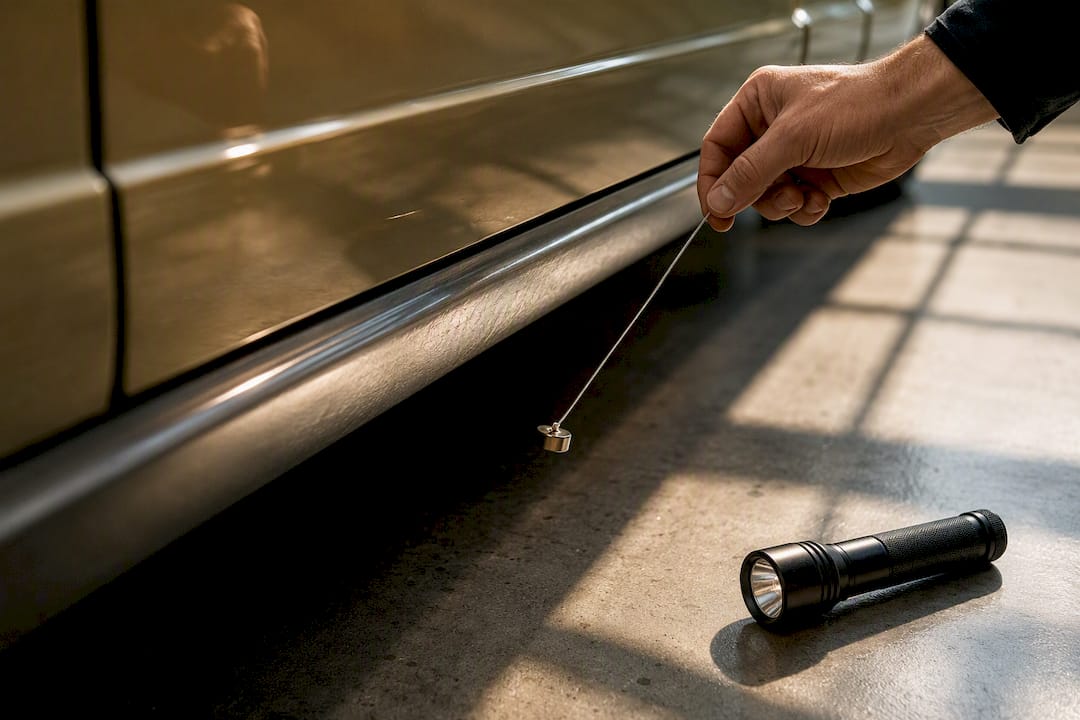
Repair-cost bands matter because they set your walk-away point. Minor surface rust and small patch panels might run a few hundred to low thousands of dollars at a competent shop. Full floor pan and torque box replacement, done correctly with proper metal and a rotisserie, climbs quickly into five figures once labor is factored in. If a seller's asking price doesn't already reflect visible rust repair needs, treat that gap as your negotiating room, not a bonus.
Engine and Transmission: What to Verify Before You Buy
Matching numbers matter more to value than almost anything else you'll check, and verifying them takes patience, not special tools. Compare the engine casting numbers and date codes stamped on the block against the build date on the door data plate, and ask the seller directly for any build sheet, Marti report, or Deluxe Marti Report that documents what left the factory. A car doesn't need a perfectly matching drivetrain to be a good buy, but it needs honest disclosure of what's been swapped.
Common failure points vary by engine family, and knowing them saves you from being talked into a bad deal:
- 289 small-blocks are generally reliable but often show oil leaks around the rear main seal and timing cover after decades of service.
- 390 big-blocks run hot in traffic and are prone to overheating if the radiator and fan clutch haven't been updated, so idle the car for ten minutes and watch the temperature gauge.
- 428 Cobra Jet engines are strong but expensive to rebuild correctly with period-correct parts, so any knocking, low oil pressure, or blue smoke on startup should be treated as a five-figure warning sign, not a minor issue.
- Three-speed manuals and early automatics can feel clunky by modern standards, but excessive slippage, delayed engagement, or grinding between gears points to expensive transmission work ahead.
On a test drive, listen for rod knock under load, watch for smoke on deceleration, and pay attention to whether the car pulls evenly without wandering. If a seller doesn't allow a compression or leakdown test before you buy, that alone is a reason to keep looking elsewhere.
Suspension, Steering, and Brakes: What Actually Needs Checking
Front suspension towers deserve a second look here specifically for structural integrity, not just rust. Rear axle mounting points and leaf spring perches are the equivalent zone in the back half of the car, and both areas show stress cracks or amateur welding when a fastback has been in a hard accident and repaired on a budget.
Steering feel tells you a lot in under a minute. Excessive play at the wheel, pulling to one side under braking, or a clunk over bumps usually means worn idler arms, tie rod ends, or a previous collision that was never properly aligned afterward.
- Check for even tire wear across both front tires, since uneven wear often points to alignment issues stemming from bent components.
- Bounce each corner of the car and listen for creaking or clunking that suggests worn bushings or shocks past their service life.
- Ask whether the car still runs its original drum brakes or has been upgraded to front discs, since factory-style disc brake conversions are common and generally desirable for anyone planning to drive the car regularly.
- Confirm whether a power brake booster and matching master cylinder have been added, since mismatched components between the pedal, booster, and master cylinder create a soft or inconsistent pedal feel.
None of these upgrades hurt value when done with period-appropriate parts. They just need to be disclosed and done right.
Interior, Trim, and Electrics: What's Cheap to Fix and What Isn't
Seat frames sag and foam collapses on nearly every fastback this age, and reupholstering with correct trim codes is a solvable, moderately priced problem. What's harder to fix cheaply is finding correct, date-coded dash pads, gauge faces, and trim pieces that match the car's original build sheet, since reproduction quality varies widely across suppliers.
Wiring is where amateur work hides. Look under the dash for taped splices, non-factory fuse additions, or a harness that's clearly been cut and reworked for a stereo, aftermarket gauges, or an electric fan. A few spliced wires aren't a dealbreaker, but a rat's nest under the dash suggests the same care wasn't applied to bigger mechanical work either.
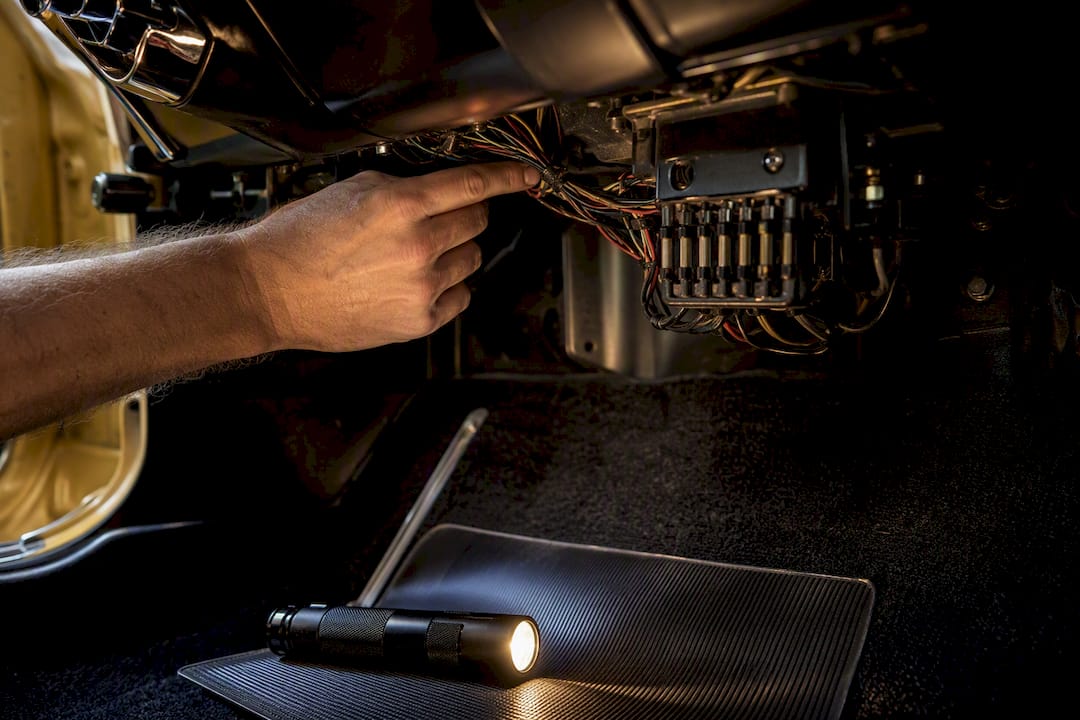
Chrome trim, correct emblems, and date-coded glass are increasingly hard to source correctly and command real premiums when present. Budget accordingly if a car is missing pieces you'll want to replace with authentic parts rather than generic reproductions.
Documentation and Authenticity: Proving What You're Actually Buying
A Marti report pulls directly from Ford's original production records and tells you exactly how a specific VIN left the factory, including the engine, transmission, color, and options. For any first-generation fastback priced above driver-quality money, ordering a Marti report before you commit is one of the cheapest insurance policies in classic car buying.
Check the VIN plate on the driver's side door jamb and compare it against the number stamped on the frame rail near the front suspension. Rivets that look replaced, a plate that sits crooked, or fonts that don't match factory standards are all signs of possible tampering, whether for insurance fraud, stolen-parts assembly, or simple misrepresentation.
- Request any build sheet found in the car during past restoration work, since these are sometimes discovered tucked behind seats or under carpet and offer strong originality proof.
- Ask for a paper trail of ownership history, prior title records, and any restoration invoices the seller has kept.
- Treat incomplete paperwork as a negotiating point rather than an automatic dealbreaker, since a well-documented partial history combined with a clean physical inspection can still support a fair price.
Provenance doesn't just satisfy curiosity. It's what separates a car worth top-tier money from a nearly identical one worth 30% less.
Mustang Fastback Pricing and Valuation: What to Expect to Pay
Restored, well-documented Boss and Shelby fastbacks sit at the top of the market, while base six-cylinder cars in similar cosmetic condition generally trade for considerably less. That valuation gap between an original R-code or Cobra Jet car and a base fastback of the same model year is often driven almost entirely by rarity and matching-numbers originality, not by condition alone.
Think of the market in three rough tiers:
- Driver-quality fastbacks, mechanically sound with some cosmetic wear, sit at the entry point of the market and make the most sense for buyers who want to enjoy the car rather than trailer it to shows.
- Restored, well-documented cars with matching numbers and factory-correct details command a meaningful premium over drivers, especially with a Marti report in hand.
- Concours-level and rare performance variants occupy the top tier, where restoration quality and originality both need to be exceptional to justify the asking price.
A car's condition alone can swing value by tens of thousands of dollars even within the same model and year, since a rough driver and a concours-restored example of the identical Boss or Hi-Po fastback rarely trade anywhere close to the same number.
Before you make an offer, check Hagerty's valuation tools alongside recent auction results and specialist classifieds to see what comparable cars have actually sold for, not just what sellers are asking. Asking prices and closing prices diverge more in this market than most buyers expect.
Budget beyond the purchase price, too. Even a car that passes inspection cleanly will likely need fresh fluids, a brake service, and new tires within the first few months of ownership, and it's smart to set aside a rust-repair contingency even on cars that look solid at first glance.
Pre-Purchase Inspection Checklist for a Mustang Fastback
Run through the car in the same order every time, whether you're doing it yourself or briefing a paid inspector.
- Walk the exterior first, checking panel gaps, paint consistency across panels, and glass date codes.
- Get the car on a lift and inspect the front suspension towers, floor pans, torque boxes, and rocker panels for rust or repair evidence.
- Open the hood and check engine casting numbers, date codes, and fluid condition, then look for leaks around the pan and valve covers.
- Sit in the cabin and test every switch, gauge, and accessory, paying attention to wiring under the dash.
- Take it on a drive that includes highway speed, hard braking, and several tight turns to surface steering and drivetrain issues.
- Request a compression or leakdown test and a fluid analysis if the seller allows it, since these catch problems a visual inspection can't.
- Ask for the Marti report, build sheet, or any ownership documentation before finalizing a price.
A qualified classic-Ford inspector typically charges between $150 and $600 depending on scope, and that's a small price relative to the mistake it can prevent. Look for inspectors who specialize in Fords of this era rather than general mechanics, since they'll know exactly where these cars hide problems.
Pro Tip: Ask the inspector to shoot video of the underside, not just photos. A slow pass with a phone camera under the car reveals seam lines and filler that a still photo often smooths over.
Walk away immediately if the seller won't allow a lift inspection, refuses a test drive of reasonable length, or can't produce a title that matches the VIN on the dash plate.
Tony's Take: What He'd Actually Buy
If it were my money, I'd take a solid, mechanically honest 1968 fastback with a small-block V8 over a rougher big-name performance car every time. The Shelbys and Boss cars are incredible machines, but their prices punish even small mistakes in the buying process, and a driver-grade car forgives you room to learn.
I'd tolerate a tired interior and mismatched wheels on a driver car. I would not tolerate rust in the shock towers or a seller who gets vague about the engine's history. Realistic restoration timelines on a driver-grade fastback run six months to a year if you're doing it right and not rushing paint. When you're ready to start comparing actual cars instead of theory, a curated marketplace speeds up the part that usually eats the most time: finding cars worth a serious look in the first place.
— Tony
How Butterclassics Helps You Find and Buy the Right Fastback
You can avoid chasing scattered local listings and unverified online marketplaces when hunting for a first-generation Mustang fastback by using a dedicated online platform. These platforms often provide detailed listings with extensive photography and specifications pulled together in one nationwide inventory, not limited to whatever happens to be sitting on one dealer's lot.
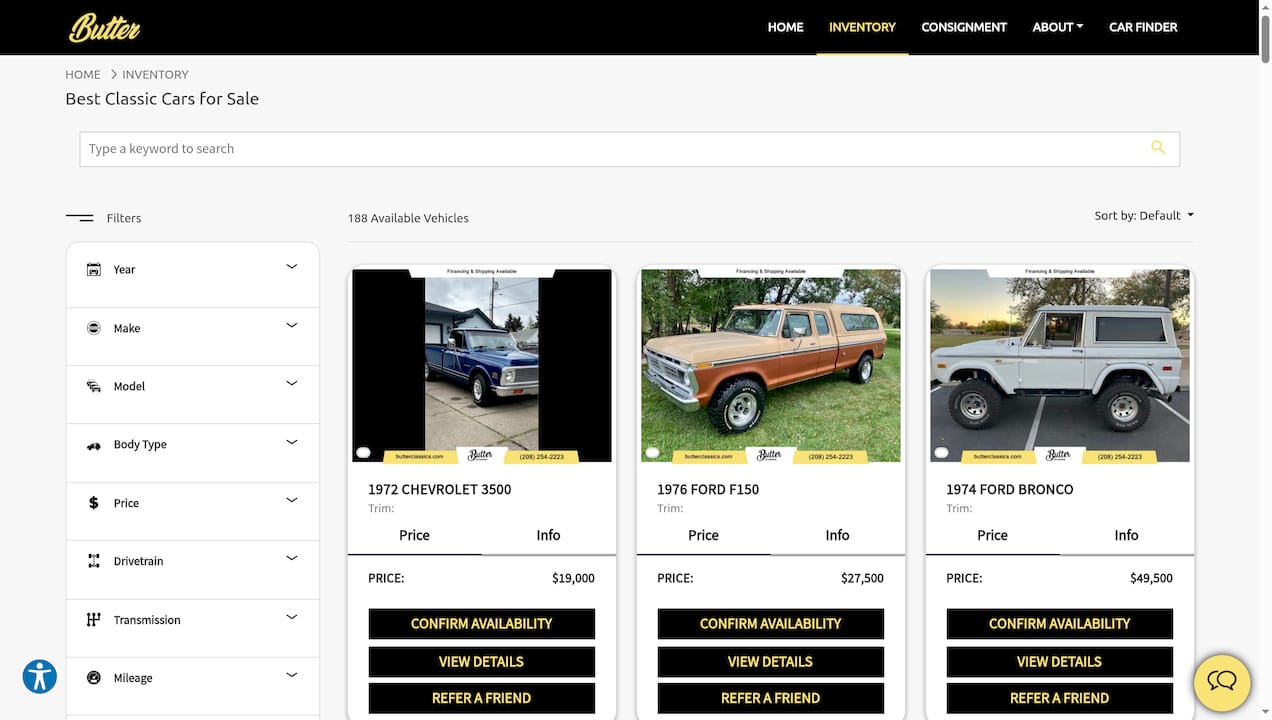
Here's what that looks like in practice:
- Browse the current inventory of classic Ford Mustangs and Broncos by price range and body style to shortlist cars worth a closer look.
- Use the car finder service if you have a specific year, engine, or trim in mind and want help tracking it down.
- Get pre-qualified through classic vehicle financing before you start shopping seriously, so you know your budget going in.
- If you're on the other side of the transaction, the consignment program handles listing, marketing, and buyer coordination for your fastback.
Vehicle listings often include detailed information and photos, and prospective buyers may have options to request additional inspection photos or schedule a test drive. If you've read this far and you're ready to stop browsing and start comparing real cars, check current Mustang fastback inventory and see what's available near your budget today.
Sources
Cross-check anything a seller tells you against Hagerty's valuation tools for current market pricing, Classic & Sports Car's Mustang buyer's guide for inspection fundamentals, and Sports Car Market's Ford Mustang guide for model history and variant hierarchy. Marti Auto Works remains the standard for production-record verification on any first-generation car.
- Ford Mustang buyer’s guide: what to pay and what to look for | Classic & Sports Car
- Ford Mustang buyer's guide - Classics World
- 1968 Ford Mustang Fastback Price Guide And Buying Tips: Valuing the Legendary Pony - Aviator PPG
- Buyer's Guide: Ford Mustang - Sports Car Market
- 1965 Ford Mustang | Buyer's Guide - Hagerty Media
FAQ
Which Year Is the Best to Buy a Mustang Fastback?
For most drivers, 1967 to 1969 V8 fastbacks offer the strongest mix of iconic styling, parts availability, and manageable pricing. Collectors chasing long-term value should instead focus on documented Shelby, Boss, or Cobra Jet variants regardless of exact year, since rarity and originality drive value far more than model year alone.
What Is the Holy Grail of Mustangs?
Among first-generation fastbacks, the true holy grail tier includes the Shelby GT350 and GT500, the Boss 302 and Boss 429, and genuine 428 Cobra Jet cars, especially those with documented Ford production history behind them. These cars combine extreme rarity with racing pedigree, which is why they command the highest prices in the market.
Which Mustangs Should I Stay Away From?
Avoid fastbacks with mismatched VIN and engine numbers, unexplained gaps in ownership history, or visible rust repair around the front suspension towers and floor pans that hasn't been disclosed. Cars advertised as clones or tributes without clear labeling as such are also worth walking away from unless the price already reflects that they aren't original.
Are Fastback Mustangs Rare?
Base six-cylinder fastbacks from common years aren't particularly rare and remain widely available on the market. Performance variants like the Boss 429 and original Shelby GT350/GT500 fastbacks are genuinely scarce, which is exactly why verified production records matter so much when one comes up for sale.
How Much Should a Pre-Purchase Inspection Cost?
A qualified classic-Ford inspector typically charges between $150 and $600, depending on how thorough the inspection is and whether it includes mechanical testing like compression checks. That cost is minor compared to the repair bills a hidden rust or drivetrain problem can create down the line.