
If you want the short answer, here it is: a C8 Stingray is the smartest all-around buy right now, a Z06 or ZR1 is the pick for enthusiasts chasing track performance, and a well-documented C3 or early C4 is where most collectors find real value. Whatever generation you choose, run the VIN through a recall check and schedule a pre-purchase inspection before you hand over a deposit.
TL;DR:
- The C8 Stingray with the Z51 package offers the best overall value for daily driving, but early models may have dual-clutch transmission issues needing attention.
- The C7 Grand Sport is ideal for weekend use, providing Z06 chassis benefits without the higher upkeep of supercharged engines.
- Collectors should focus on C3 models from 1968 to 1972, carefully checking for frame rust and verifying originality, especially on high-value early cars.
- A thorough pre-purchase inspection is critical, including VIN recall checks, service record reviews, and test drives in all modes to avoid costly repairs.
- Buying out-of-state or from a dealer offers more security and curated options, with shipping costs ranging from $1.50 to $2.50 per mile, and should involve escrow and independent inspection to reduce risk.
Table of Contents
- Corvette Buyer's Guide: Which Model Fits Your Goal?
- C8 Deep Dive: Picking the Right Trim and Year
- Generation Summaries: Buying a C1 Through C7
- What to Check Before You Buy (Inspection Checklist)
- What Corvette Ownership Really Costs
- Where to Buy: Dealer, Private Party, or Out-of-State
- Choosing Your Corvette: A Simple Decision Framework
- Author Perspective and How This Guide Comes Together
- Butter Classics: A Different Way to Shop for a Collector Corvette
- Sources
- FAQ
Corvette Buyer's Guide: Which Model Fits Your Goal?
Every Corvette buyer's guide worth reading starts with mission, not model year. A car that's perfect for weekend canyon runs is the wrong car for a daily commute, and a numbers-matching C2 is a different animal from a driver-grade C5 you plan to autocross. Match the car to what you'll actually do with it, then let budget narrow the field.
- Daily driver: C8 Stingray with the Z51 package. Modern safety tech, real trunk space, and a warranty. Watch for early-build dual-clutch transmission complaints in 2020 models.
- Weekend performance car: C7 Grand Sport. Z06 chassis and grip without the supercharged engine's heat and reliability headaches.
- Track day car: C8 Z06 or ZR1. Flat-plane crank Z06 needs disciplined maintenance; the ZR1's twin-turbo output demands a buyer who respects tire and brake wear costs.
- First Corvette on a modest budget: C5, especially 2001 to 2004. Simple LS1/LS6 engines, cheap parts, and forgiving mechanics.
- Collector piece: C3 Stingray, 1968 to 1972, before federal emissions rules softened output. Rust in the frame and birdcage is the deal breaker to check.
- AWD daily/weekend hybrid: C8 E-Ray. Newer platform, less repair history, so lean harder on the inspection.
C8 Deep Dive: Picking the Right Trim and Year
The C8 is where most buyer confusion lives, mainly because Chevrolet built five genuinely different cars on one platform. Comprehensive C8 guides point to the Stingray as the broad, practical entry point, while the Z06 and ZR1 sit in specialist territory built for repeat track use, and the E-Ray brings hybrid all-wheel drive to a lineup that used to be rear-drive only.
Mission by trim:
- Stingray: best all-around value, easiest to insure and maintain.
- Z06: flat-plane V8, higher-strung, better suited to buyers who actually track their car.
- ZR1: twin-turbo, the fastest street Corvette ever built, and the most expensive to own if something breaks.
- E-Ray: AWD traction for wet climates or year-round drivers, at a price premium over Stingray.
- Grand Sport (C8): widebody Z06 styling cues on the naturally aspirated engine, a middle ground for buyers who want the look without Z06 running costs.
Year-by-year matters more on the C8 than most generations because trim availability, recalls, and packages shifted fast. Early 2020 cars carried the most build-quality complaints due to pandemic-disrupted production; 2021 and later cars generally smoothed out. The Z06 didn't arrive until 2023, and the ZR1 followed in 2025, so shopping model year also means shopping which drivetrain even existed yet.
Cost Callout: The dual-clutch transmission is the C8's single biggest financial risk. Shuddering or harsh shifts during a test drive in both Tour and Sport modes can signal a transmission problem, and a full DCT rebuild can run several thousand to tens of thousands of dollars depending on the shop and parts availability.
Trim and option selection matters as much as the trim badge itself. Guides that track buyer regret consistently flag missing MagRide, Z51, or front lift as a recurring complaint after the sale, especially on cars destined for daily use on rough roads or frequent curb approaches. Front lift alone can save a bumper from a driveway scrape, and it's nearly impossible to add later without significant cost.
Generation Summaries: Buying a C1 Through C7
Older Corvettes reward patience and punish shortcuts. Each generation has its own signature weak point, and knowing it before you shop saves you from a costly surprise six months into ownership.
- C1 (1953 to 1962): Fiberglass bodies age well, but frame rust and deteriorated wiring are common. Values run high for early solid-axle cars; expect a serious commitment if you want a numbers-matching example.
- C2 (1963 to 1967): The most collected generation. Split-window 1963 coupes command premiums; check for prior accident repair on the fiberglass and verify VIN plates carefully.
- C3 (1968 to 1982): Huge production run means huge price spread. Chassis rust, weak factory AC, and softened emissions-era power in later years (post 1974) are the big variables. This is the generation most buyers mean when they search for a C3 Corvette buying guide, and it rewards careful shopping.
- C4 (1984 to 1996): Digital dash failures and cooling system issues are common. ZR1 (LT5 engine) versions need a specialist for major work.
- C5 (1997 to 2004): The reliability sweet spot. Watch for rear differential leaks and worn suspension bushings on higher-mileage cars.
- C6 (2005 to 2013): Strong values on Z06 and ZR1 variants. Check head gaskets on early LS7 Z06 engines and confirm dry-sump oil levels were maintained.
- C7 (2014 to 2019): Excellent daily reliability. Grand Sport and Z06 command premiums; verify the supercharger belt and heat exchanger service history on Z06s.
For anything built before the 1980s, confirming VIN and title history takes on extra weight, since reproduction VIN tags and salvage title washing show up more often on high-value early cars.
What to Check Before You Buy (Inspection Checklist)
A pre-purchase inspection is the cheapest insurance policy in the entire buying process. Community-driven buying guides consistently rank it as the highest-value spending before purchase, and skipping it to save a few hundred dollars is how buyers end up with a $15,000 transmission bill.
- Run the VIN through the NHTSA recall lookup to confirm there are no open safety or emissions campaigns.
- Pull service records directly from the seller, not just a vehicle history report. Carfax and similar services are useful but incomplete, and they rarely catch mechanical wear that only a hands-on inspection reveals.
- Schedule a qualified PPI with a shop that knows Corvettes specifically, not a generalist mechanic.
- Drive the car in every mode. On a C8, cycle through Tour and Sport and feel for DCT shudder. On a C3 or C4, run the AC and heat through a full cycle and watch the temperature gauge under load.
- Check for rust and frame integrity on any pre-C5 car, focusing on the frame rails, birdcage, and rear leaf spring mounts.
- Walk away if the seller won't allow an independent inspection, or if service records don't match stated mileage.
Pro Tip: Bring a mechanic's creeper and a flashlight to the test drive, even if a shop is doing the formal PPI later. Five minutes under the car in the driveway will tell you whether it's worth spending money on a full inspection at all.
A solid test-drive checklist covers the basics: cold start behavior, steering play, brake pull, and exhaust smoke color on startup.

What Corvette Ownership Really Costs
The sticker price is the smallest number in the whole equation. Insurance, tires, and maintenance stack up fast, and they vary wildly depending on whether you're driving a garage queen or a track regular.
Ownership Cost Snapshot: DCT repairs on a C8 can run $8,000 to $20,000 in a worst-case rebuild, and that single line item can dwarf a year of routine maintenance on most other generations.
- Insurance: Standard policies work fine for daily-driven C5 through C8 cars. Pre-1990 collector cars often benefit from an agreed-value policy through a specialty insurer, which pays out an agreed sum instead of depreciated market value after a total loss.
- Tires: Performance-oriented trims like the Z06 and ZR1 chew through sticky summer rubber faster than a Stingray on street tires, and track use accelerates that further.
- Maintenance: Fluid changes and brake wear scale with how hard the car is driven. A garage-kept C3 costs far less annually than a track-day C8 Z06.
- Parts availability: Common on C5 through C8; increasingly specialized and pricier the further back you go, especially for trim, glass, and interior pieces on C1 and C2 cars.
Get insurance quotes before you buy, not after. A restored, high-value classic Corvette may need an agreed-value policy that a standard carrier won't offer over the phone.
Where to Buy: Dealer, Private Party, or Out-of-State
Each buying channel trades convenience for cost, and the right one depends on how much legwork you're willing to do yourself.
- Dealers offer financing, warranties, and easier returns if something's wrong, but you'll pay a premium for that convenience.
- Private-party sales usually save money but put the entire inspection burden on you.
- Auctions can surface rare cars, but bidding against emotion is how people overpay.
- Specialty marketplaces built around classic and collector inventory sit in between, offering curated listings with more vehicle history than a random classified ad.
Buying out-of-state opens up far more inventory, and it's a legitimate way to find better pricing on high-demand models if you plan the logistics correctly. Shipping typically runs $1.50 to $2.50 per mile depending on open versus enclosed transport, and flying out to drive the car home yourself is often cheaper for moderate distances. Get a temporary tag from your home state's DMV before the trip, and confirm your state's tax reciprocity rules. Skip any seller-suggested workaround that sounds like it's dodging sales tax. That's a paperwork headache that lands on you, not them.
Using an escrow service and a remote, third-party inspection can mitigate most of the risk when you can't see the car in person.
Choosing Your Corvette: A Simple Decision Framework
Narrowing thousands of listings down to a shortlist takes four decisions, in this order.
- Define your mission. Daily driver, weekend toy, track car, or collector piece each point to a completely different generation and trim.
- Set a total budget, not just a purchase price. Include insurance, tires, and a repair contingency fund, especially on a C8 with DCT risk.
- Pick your generation and spec, then narrow to specific trims like Z51 or Grand Sport that match how you'll actually drive it.
- Verify condition and logistics with a VIN check, service records, and a PPI before you commit to shipping or a road trip.
When you talk to a seller, ask directly why they're selling, whether they have every service record, and whether an independent shop can inspect the car before you buy. A seller who hesitates on any of those three questions is telling you something.
Author Perspective and How This Guide Comes Together
This guide reflects hands-on inspection priorities and current market patterns across every Corvette generation, cross-checked against recall data and community-sourced buying practices. No single source covers every generation equally well, so always verify VIN and service history yourself and treat a PPI as non-negotiable, not optional.
— Tony
Butter Classics: A Different Way to Shop for a Collector Corvette
If the generation summaries above pointed you toward a C1 through C7 rather than a new C8, Butter Classics is built specifically for that search. Instead of scrolling classified ads hoping a seller answers your questions honestly, you get curated listings with detailed specs, high-resolution photos, and the option to pre-qualify for financing before you ever schedule a look.
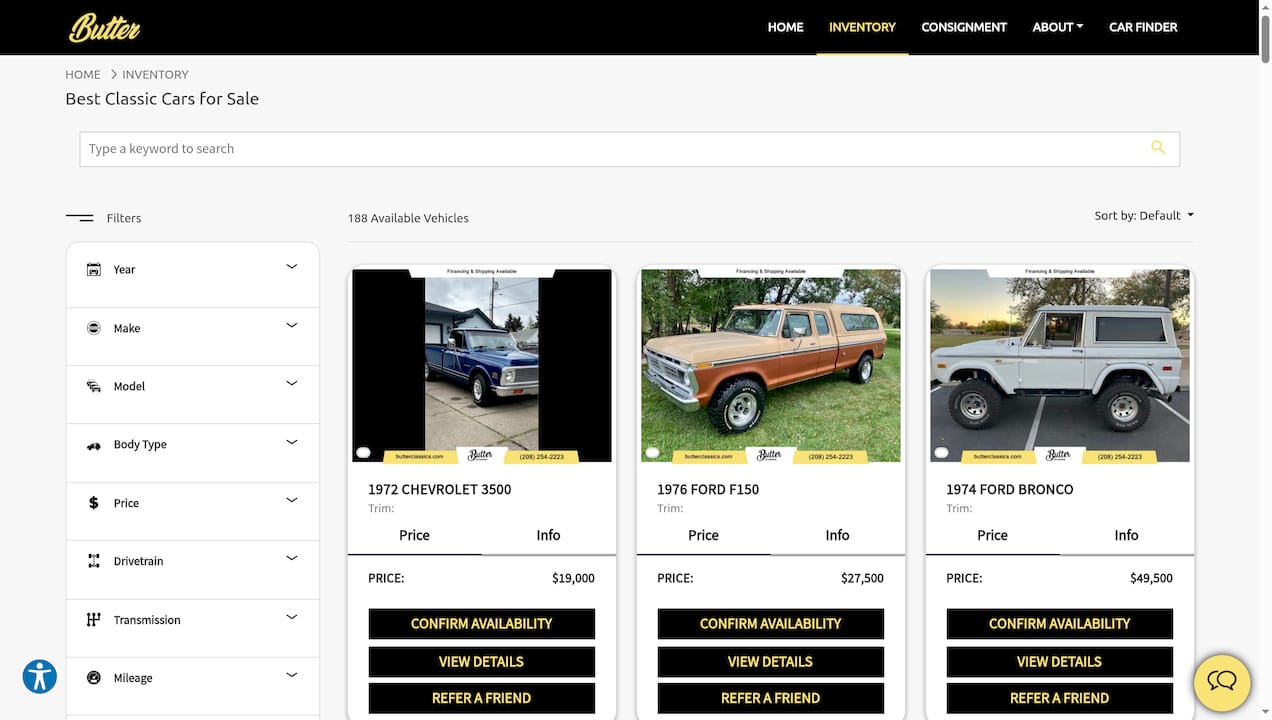
Browse the current Corvette inventory by price or model year, and use the car finder tool if you have a specific spec in mind that isn't listed yet. When something catches your eye, you can schedule a test drive directly instead of chasing down a private seller's calendar. Selling instead of buying? The consignment program handles the listing work for you. Start with the inventory page and see what's available right now.
Sources
Before you sign anything, check the NHTSA recall database by VIN, cross-reference year-specific issues in a detailed C8 guide, and read through community buying practices for real-world red flags. If you're restoring an older battery-dependent classic, period-correct battery options are worth a look too.
- NHTSA vehicle safety resources
- The Ultimate C8 Corvette Buyer's Guide (2020–2026) | ZK's Garage
- 10 Best Used Corvette Buying Practices | Corvetteforum
- The Corvette Cross-Country Guide: How to Buy Out-of-State and Save Thousands in 2026
FAQ
What's the Best Year of Corvette to Buy?
There's no single best year across all generations, but the C5 (2001 to 2004) is widely considered the easiest and cheapest to own for a first-time buyer, while a 2021 or later C8 Stingray avoids the early production hiccups of the 2020 launch year.
Which Corvette Should You Avoid?
Approach any C8 with unresolved DCT shudder symptoms with caution, since a rebuild can cost $8,000 to $20,000, and steer clear of any pre-1990 Corvette with visible frame rust unless you're prepared for a full restoration budget.
What Salary Do You Need to Afford a Corvette?
It depends far more on the generation and trim than any fixed income figure. A used C5 or C6 can fit a modest budget when you account for insurance and maintenance, while a new C8 Z06 or ZR1 demands a household budget that comfortably covers a much higher purchase price plus track-level tire and brake costs.
Are Corvette Sales Declining?
Sales volume naturally fluctuates by model year and trim availability, but demand for well-documented used Corvettes, especially collector-grade C3s and low-mileage C7s, remains strong among buyers using a specialty marketplace to find curated inventory.
Is a Pre-Purchase Inspection Really Necessary?
Yes. A PPI is consistently ranked by experienced Corvette buyers as the single highest-value expense before purchase, and it routinely catches problems that a vehicle history report or a casual test drive would miss entirely.