
The top appreciating classic car models in 2026 fall into three clear groups: blue-chip analog icons (air-cooled Porsche 911s, limited-production Ferraris), late-1990s and 2000s modern classics (Mazda MX-5 NB, Chevrolet C6 Z06, Nissan Skyline GT-R, Toyota MR2), and a short list of budget picks under $30,000 that younger collectors are quietly pushing upward. If you want the short version before we dig in, here it is:
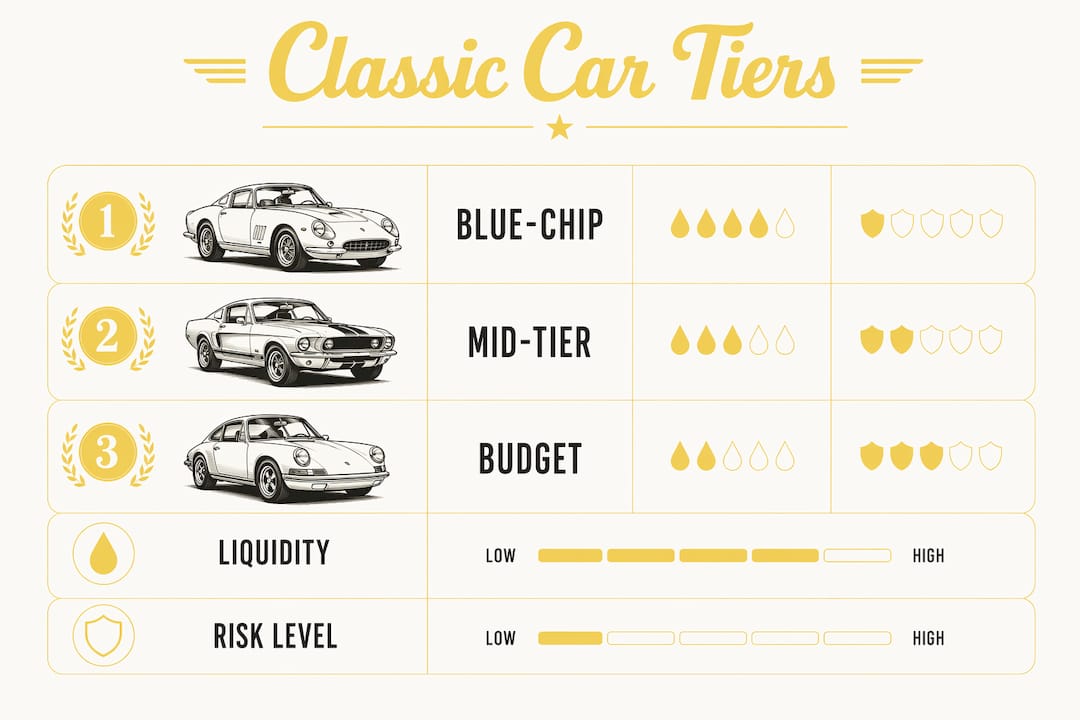
- Blue-chip / high bracket (>$150k): Air-cooled Porsche 911s, Ferrari 360 and 308 examples. Broadest global buyer pools, most liquid, slowest to move but most reliable to hold.
- Mid bracket ($30k–$150k): Chevrolet Corvette C6 Z06, Nissan Skyline GT-R R33/R34 (with US import caveats), Ferrari 360 Modena at the lower end of this range.
- Budget bracket (<$30k): Mazda MX-5 Miata NB (1999–2005), Toyota MR2 Spyder, early Ford Bronco-adjacent trucks, select late-1990s sport compacts.
The global classic car market is a multi-billion dollar industry, and vintage cars have demonstrated an appreciation of about 185% over the previous decade, outpacing art, wine, watches, and the S&P 500 in the same period. That headline number matters, but it masks a key reality: gains in 2026 are concentrating in specific, well-documented models rather than spreading evenly across the market. Scarcity, provenance, and buyer demographics are doing the heavy lifting.
Quick stat: Hagerty's Market Rating started 2026 at 58.28, a 15-year low for that metric, while Mecum's Kissimmee event still posted $445M in total sales. Soft sentiment plus strong auction liquidity is a classic buyer's entry window.
Butterclassics carries inventory across all three brackets and can help you source specific models through its Car Finder service.
Table of Contents
- Which classic car models are the smartest buys in 2026?
- What are the best budget classic cars to buy under $30k in 2026?
- What market trends are shaping classic car values in 2026?
- How do you buy a classic car in 2026 without getting burned?
- How long does classic car appreciation actually take?
- What does the research actually say about classic car investing?
- Key Takeaways
- The honest truth about buying for appreciation in 2026
- Butterclassics makes it easier to find the right car at the right price
- Useful sources and data references for follow-up research
Which classic car models are the smartest buys in 2026?
The models below are chosen for a specific reason: each has a credible, data-backed appreciation thesis, a real buyer pool, and manageable carrying costs relative to its price bracket. These are not random nostalgia picks.
| Model | Why it may appreciate | Price bracket | Liquidity | Running costs | Best use-case |
|---|---|---|---|---|---|
| Air-cooled Porsche 911 (pre-1998) | Scarcity, global cult status, analog purity | High (>$150k) | Blue-chip, very liquid | High (specialist only) | Investment / show |
| Ferrari 360 Modena (1999–2004) | Mid-engine V8 icon, rising demand, accessible Ferrari entry | Mid ($60k–$120k) | Strong, growing | High (scheduled service critical) | Driving + investment |
| Ferrari 308 GTB/GTS | Pininfarina styling, 1970s–80s era, double-digit growth signs | Mid ($45k–$90k) | Good, enthusiast-driven | Moderate-high | Driving + show |
| Chevrolet Corvette C6 Z06 (2006–2013) | LS7 V8, track pedigree, still undervalued vs. performance delivered | Mid ($35k–$65k) | Strong US buyer pool | Moderate | Daily driver + track |
| Mazda MX-5 Miata NB (1999–2005) | Hagerty Bull Market pick, rising nostalgia, low entry cost | Budget ($12k–$22k) | Wide, active | Low | Daily driver + weekend |
| Nissan Skyline GT-R R33/R34 | JDM icon, Hagerty-tracked demand surge, import window opening | Mid–High ($40k–$200k+) | Growing but niche | Moderate-high | Show + investment |
| Toyota MR2 Spyder (2000–2005) | Mid-engine layout, lightweight, undervalued vs. peers | Budget ($8k–$18k) | Moderate | Low-moderate | Weekend driver |
| Ford Bronco (1966–1977 first gen) | Original Bronco demand surging alongside new-model halo effect | Mid–High ($40k–$120k) | Strong, broad | Moderate | Show + weekend |
Air-cooled Porsche 911: the benchmark everything else is measured against
You don't buy an air-cooled 911 expecting a bargain. You buy it because blue-chip classics with true scarcity and global demand are the most liquid investments in the collector car space. Market advisors consistently point to pre-1998 911s as having the broadest international buyer pools, which means you can sell one in Tokyo, London, or Dallas without discounting. Entry costs are high, but so is the floor.
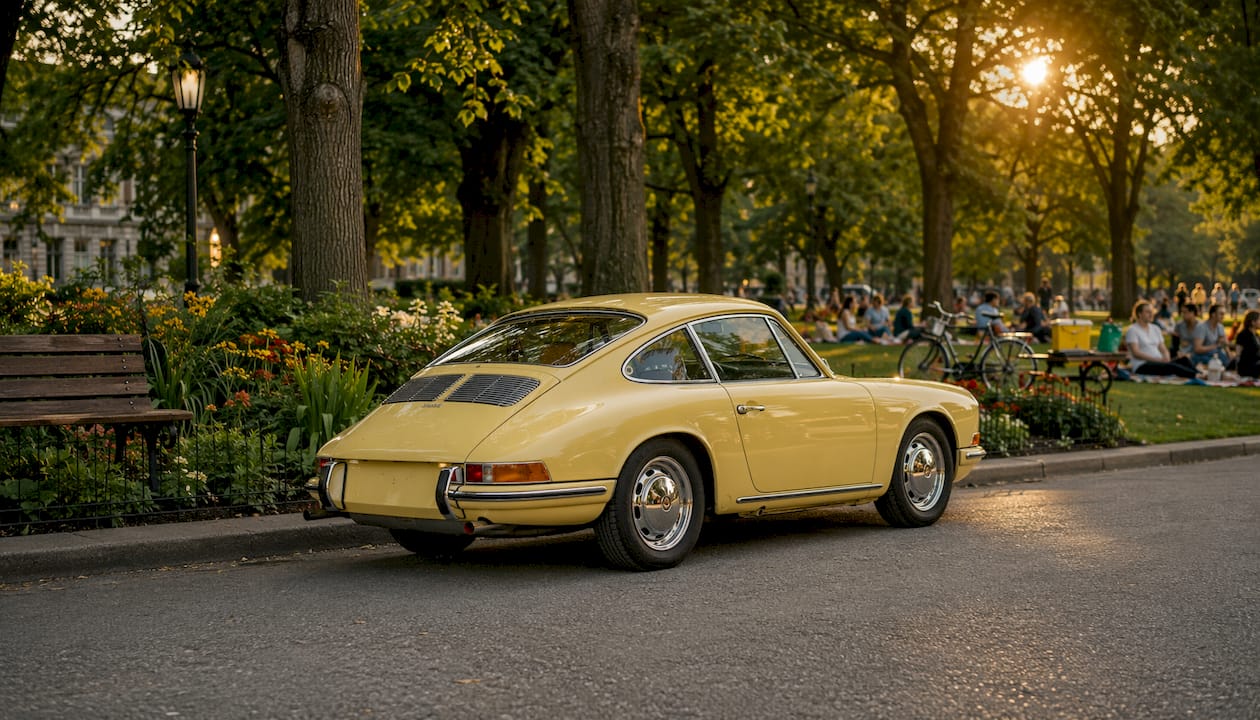
Mazda MX-5 Miata NB (1999–2005)
Hagerty named the NB-generation Miata to its 2026 Bull Market List, with an average valuation of about $16,600. That price point is the whole story. You get a pure, lightweight roadster with a passionate community, rising parts availability, and a buyer pool that skews younger. Condition matters a lot here: rust in the sills and floors is the single biggest red flag on an NB. Target a clean, documented example with original paint and no structural corrosion.
Pro Tip: On any NB Miata, bring a flashlight and probe the rocker panels and floor seams before anything else. Surface rust is cosmetic; structural rust in those areas is a deal-breaker that no restoration budget can make financially sensible at this price point.
Chevrolet Corvette C6 Z06 (2006–2013)
The C6 Z06 is arguably the most undervalued performance car in America right now. The 7.0-liter LS7 V8 produces 505 horsepower from the factory, the chassis is genuinely track-capable, and clean examples still trade in the $35,000–$65,000 range. Compare that to what a comparable Porsche 911 GT3 of the same era costs, and the value gap is obvious. The modern-classic momentum Hagerty tracks for performance cars from this era is starting to close that gap.
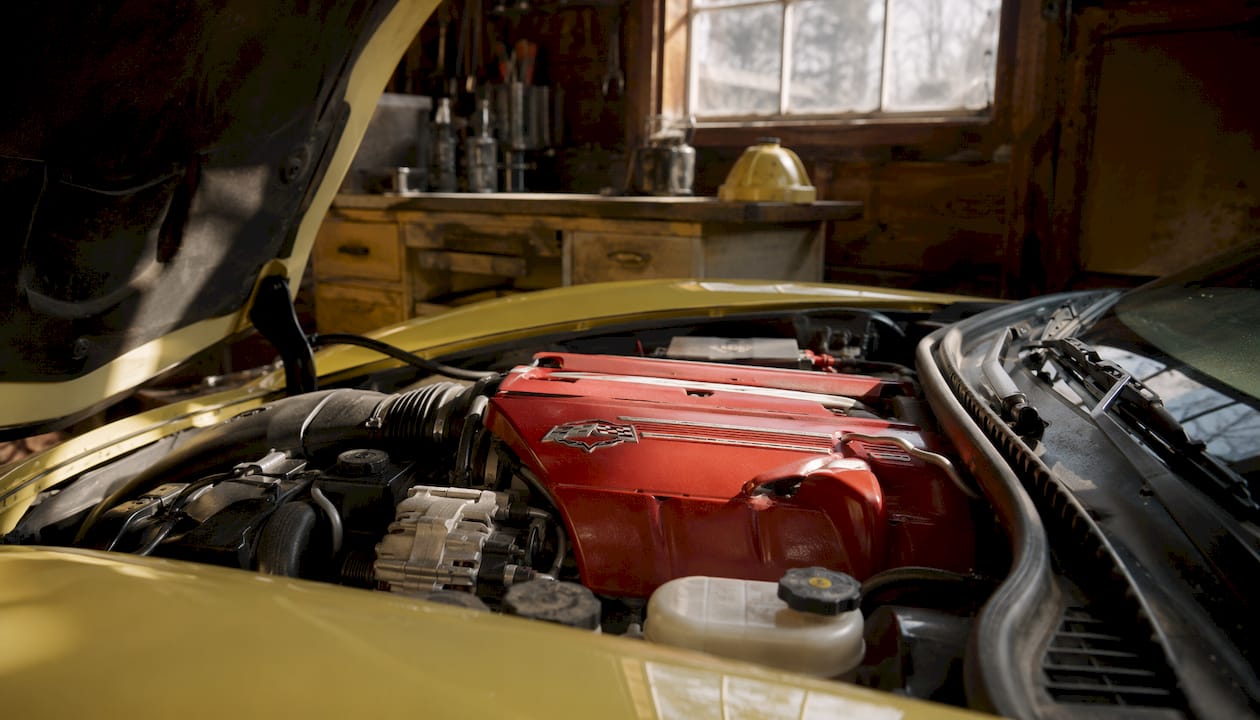
Nissan Skyline GT-R R33/R34: the import window matters
The R34 GT-R turns 25 years old on a rolling basis through the mid-2020s, which means US import eligibility under the 25-year rule is actively opening up. That legal clarity is a structural demand driver. Prices for clean R34 V-Spec examples have already moved well past $100,000, and R33 GT-Rs offer a more accessible entry at $40,000–$70,000 for solid examples. Always verify import compliance documentation and NHTSA conformance paperwork before purchase. An R34 without a clean import history is a liability, not an asset.
Ferrari 360 Modena and 308 GTB
The 360 Modena sits at the accessible end of the Ferrari ladder, with good examples in the $60,000–$90,000 range. The 308 GTB, as Classic Cars Magazine notes, trades between roughly $45,000–$90,000 for decent examples, with the 1970s–1980s Ferrari era showing early signs of double-digit growth. Both reward buyers who prioritize documented service history above everything else. A Ferrari with a complete Maranello service record is worth materially more than an identical car with gaps.
Ford Bronco (first generation, 1966–1977)
The original Bronco's appreciation story got a significant boost from Ford's new-model revival, which introduced a new generation of buyers to the nameplate. Clean first-gen examples in original or sympathetically restored condition are trading in the $40,000–$120,000 range depending on spec and condition. The buyer pool is broad and genuinely enthusiastic, which keeps liquidity healthy.
What are the best budget classic cars to buy under $30k in 2026?
Not every great buy requires a six-figure check. Younger collectors are driving a structural demand shift toward late-1990s and 2000s models, and several of the best opportunities sit well under $30,000.
- Mazda MX-5 Miata NB (1999–2005): $12,000–$22,000 for clean examples. Hagerty Bull Market pick, rising nostalgia, low maintenance. Appreciation thesis: growing enthusiast community, Hagerty-tracked demand. Watch for: structural rust, worn suspension bushings.
- Toyota MR2 Spyder (2000–2005): $8,000–$18,000. Mid-engine layout, lightweight, genuinely fun to drive. Appreciation thesis: mid-engine exotics at this price are rare; values have been quietly climbing. Watch for: soft-top condition, SMT transmission issues on automated-manual cars.
- Honda S2000 (2000–2009): Values have already moved, but clean AP1 examples under $25,000 still exist. The 9,000-rpm F20C engine has a devoted following. Watch for: high-mileage examples with worn VTEC components, accident history.
- Dodge Viper (1992–2002, first gen): Raw, analog, and increasingly collectible. Early examples can still be found in the $25,000–$35,000 range. Hagerty notes that 52% of Dodge Charger owners in a similar muscle-car demographic are Gen X and younger, signaling a generational handoff that benefits American performance cars broadly. Watch for: side-exit exhaust heat damage, frame corrosion.
- Toyota Celica GT-S (2000–2005): Under $15,000 for clean examples. The 2ZZ-GE engine is a gem. Appreciation thesis: rising JDM and sport-compact nostalgia. Watch for: lift-bolt issues on the 2ZZ engine if not properly maintained.
- Subaru WRX STi (2004–2007): Clean, low-mileage examples are approaching $25,000–$30,000. Hagerty specifically tracks the STi as part of the late-1990s/2000s nostalgia wave. Watch for: modified examples with unknown tuning history, blown head gaskets.
- Ford Ranger Splash / early compact trucks (1993–1997): Under $15,000 for solid examples. Appreciation thesis: compact truck nostalgia is real and growing. Watch for: frame rust in northern states, deferred maintenance.
One honest note on budget buys: treat restoration costs as part of the purchase price, not a separate line item. Holding costs including insurance, climate-controlled storage, and maintenance mean your purchase price typically represents only 60–70% of your true acquisition cost. A $15,000 car with $8,000 in needed work and $3,000 in annual carrying costs is a $26,000 commitment in year one. Budget accordingly.
The clearest rule here: buy for passion first. If you love the car and would drive it regardless of what happens to values, a budget pick is a great decision. If you're buying purely to flip in 18 months, the math rarely works at this price point. Check out undervalued classic car opportunities for a deeper dive on emerging picks.
What market trends are shaping classic car values in 2026?
Two forces are running in opposite directions right now, and understanding both helps you time your entry.
The demand shift toward modern classics is structural, not cyclical. Late Gen X and Millennial buyers, now in their peak earning years, are chasing the cars they grew up with. Hagerty's data shows rising nostalgia for the NSX, Supra, Skyline GT-R, WRX STi, and similar 1990s–2000s models. Some mainstream sport compacts have doubled or near-doubled in value over recent years. This is not a fad; it's a demographic wave.
The broader market, however, is cooling. Hagerty's Market Rating of 58.28 at the start of 2026 is a 15-year low for that index. That softness is actually good news for buyers: it means you can negotiate, take your time, and avoid the panic-buying that inflated prices in 2021–2022.
| Segment | Trend in 2026 | Key driver | Liquidity |
|---|---|---|---|
| Air-cooled Porsche 911 | Stable to rising | Global scarcity, analog appeal | Very high |
| JDM icons (GT-R, Supra, NSX) | Rising, some volatility | Import window + Millennial nostalgia | Growing |
| American muscle | Flat to modest growth | Aging buyer base, Gen X interest | Moderate |
| Modern classics (1990s–2000s sport compacts) | Rising | Younger buyers, affordability | Moderate-high |
| Ferrari / Italian exotics | Rising in select models | Global collector demand, scarcity | High for documented cars |
| Early SUVs / trucks (Bronco, FJ40) | Rising | Lifestyle appeal, broad buyer base | Strong |
Auction data reinforces the picture. Mecum's Kissimmee 2026 event posted $445M in total sales, and combined Amelia Island and Miami auction results reached $255.9M. Those are not the numbers of a dead market. They tell you that serious buyers are still writing checks; they're just being more selective. Read the classic car market trends checklist for a full breakdown of 2026 valuation signals.
How do you buy a classic car in 2026 without getting burned?
The checklist below works whether you're at an auction, browsing a private listing, or walking a dealer lot. Use it before you make any offer.
- Verify the title chain. Confirm the seller holds a clean title in their name. Check for liens, salvage brands, or rebuilt titles. A salvage-branded classic is nearly impossible to insure at agreed value and will sell at a steep discount when you exit.
- Confirm matching numbers. For investment-grade purchases, the VIN on the door jamb, dashboard, and frame must match the engine and transmission stampings documented in the original build sheet or window sticker. Matching numbers and documented history are the single biggest value multiplier within any model.
- Review the service history file. A complete history file converts a speculative car into a sellable, blue-chip-quality example. Gaps in service records are negotiating leverage, not a reason to walk away automatically, but they do lower the ceiling on what you should pay.
- Order a pre-purchase inspection (PPI). Never skip this. Use a marque-specific specialist, not a general mechanic. For a Corvette, find a Corvette specialist. For a Ferrari, use a Ferrari-trained independent shop. Budget $200–$500 for the inspection; it's the cheapest insurance you'll buy.
- Check for structural rust. Probe the frame rails, floor pans, rocker panels, and trunk floor. Surface oxidation is cosmetic. Rust in structural areas is a reason to walk. No restoration budget makes structural rust financially sensible on a sub-$50,000 car.
- Look for undocumented modifications. Engine swaps, suspension changes, and brake upgrades without paperwork reduce value and complicate insurance. Ask for receipts on every modification.
- Verify auction claims independently. If a seller claims a car was "sold at Barrett-Jackson" or "featured at Pebble Beach," ask for the lot number and verify it. Auction provenance is valuable; claimed auction provenance without documentation is not.
- Budget total acquisition cost, not just purchase price. Factor in transport, PPI, immediate mechanical needs, insurance, and first-year storage. The purchase price is typically 60–70% of your real first-year cost.
Pro Tip: Before any viewing, pull the car's history on a service like Carfax or the NICB's VINCheck to screen for accident reports, odometer rollbacks, and title issues. It takes five minutes and can save you from a very expensive mistake.
For a deeper look at what separates a collectible from a commodity, the key factors that make a car collectible are worth reading before you start shopping.
How long does classic car appreciation actually take?
Realistic timelines vary significantly by model type, and confusing them is one of the most common mistakes new collectors make.
| Model group | Likely appreciation window | Liquidity at exit | Risk level |
|---|---|---|---|
| Blue-chip (air-cooled 911, limited Ferrari) | 5–10+ years for meaningful gains | Very high via major auction | Low-moderate |
| Mid-tier modern classics (C6 Z06, 360 Modena) | 3–7 years | Good via specialist dealer or auction | Moderate |
| JDM icons (GT-R, Supra, NSX) | 2–5 years, some already moving | Growing, auction or enthusiast market | Moderate-high |
| Budget sport compacts (NB Miata, MR2) | 3–8 years | Moderate, enthusiast marketplace | Higher (thin margins) |
| Early trucks / SUVs (Bronco, FJ40) | 3–6 years | Strong, broad buyer base | Moderate |
The 0–2 year window is rarely where appreciation happens unless you bought at the exact bottom of a cycle. The collector car market rewards patience; short-term flips are the exception, not the rule.
Selling channels matter as much as timing. Major auctions (Mecum, Barrett-Jackson, RM Sotheby's) deliver the highest realized prices for blue-chip cars but charge seller's premiums of 5–10%. Specialist consignment dealers like Butterclassics offer a more curated audience and lower friction for mid-tier models. Private sales through enthusiast forums and platforms like Bring a Trailer can work well for budget picks with strong documentation, though they require more seller effort.
Storage and insurance are the carrying costs that quietly erode returns. Climate-controlled storage runs $150–$400 per month depending on your market. Agreed-value classic car insurance typically costs $500–$1,500 annually for a $50,000 car, depending on mileage limits and the insurer. Factor both into your hold-period math before you buy.
What does the research actually say about classic car investing?
The data picture for 2026 is nuanced but actionable. Here's what the key sources show.
| Source | Key finding | What it means for buyers |
|---|---|---|
| Haulin.ai / market reports | strong appreciation over the previous decade for vintage cars | Long-term returns are real but require patience and selectivity |
| Hagerty Market Rating | 58.28 at start of 2026 (15-year low) | Soft sentiment = buyer's market for entry |
| Mecum Kissimmee 2026 | $445M total sales | Liquidity is healthy at the top of the market |
| Passion Asset Advisory | Gains concentrated in scarce, pedigree-rich models | Provenance and matching numbers are non-negotiable for premium pricing |
| Progressive / financial advisors | Purchase price = ~60–70% of true acquisition cost | Budget holding costs before you commit |
For price tracking, use Hagerty's valuation tool and Classic.com for realized auction prices. Both give you a triangulated view of what cars are actually selling for versus what sellers are asking. Knight Frank's annual Luxury Investment Index provides useful macro context on how collector cars compare to other passion assets. For a direct comparison of classic cars against financial markets, the classic car vs. stock market returns guide breaks down the numbers clearly.
Key Takeaways
The single most important principle for 2026: appreciation in the classic car market is concentrating in scarce, well-documented models with clear buyer pools, not spreading evenly across all vintage vehicles.
| Point | Details |
|---|---|
| Target three brackets | Blue-chip (>$150k), mid-tier ($30k–$150k), and budget (<$30k) each offer real upside with different risk profiles. |
| Provenance multiplies value | Matching numbers and a complete history file are the biggest single value driver within any model. |
| Budget total acquisition cost | Purchase price typically represents only 60–70% of true first-year cost once holding costs are included. |
| Entry timing is favorable | Hagerty's Market Rating at a 15-year low in early 2026 signals a buyer's market for selective entry. |
| Butterclassics for sourcing | Butterclassics carries inventory across all three price brackets and offers a Car Finder service for targeted model searches. |
The honest truth about buying for appreciation in 2026
There's a version of classic car investing that looks great on paper and falls apart in practice. You buy a car because someone told you it would double in five years, you store it in a garage you're paying $300 a month for, and three years later you're selling it for roughly what you paid because the buyer pool for that specific model turned out to be thinner than the forums suggested.
The buyers who actually do well prioritize in this order: liquidity first, then provenance, then condition. Liquidity means you can sell the car without waiting two years for the right buyer. Provenance means the car's history is documented and verifiable. Condition means you're not buying someone else's deferred maintenance problem.
Setting a buy-price ceiling before you start looking is not optional. Decide the maximum you'll pay for a specific model in a specific condition grade, then stick to it. Auction environments are designed to make you bid past your ceiling. Private sellers are often emotionally attached to a number that doesn't reflect the market. Your ceiling is your protection against both.
On inspections: send your PPI checklist to the specialist before the appointment, not after. A good marque specialist will know exactly which failure points to prioritize. On a C6 Z06, that means checking the dry-sump oil system and the LS7's known valve guide wear. On an NB Miata, it's the floor pans and the power steering rack. On an R34 GT-R, it's verifying the import documentation is airtight before anything mechanical.
One practical example worth noting: a buyer who passed on a clean NB Miata at $14,000 because they wanted to negotiate to $12,000 watched the same car sell to someone else and reappear at auction 18 months later at $19,500. The $2,000 they tried to save cost them $5,500 in appreciation. When the provenance is right and the price is fair, move.
Butterclassics makes it easier to find the right car at the right price
Reading a guide like this is step one. Actually finding a clean, documented example of the model you want is where most buyers get stuck. Butterclassics specializes in exactly that: a curated inventory of classic and vintage vehicles spanning muscle cars, Corvettes, Broncos, trucks, and more, with detailed specs, high-quality photos, and transparent pricing.
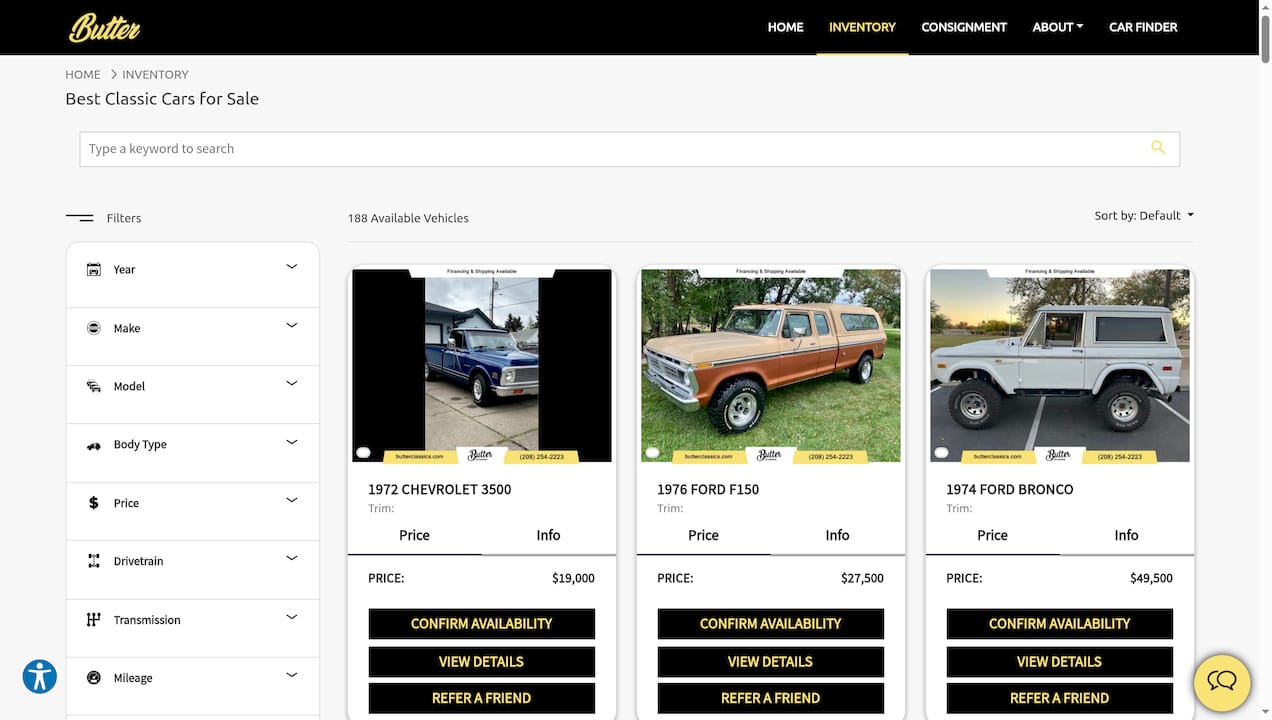
If the specific model you're targeting isn't in the current inventory, the Car Finder service lets you commission a targeted search. Tell us the make, model, year range, condition grade, and budget, and we'll locate it. You can also schedule a test drive on any listed vehicle, get financing pre-qualification before you commit, or consign a car you're ready to sell. Every listing is handled with the kind of care that makes the process smooth as butter, from first inquiry to keys in hand.
Ready to start? Browse the current inventory or submit a Car Finder request today.
Useful sources and data references for follow-up research
These are the sources worth bookmarking before you bid or buy.
- Hagerty's 2026 Smart Buys and Market Commentary: Best for model-specific appreciation picks, the Hagerty Market Rating, and auction liquidity data. Check this before any purchase.
- Hagerty Valuation Tool: Real-time price guides by condition grade for thousands of models. Use it to set your buy-price ceiling and verify asking prices.
- Classic.com: Realized auction prices aggregated across major houses. The best tool for triangulating what cars actually sell for versus what sellers ask.
- Passion Asset Advisory — 2026 Investment Analysis: Expert commentary on provenance, matching numbers, and which segments are gaining versus cooling.
- Progressive — Are Classic Cars a Good Investment?: Honest breakdown of holding costs, risk profile, and realistic return expectations. Required reading before your first purchase.
- Haulin.ai — Best Vintage Cars Market Overview: Market size context and decade-long appreciation data for the collector car asset class.
- Butterclassics Blog — Classic Car Market Trends 2026: Valuation forecasts and collector sentiment specific to 2026, with a buyer's checklist.
- Butterclassics Blog — What Makes a Car Investment Worthy: Practical criteria for evaluating any model as an investment-grade purchase.
- Butterclassics Blog — Classic Car Market Index Explained: How to read index metrics like the Hagerty Market Rating and what they signal for entry timing.
- Hawksaloft — Hagerty's 2026 Bull Market List: Full coverage of Hagerty's 11 picks for 2026, including the Mazda MX-5, Dodge Charger, and Porsche Carrera GT.