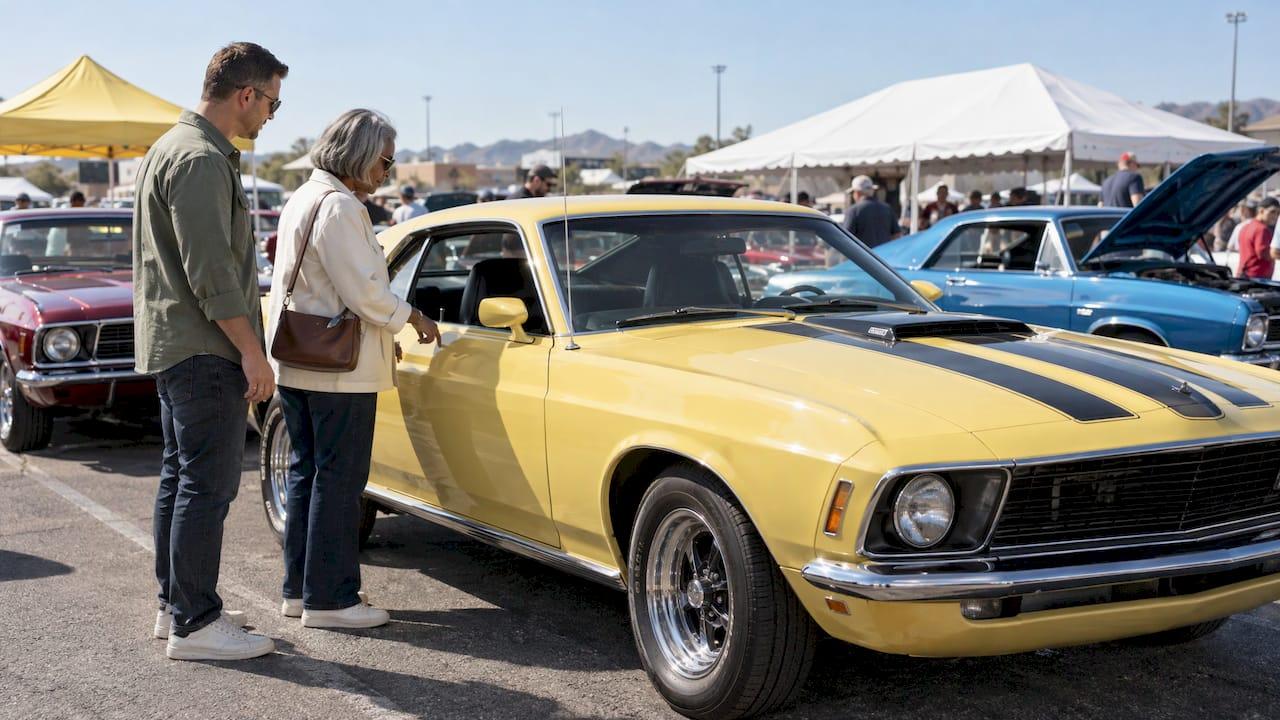
The best states to sell a classic car are the ones with the most collectors, the friendliest paperwork and the right climate for your type of car: California, Florida, Texas, Arizona, Georgia and Pennsylvania lead on those counts. But here's the twist most sellers miss. Your car doesn't have to live in a hot market to sell in one. A listing reaches buyers in every state, so the real question is which state's rules and buyers matter for your car, and how to sell without leaving money behind.
We'll walk through where the buyers are, what changes from state to state (smog, inspections, taxes, title), and how to pick the sales route that fits your car.
TL;DR
- Hagerty's data points to California, Florida, Texas, Washington and Georgia as the top five states for classic ownership, so buyer pools run deep there.
- Arizona's winter auction week is the biggest single-state event on the calendar, but online sales now move more volume than live auctions.
- Rules matter more than geography at closing: smog, inspections and title handling differ by state, and the buyer's home state usually decides tax.
- You can sell nationwide from any state. Good photos, a clean title and a clear price matter more than your zip code.
- If you'd rather skip the hassle, consignment puts a nationwide buyer pool behind your car without you handling every call.
Table of Contents
- Where the buyers are: the states with the deepest collector pools
- Arizona: the one state that sets the market's mood
- Why selling online beats selling in one state
- Rules that change from state to state
- How to pick the right place to sell your car
- Our perspective
- Let us help you sell
- FAQ
- Sources
Where the buyers are: the states with the deepest collector pools
Start with where classic owners actually live. A Hagerty market sheet on pre-1981 classics lists California, Florida, Texas, Washington and Georgia as the top five states for ownership. It sizes the U.S. market for these cars at 10 to 12 million vehicles. More owners means more people who already love the hobby, know what a fair price looks like and might want a second (or third) car.
Club culture is another signal. A 2023 RotoWire summary of collector-car states counted 72 classic-car clubs in California, 52 in Pennsylvania, 47 in Florida, and 17 each in Texas and Arizona. Clubs are where word of mouth travels. A well-presented car in a club-heavy state can get noticed fast.

The same report also showed that taste varies by state. California's most commonly listed classic was the 1967 Ford Mustang. Florida, New York and Texas each leaned toward the 1969 Dodge Charger, and Arizona favored the 1970 Ford Mustang Mach 1. If you own one of those, the state tilt is a nice bonus. If you own something else, don't worry. Those are listing trends, not limits on who can buy your car.
A quick state-by-state read
| State | Why sellers look at it | What to know |
|---|---|---|
| California | Largest ownership base and the most clubs in the RotoWire count | Smog rules apply to many sales; 1975 and older gasoline cars are exempt |
| Florida | Top-five ownership state, big Charger and muscle appetite | No statewide safety inspection |
| Texas | Top-five ownership state with strong truck and muscle demand | Annual emissions inspections for newer gasoline vehicles, not for most true classics |
| Arizona | Home of the January auction week, dry climate that keeps cars rust-free | Localized emissions testing in the Phoenix and Tucson areas |
| Georgia | Top-five ownership state | Emissions testing in metro Atlanta |
| Pennsylvania | Second in the club count | Strong enthusiast network in the Northeast |
Arizona: the one state that sets the market's mood
Every January, Arizona hosts a run of collector auctions that gets the whole hobby talking. Hagerty's 2024 results report counted 2,724 cars offered over seven days, 2,375 sold and $244.8 million in total sales, with an average sale of $103,083. The sell-through rate came in at 87%.
Individual houses can do even better. One independent write-up of a Scottsdale sale in January 2022 recorded 85 of 89 cars sold, a 95.5% sell-through rate, with a median sale price of $95,200.
What does that mean for you? Arizona is great if your car is a high-value, auction-ready piece and you're ready to commit to a consignor's timeline and fees. It's less useful if your car is a solid driver in the mid-five figures, where a lot of the buyers you want aren't standing in a tent in Scottsdale. For those cars, a nationwide online listing often does the same job with far less travel and no auction-day gamble.
Why selling online beats selling in one state
The market has been moving online for years. Hagerty's 2025 market report said online auctions sold more than 50,000 collector vehicles a year, up 6% year over year, while live-auction volume stayed around 21,000. It also reported that online auction sales passed live-auction sales by about $100 million in 2024, and that the online lead doubled in 2025.
The takeaway is simple: buyers are shopping from their couches. A seller in Ohio can reach a buyer in Texas, and the car ships. So the "best state" matters less for finding a buyer and more for the paperwork and presentation around the sale.
If you're weighing formats, our guides on where to sell classic cars and consignment versus auction lay out fees and timelines side by side.
Rules that change from state to state
This is where your home state can help or slow you down. Always confirm details with your state's motor vehicle agency before listing, because rules change.
Smog and emissions
California is the one most sellers ask about. According to Car Talk's guide to selling in California, vehicles from model year 1975 or older are exempt from the smog tests required for sale. That's a real perk for owners of true early classics. If your car is a 1976 or later gasoline model, plan for smog paperwork before you list.
Outside California, a 2026 inspection comparison reported no statewide safety inspection in Florida, Arizona, Georgia, Minnesota, Montana and many other states. Emissions testing is more local: it showed up in places like Phoenix and Tucson, metro Atlanta, Clark and Washoe counties in Nevada, and Bernalillo County in New Mexico. The same comparison noted that New York requires annual inspections, and that Texas requires annual emissions inspections for gasoline vehicles older than two years after repealing safety inspections in 2025.
Practical rule: if your county tests emissions, ask your DMV whether your classic qualifies for an age or historic-plate exemption before a buyer asks.

Title, tax and who pays
On a private sale, the buyer generally pays the state's sales tax or fee when titling and registering the car, not the seller. That means your state's tax rate rarely cuts into your sale price, but the buyer's does affect what they can afford. A buyer in a no-tax state keeps more in their pocket, which is one reason some collectors shop across state lines. Our guide on the best states to buy a classic car covers that side of the table.
What you do control is the paperwork. Get these ready before the first call:
- A clean, signed-over title in your name, with no lien. If a lender holds the title, get the payoff and release process sorted first.
- A bill of sale with the VIN, price, date and both parties' details.
- Odometer disclosure where your state requires it.
- Any service records, restoration receipts and original documents.
A car with a tidy paper trail sells faster and holds its price better.
Climate and condition
Where a car has lived shapes how buyers see it. Dry-state cars from Arizona, California and Nevada often attract buyers who want less rust. Cars from salt-belt states can still sell well with strong underbody photos and honest descriptions.
Sun is its own issue. If your car has spent years in strong UV, paint and trim condition will be the first thing buyers study. There's a good explainer on how SoCal sun damages car paint, and it's worth reading if your classic has lived in the Southwest. A good detail before photos can make that story much better.
How to pick the right place to sell your car
There's no single best state, but there is a best route for each car. Ask yourself three things.
How rare and valuable is the car? Six-figure, headline cars suit major auctions, where a crowd and a stage add excitement. Everyday collectibles, like a clean pickup, a Bronco or a Mustang, usually do well in a curated online marketplace where buyers have time to read, ask questions and compare.
How involved do you want to be? Selling privately means fielding calls, tire-kickers and test-drive requests. Consignment hands that to someone else.
How fast do you need the money? Auctions and consignment have different payment timelines. Our guide on consignment or auction walks through what to expect.
Before choosing, set a realistic price. Our 2026 pricing guide for classic resale shows how to build a number you can defend. And if you're curious about timing, the market trends checklist helps you read the market before you list.
Presentation that travels across state lines
When buyers can't see your car in person, your listing is the showroom. A few habits that help:
- Shoot in daylight: exterior from all angles, interior, engine bay, undercarriage, trunk and VIN plate.
- Show the flaws. A chip, a crack or a worn seat shown honestly builds trust and cuts down on later back-and-forth.
- List the specifics: numbers-matching or not, mileage, recent work, what's original.
- Be clear on how the car can be delivered or picked up.
Our perspective
We hear this question a lot, and our answer is a friendly one: don't pack your car off to a different state just to chase a better market. The buyers who love your car are probably already looking for it, wherever they live.
What matters is reach and trust. A nationwide inventory, not tied to a single lot, puts your car in front of collectors in California, Florida, Texas and everywhere in between. Detailed listings with plenty of photos and specs let those buyers feel confident before they ever visit. And our Butter Certified approach and Worry Free Guarantee are designed to make the whole thing smooth as butter for the person on the other end.
If you'd rather not run the sale yourself, consignment is built for that. We help with the listing and the buyer conversations, and we can work with financing pre-qualification and delivery or pickup, so you can keep your weekends.
Tony
Let us help you sell
If you're ready to sell without driving across the country or hosting strangers in your driveway, consign your vehicle with Butter Classics. We show your car to a nationwide audience of enthusiasts and collectors, with detailed listings and plenty of photos. Buyers can request quotes, schedule test drives and pre-qualify for financing, which helps serious buyers move forward.
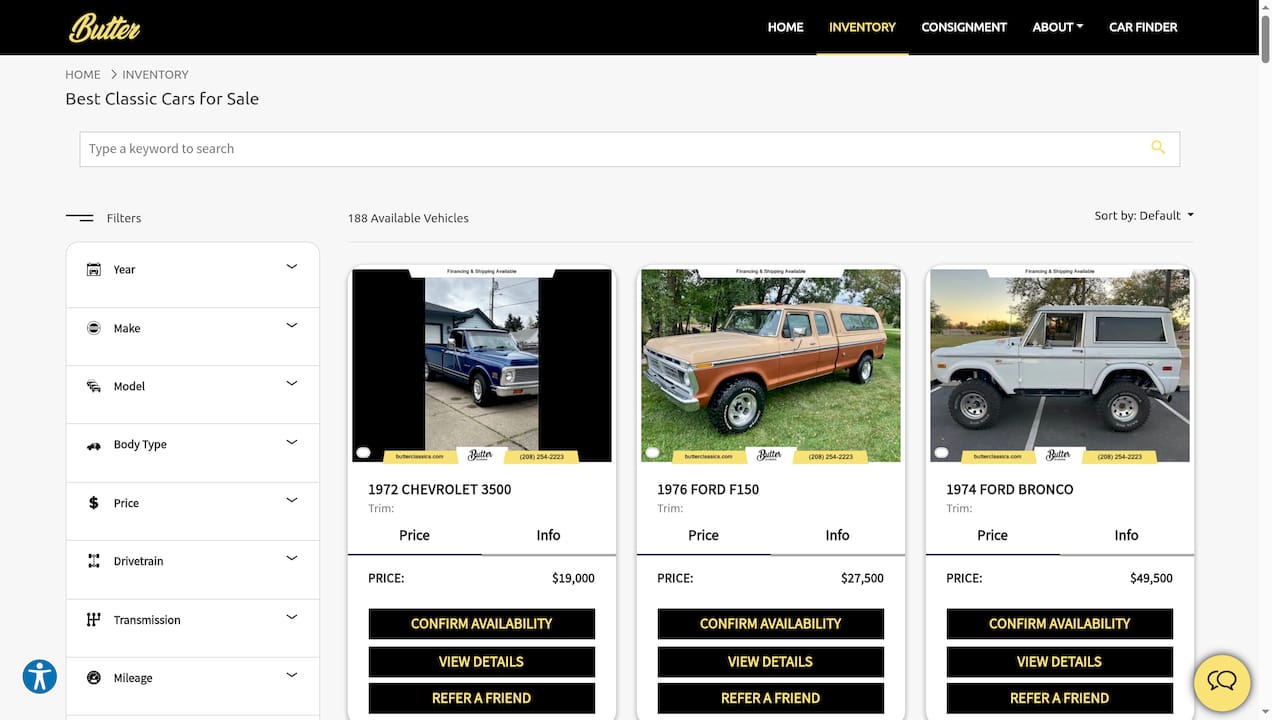
Want to see how we present cars first? Browse our inventory and imagine yours alongside them.
FAQ
What is the best state to sell a classic car?
There's no single winner, but California, Florida, Texas, Washington and Georgia lead in classic ownership according to Hagerty, so buyer pools there are deep. Arizona stands out for its January auction week. For most cars, though, selling online lets you reach all of those states at once.
Does it matter what state I live in when I sell?
It matters mostly for paperwork. Smog rules, inspections and title handling vary by state, and California exempts model year 1975 and older cars from the smog tests required for sale. Check your state's motor vehicle agency before listing so there are no surprises at closing.
Who pays sales tax on a private classic car sale?
Generally the buyer, who pays when titling and registering the car in their home state. Rates differ, so buyers sometimes compare states. As the seller, focus on a clean title and a clear bill of sale, and have the buyer confirm their state's rules.
Is it better to sell a classic car at auction or online?
Both work, depending on the car. Hagerty reports online auctions now sell more than 50,000 collector vehicles a year, against roughly 21,000 at live events. Top-tier cars may shine on a live stage, while many everyday collectibles do well online or on consignment.
Sources
- Hagerty: Pre-1981 Classics market sheet
- RotoWire: States With the Most Collector Cars
- Hagerty: Arizona Auction Results
- Rick Carey: Bonhams Scottsdale, January 27, 2022
- Hagerty: By the Numbers, The Collector Car Market in 2025
- Car Talk: How to Sell a Car in California
- World Population Review: States Without Vehicle Inspection
- PPF Pros: Why SoCal Sun Destroys Car Paint