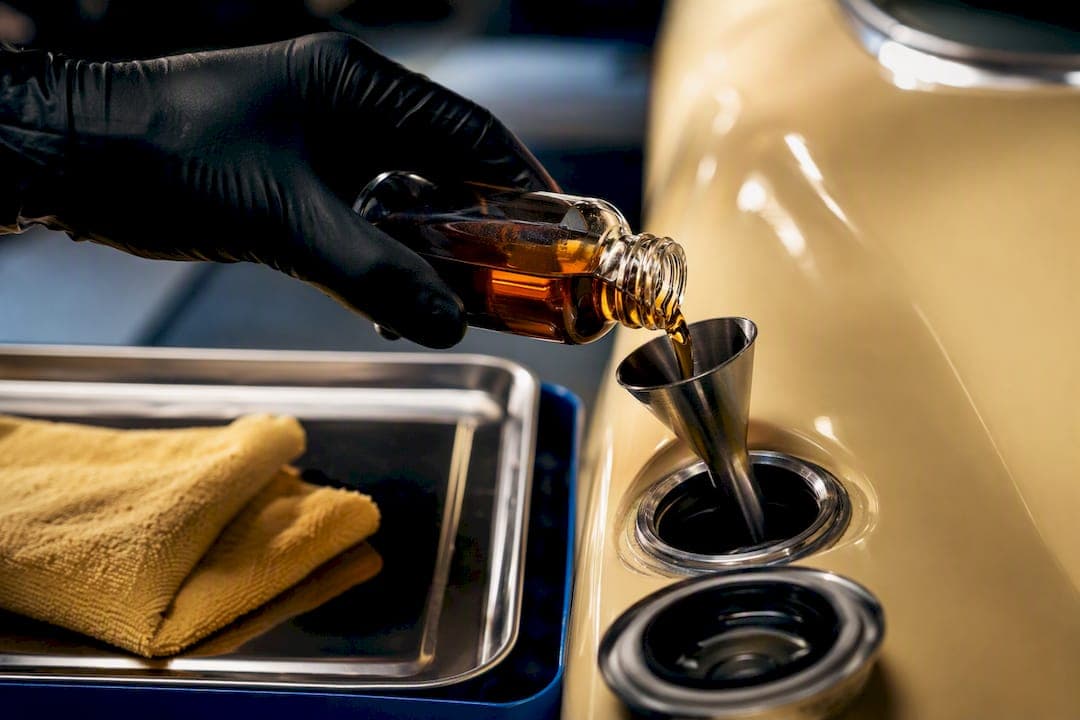
Use a reputable bottled lead substitute at label dosing if your engine still has its original, non-hardened valve seats and unknown head history. If a mechanic has confirmed hardened seat inserts or a rebuilt top end, you likely don't need one.
TL;DR:
- Lead substitutes with MMT provide the most effective protection and often boost octane in high-compression engines, especially if the engine has factory soft valve seats.
- Owners should verify valve seat condition through service records, machinist inspections, or performance signs such as reduced compression or rough idling before using a substitute.
- Active ingredients must be listed on the product label; avoid brands that do not specify their chemistry or dosing instructions clearly.
- Most lead substitutes are used at a ratio of approximately 1:1,000, with precise measurement and consistent dosing recommended to maintain valve seat protection.
- Using a lead substitute is unnecessary if the engine has hardened seats from factory or recent rebuilds, but essential for original soft-seat heads to prevent wear.
Table of Contents
- What Is a Lead Substitute for Classic Cars?
- Do You Actually Need a Lead Substitute?
- MMT, Sodium, Phosphorus, and Pellets: What's Actually in the Bottle
- How to Dose and Use a Bottled Lead Substitute
- Risks, Compatibility, and Myths Worth Ignoring
- Shopping Guide: Lead Substitute Products Worth Considering
- Preserving Originality vs. Modifying the Engine
- An Author's Take on Playing It Safe
- Find a Classic Car With Documented Head Work Already Done
- Where to Verify the Details
- Sources
- FAQ
What Is a Lead Substitute for Classic Cars?
A lead substitute is a fuel additive that steps in for the job leaded gasoline used to do: cushioning the contact between the valve and the valve seat every time the valve slams shut, thousands of times a minute. Old formulations relied on tetraethyl lead to leave a soft, sacrificial film on those surfaces. Modern lead substitutes use different chemistry to build a similar protective layer that prevents microwelding and valve-seat recession, the wear pattern that eats away at seats not designed to run without lead.
This isn't a nostalgia product. In the United States, leaded gasoline for on-road use was fully phased out by the EPA by 1996, which means every classic still on the road today is drinking fuel its original engineers never designed for. Lead substitutes exist to close that gap.

Do You Actually Need a Lead Substitute?
Not every classic needs one, and that's worth figuring out before you spend a dime. If your engine still wears its factory heads, has never been rebuilt, and came from an era when manufacturers cut costs with soft cast-iron valve seats, high-compression driving on unleaded fuel puts real wear on those surfaces over time; for sourcing specialized components, consider visiting Supercars to find the right restoration parts for your classic engine.
You're probably in the clear if a machine shop has already installed hardened valve seat inserts, whether during a full rebuild or a top-end refresh. Newer classics built closer to the phase-out years sometimes shipped with hardened seats from the factory, too.
Three checks settle the question fast:
- Pull the service records and look for any mention of valve, head, or seat work.
- Ask a machinist to inspect the heads directly if the history is murky.
- Watch for warning signs during ownership, like a gradual loss of compression or rougher idle over months of driving.
MMT, Sodium, Phosphorus, and Pellets: What's Actually in the Bottle
Not all lead substitutes work the same way, and the active ingredient on the label tells you almost everything you need to know.
-
MMT (methylcyclopentadienyl manganese tricarbonyl): This manganese compound comes closest to replicating lead's original job. It builds a durable film on the valve face and often delivers a modest octane bump, which matters for higher-compression classic engines.
-
Sodium and phosphorus compounds: These have a longer track record as substitutes and remain common active ingredients across the category, though performance varies more by brand than with MMT-based products.
-
Iron-based additives: Less common today, these largely fill the same sacrificial-layer role with mixed results reported by owners.
-
Metal pellets dropped in the tank: Skip these. They don't dissolve into the fuel or reach the valve seats in any meaningful way, and most owners who try them report no measurable protection.
The takeaway for shopping: buy a product that names its active chemistry on the bottle. If a label just says "lead substitute" with no ingredient list or dosing chart, that's a red flag, not a bargain.
How to Dose and Use a Bottled Lead Substitute
Dosing is where a lot of owners get sloppy, and it's the easiest part to get right if you follow the label instead of guessing.
Most lead substitutes use a mixing ratio around 1:1,000. Liqui Moly, for example, recommends 25 milliliters per 25 liters of fuel, which works out to roughly one fluid ounce per 6.6 gallons. If your tank holds 15 gallons, that's about 2.3 ounces per fill.
- Read the label first and confirm the exact ratio for that specific product, since brands vary.
- Measure with a marked syringe or dosing cup rather than eyeballing it.
- Add the substitute to the tank before or while fueling so it mixes evenly.
- Log the date and amount in a notebook or your car's maintenance file.
- Fill up as directed, whether that's every tank or every few fills per the manufacturer.
Pro Tip: Keep the dosing syringe in the glovebox with a small bottle of additive. It turns a five-minute chore at the pump into a habit instead of something you forget for three fill-ups in a row.
Risks, Compatibility, and Myths Worth Ignoring
A lead substitute is not a universal fix, and using one carelessly can create new problems.
- Check the product's own compatibility notes before assuming it's safe with a catalytic converter. Some formulations are cleared for cars with cats and modern emissions equipment; others aren't, so don't guess.
- Ethanol-related fuel system issues (swollen gaskets, corroded fuel lines, phase separation in stored fuel) are a completely separate problem from valve-seat wear. A lead substitute does nothing to solve them, so don't expect one product to cover both.
- Ignore the forum advice about splashing transmission fluid into your gas tank as a homemade lead substitute. It has no tested mechanism for protecting valve seats and can gum up modern fuel injection components.
- Metal pellets sold as "lead substitute capsules" for the tank fall into the same category. They're a solution to a problem they don't actually solve.
- If a compression test or machinist inspection reveals real seat recession already underway, an additive won't reverse it. At that point, a proper heads rebuild with hardened inserts is the only fix that lasts.
Shopping Guide: Lead Substitute Products Worth Considering
A handful of brands dominate the U.S. market, and each one leans on a slightly different pitch.
- Red Line Lead Substitute uses a sodium-compound formulation and gets used across racing, marine, and off-road applications as well as daily-driven classics.
- Liqui Moly Lead Substitute publishes a clear dosing chart (25 ml per 25 L) and states its compatibility notes for modern engines and catalytic converters right on the product page.
- MAG 1 Lead Substitute markets straightforward valve-seat protection at a budget-friendly price point, a common choice for owners who drive their classics regularly rather than show them.
- AMSOIL offers octane-boosting and lead-replacement formulations that lean toward performance-minded owners who want both seat protection and a knock-resistant fuel.
Before buying anything, confirm three things: the active ingredient is named on the label, the dosing instructions are specific rather than vague, and the manufacturer states whether the product is safe with catalytic converters. If you're chasing extra octane for a high-compression engine, lean toward an MMT-based or octane-boosting formula. If seat protection is the only goal, a straightforward sodium or phosphorus-based product does the job without added cost.
Preserving Originality vs. Modifying the Engine
Some collectors treat additive use as part of keeping a car authentic to its era, avoiding machine work that alters the original heads. Others decide a hardened-seat conversion is worth the trade-off for peace of mind on long drives. Neither approach is wrong, but it changes what you should look for when buying.

Service histories matter here. A car with documented head work carries real value for a buyer who doesn't want to guess. If you're shopping inventory or working from a restoration guide like this one on lead bodywork in vintage cars, add valve-seat condition to your checklist right next to paint and chrome.
An Author's Take on Playing It Safe
If you're unsure which camp your engine falls into, use a reputable product at label dosing and schedule a heads inspection before your next long trip. Keep a written log of every dose, and go easy on sustained high-load driving until you know for certain what's under those valve covers.
— Tony
Find a Classic Car With Documented Head Work Already Done
Sorting out valve-seat history on a car you don't own yet is a headache, and it's exactly the kind of detail that gets glossed over in a vague online listing. Some classic car marketplaces offer detailed vehicle listings with real service history instead of just a photo and a phone number.

If you're selling a classic with documented head work, hardened seats, or a full rebuild on record, that's a selling point worth putting front and center. Consign your vehicle with Butterclassics and make sure that history shows up in the listing, not buried in a shoebox of receipts. Buyers can also use Car Finder to request vehicles with documented restoration work, including confirmed valve-seat condition, instead of gambling on an unknown engine. Start there, and you'll spend less time chasing mechanics for answers and more time actually driving the car.
Where to Verify the Details
- EPA leaded gasoline phase-out notice
- Liqui Moly lead substitute dosing page
- Red Line Lead Substitute product page
- Biofuel study on historic engine emissions
Sources
- What is a lead substitute and do I need one? - AMSOIL Blog
- Federal Register notice re: leaded gasoline phase-out (EPA)
- Liqui Moly lead substitute product page
- Preliminary assessment of the emissions-reduction potential of a second-generation biofuel in historic engines (Zenodo)
FAQ
What Can I Use Instead of Lead Fuel Additive?
Bottled lead substitutes with MMT, sodium, or phosphorus compounds are the standard replacement, and emerging low-ethanol biofuels are showing promise as an alternative pathway for historic engines without any additive at all.
How Did Lead Stop Engine Knocking?
Tetraethyl lead raised the fuel's resistance to premature ignition (knock) while also leaving a soft film on valve seats that cushioned metal-to-metal contact, which is why removing it created two separate problems substitutes now address.
What Is the Best Lead Replacement Additive?
There's no single best option for every car. MMT-based products tend to offer the closest match to lead's original protective mechanism plus an octane benefit, while sodium and phosphorus formulations from brands like Red Line, Liqui Moly, MAG 1, and AMSOIL cover straightforward seat protection at different price points.
Can I Still Buy Leaded Gasoline?
No, on-road leaded gasoline has been unavailable in the U.S. since the EPA's phase-out took full effect by 1996, which is exactly why lead substitute additives exist for classic car owners today.
Is a Lead Substitute Necessary for Every Classic Car?
No. Cars with hardened valve seats, whether from a factory upgrade or a later rebuild, don't need one, while cars still running original soft seats benefit from consistent use at label dosing.