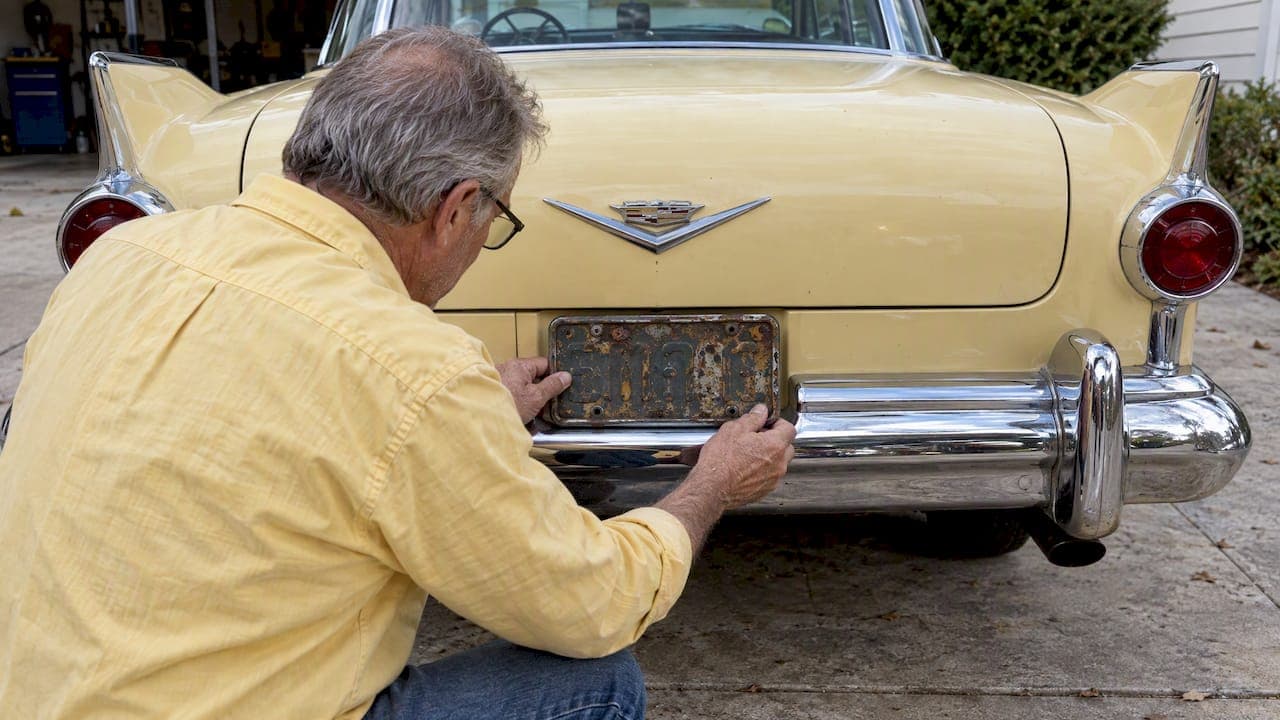
Most U.S. states let vehicles about 25 years old or older register for historic or antique plates, though the exact age, allowed driving, and paperwork vary by state. Some states use 20 or 35 years instead, and most limit everyday driving in exchange for lower fees. Your best next move: check your state DMV's historic plate page and start gathering your title, vehicle photos, and insurance proof now.
TL;DR:
- Most states measure eligibility by model year, not build or sale date; a 2001 model year vehicle reaches 25 years in 2026.
- Historic plates usually limit driving to events or repairs, while year of manufacture plates require a legible, unaltered tag; seasonal programs may allow broader use.
- Michigan requires 26 years and permits unrestricted driving from Memorial Day through Labor Day; Kansas requires 35 model years and offers lifetime registration.
- New York requires historical wording on insurance, and year of manufacture applications need a legible copy of the original plate; faded tags can be rejected.
Table of Contents
- What "Historic," "Antique," and "Year-of-Manufacture" Plates Actually Mean
- Do You Qualify? The Checklist Most States Use
- Documents, Photos, and Insurance You'll Need Before You Apply
- How to Apply: A Step-By-Step Workflow
- How Historic Plate Rules Differ by State
- Tips Collectors Use to Avoid DMV Delays
- Why Historic Plates Matter Beyond the Paperwork
- Finding a Classic That Already Meets Historic Plate Criteria
- FAQ
- Sources
What "Historic," "Antique," and "Year-of-Manufacture" Plates Actually Mean
These three labels get used interchangeably, but they're not the same thing, and the differences affect what you can drive and what you need to prove.
- Historic or antique plates typically apply to vehicles past a state-set age threshold (often 25 to 35 years) and usually restrict driving to shows, parades, repair trips, or occasional personal use.
- Year-of-manufacture (authentic) plates let you run the original-style plate issued the year your car was built, instead of a modern antique design, but states usually require proof the plate is legible and unaltered.
- Expanded-use or seasonal plates relax the restrictions somewhat, sometimes allowing unlimited driving during a set window of the year.
The label your vehicle qualifies for determines more than just the plate design on your bumper. It changes your insurance requirements, whether you need an annual inspection, and how much daily driving you're allowed. A car registered as strictly "historic" in one state might face tighter mileage limits than the same model year registered under a seasonal or expanded-use category elsewhere. That's why reading your specific state's definitions before applying matters more than relying on what a neighboring state allows.
Do You Qualify? The Checklist Most States Use
Before you fill out a single form, run through these common requirements. Most state DMVs build their historic plate programs around the same core questions.
- Check the model year against your state's age threshold. Most states count from the vehicle's model year, not the calendar year it was built or sold, so a 2001 model year car doesn't hit "25 years" until 2026.
- Confirm you hold a clean title in your name. Many states require the vehicle to be titled and registered to you personally, with no outstanding liens complicating the historic designation.
- Verify the vehicle is substantially original. States generally expect the body, frame, and major components to match the original specification, and they treat replicas or facsimiles differently from factory-original cars.
- Review your state's usage limits. Expect restrictions tied to exhibitions, club events, parades, or repair trips, sometimes with an annual mileage cap rather than a flat ban on driving.
- Ask your insurer about historical coverage. Some states require your policy to carry specific "historical" wording or proof that you own another vehicle for daily use before they'll approve the plate.
Pro Tip: Pull your vehicle's title and calculate its exact model-year age before you call the DMV. It saves a round of back-and-forth if the clerk asks for documentation on the spot.
The originality question trips up more owners than the age rule does. If your classic has a replica body or a swapped drivetrain, some states will still approve it as "historic" as long as you can document the modification, while others require a stricter facsimile designation with its own rules. It's worth asking directly rather than assuming your car fits the standard category.
Documents, Photos, and Insurance You'll Need Before You Apply
Gathering paperwork before you start the application saves a trip back to the DMV counter. Most states ask for a similar core set of items, though the exact combination depends on where you live.
- A copy of your current title or registration, showing the vehicle is titled in your name.
- Two photos of the vehicle, typically front and side angles, clear enough to confirm the body style and condition.
- Proof of insurance, and in states like New York, the policy may need to specifically say "historical" rather than relying on a standard policy.
- A personal property tax receipt or non-assessment statement, required in some states as proof you're not dodging local tax obligations.
- A clear photocopy or scan of your original vintage plate, if you're applying for a year-of-manufacture plate rather than a standard antique design.
If your plate request depends on the original tag's condition, legibility matters. A faded, rusted, or partially unreadable plate can get rejected even if the vehicle itself qualifies. When a title is missing entirely, which happens more often with cars that have passed through several owners or sat in storage for decades, some states allow alternate proof like a bill of sale, prior registration records, or a bonded title process. If your car's documentation is murky, a classic car history check can help you sort out VIN discrepancies before they become a DMV problem, especially on pre-1981 vehicles where VIN formats weren't standardized. For insurance paperwork specifically, a proof of insurance guide walks through the documentation types most DMVs and dealerships accept.
How to Apply: A Step-By-Step Workflow
Once you've confirmed eligibility and gathered your paperwork, the application itself moves fairly quickly in most states.
- Find your state DMV's historic or antique plate page and download the correct form. Michigan, for example, uses form BDVR-96 specifically for historical and authentic plate requests.
- Complete the form in full, sign it, and attach your title copy, photos, and any required tax documents. Incomplete forms are the single most common cause of processing delays.
- Confirm your insurance meets the state's specific wording or endorsement requirements. Call your insurer before submitting, since adding "historical" language or an agreed-value endorsement can take a few days to process.
- Submit your application by mail or in person, and budget for the listed fee. Missouri, for instance, charges a one-time fee around $25.25 plus processing for its historic plates.
- Follow up if you don't hear back within the state's typical processing window. Most DMVs post expected turnaround times online, and a phone call after that window closes usually gets a straight answer.
Pro Tip: Keep a copy of everything you submit, including the photos. If the DMV loses a page or asks a follow-up question months later, you won't be starting from scratch.
The most common rejection reasons are predictable: missing insurance proof, an out-of-state title that hasn't been retitled locally, or a replica vehicle without supporting build documentation. Each of those is fixable, usually by providing one additional document rather than restarting the entire application.
How Historic Plate Rules Differ by State
The core framework is similar everywhere, but the specifics shift enough that you can't assume your home state matches a friend's experience in another.
- Michigan requires vehicles to be at least 26 years old for historical or authentic plates, and while driving is generally limited, the state allows unrestricted use during a seasonal window from Memorial Day through Labor Day.
- Kansas sets its antique threshold at 35 model years, but in exchange offers lifetime registration, meaning you register once and never renew, plus a personalized plate option through form TR-715.
- Missouri allows historic registration starting at 25 years old and permits driving to exhibitions, shows, and repair shops within an annual mileage allowance, for a one-time fee rather than yearly renewal.
- New York requires vehicles to be manufactured at least 25 years before the current year, limits use to collector and exhibition purposes, and requires historical insurance wording along with a mail-in application process.
- New Mexico splits its program into "horseless carriage" plates for vehicles 35 years and older and authentic year-of-manufacture tags for vehicles 30 years and older, with physical inspection required before the authentic plate is approved.
- Maryland shows how these rules can shift over time: House Bill 773 in the 2026 legislative session proposed a 30-year eligibility threshold along with inspection and emissions exemptions for qualifying model years.
That Maryland bill is worth paying attention to if you're in a state where lawmakers periodically revisit historic vehicle rules. Thresholds that feel fixed today can shift with a single legislative session, which is part of why checking your current state DMV page before applying beats relying on older guides or forum posts.
Tips Collectors Use to Avoid DMV Delays
Experienced collectors treat documentation as part of the restoration process, not an afterthought once the car is finished. If your vehicle is a replica or has had significant work done, keep mechanical build records, parts receipts, and phase-by-phase restoration photos. These materials give the DMV clerk something concrete to review instead of asking you to explain verbally why the car qualifies.
For year-of-manufacture plates, condition and legibility of the original tag carry real weight. A plate with readable numbers, intact color, and visible registration tabs clears review faster than one that's flaking or sun-bleached past recognition.
Pro Tip: Before you apply, ask your insurer about an agreed-value appraisal. It supports a historical insurance endorsement and gives you a documented value if you ever need to file a claim.

Why Historic Plates Matter Beyond the Paperwork
We've watched plenty of collectors chase historic plates for reasons that go beyond lower fees. A historic designation often opens the door to club events and parades that require proof of registration status, and it can simplify getting a historical insurance endorsement at a fair agreed value. The tradeoff is real: fewer miles in exchange for a plate that fits the car's identity and, often, its resale story.
— Tony
Finding a Classic That Already Meets Historic Plate Criteria
If you're shopping for a vehicle that's old enough and original enough to qualify for historic plates without a fight, we built our nationwide inventory around exactly that kind of car. Every listing includes detailed specs and photos, so you can check model year and originality before you ever call a DMV.
We also handle the other side of ownership. If you're ready to sell a qualifying classic instead of buying one, our consignment service takes the listing and sale logistics off your plate. And if financing is part of the plan, pre-qualification options can help you move on a car before someone else does.
- Browse our nationwide inventory of classic trucks, muscle cars, and 4x4s ready for historic registration.
- Start a consignment if you're ready to sell a qualifying classic.
- Schedule a test drive before you commit to a purchase.
FAQ
What are the requirements for a street rod tag in Maryland?
Maryland's street rod rules sit alongside its broader historic vehicle framework, and recent legislation like House Bill 773 shows the state actively revisiting age thresholds and exemptions. Check Maryland's current MVA guidance directly, since street rod categories often carry different build and inspection standards than standard historic plates.
What does a historic plate mean?
A historic plate signals that your vehicle has passed a state-set age threshold, commonly 25 years or more, and typically comes with usage limits like restrictions to shows, parades, or repair trips. The exact meaning shifts by state: Missouri and New York both use 25 years as their baseline, while Kansas sets its antique threshold at 35.
How old does a car have to be before it is considered an antique?
Most states set the antique or historic threshold between 20 and 35 years, with 25 years being the most common benchmark nationwide. Michigan requires 26 years, while Kansas requires a full 35 years, so the answer depends entirely on where you're registering.
How often can I drive my antique car?
Driving limits vary by state, ranging from occasional use for shows and repair trips to a defined annual mileage cap. Missouri permits driving to exhibitions and repair shops within a set mileage allowance, while Michigan allows unrestricted driving during a seasonal window from Memorial Day through Labor Day.
Sources
- Ordering historical and authentic license plates — Michigan Secretary of State
- Kansas antique plates — Kansas Department of Revenue
- Historic License Plates — Missouri Department of Revenue
- Historical and vintage plates — NYS DMV
- House Bill 773 - Maryland General Assembly (2026 RS)