
What are the best Facebook alternatives for vintage car communities?
If you're ready to move your classic car conversations off Facebook, explore some useful Alberta Local Resources that support classic car enthusiasts during platform transitions. The best alternatives combine privacy, group features, and a community quality that suits niche collectors far better than a platform built for everyone.
Here's where to start:
- MeWe brings group and chat features closest to Facebook's experience, with no ads and no data selling. Private groups, custom profiles, and cloud storage make it a natural landing spot for car clubs.
- Mastodon runs on independent servers with no algorithms and no ads. You pick a server whose community rules fit your crowd, or host your own.
- Minds offers an open-source, algorithm-free feed where content creators earn tokens. Groups and messaging work well, and the interface feels familiar to anyone coming from Facebook.
- Signal is the go-to for secure group chats when your club needs a private channel for swap meet planning or member-only discussions.
- GroupMe replicates Facebook group chat functionality and adds SMS fallback, so even members without a smartphone app stay in the loop for event coordination.
None of these platforms match Facebook's raw user count, but for a focused vintage car community, that trade-off often works in your favor. Smaller pools mean less noise and better conversations.
Table of Contents
- How do you choose the right platform for your car club?
- Side-by-side comparison of top alternatives for US car enthusiasts
- What classic car communities say about switching platforms
- Butterclassics is where classic car collectors go next
- Key Takeaways
How do you choose the right platform for your car club?
Picking the right alternative comes down to what your group actually does together online.
Privacy and moderation matter more than you might expect. Facebook's history of data issues pushed many collectors toward platforms that don't track you or sell your data. MeWe and Signal both operate without ads. Mastodon puts moderation decisions in the hands of each server's community rather than a corporate policy team.
Community size is a real trade-off. Moving away from Facebook means accepting a smaller active user base. The upside is that discussion quality often improves when the group is tight-knit and purpose-built around a shared passion like pre-war Packards or first-gen Broncos. Check out the classic car community guide for tips on building that kind of group from scratch.
Photo quality deserves attention. Many social platforms compress images heavily. If your group shares high-resolution shots of chrome work or engine bays, store your best photos in a dedicated cloud service like Google Photos rather than relying on any platform's native storage.
Migration works best as a group move. Trying to pull contacts one by one rarely works. Automotive clubs that migrate together preserve the network effects that make a group worth joining.
- Announce the move on Facebook with a clear deadline.
- Create the new group before you leave and seed it with content.
- Assign a few members as moderators on day one.
- Keep a read-only Facebook presence for latecomers.
Pro Tip: Pick one platform and commit as a club. Splitting across two alternatives kills engagement on both. A single well-run MeWe or GroupMe group will outperform three half-populated ones every time.
Side-by-side comparison of top alternatives for US car enthusiasts
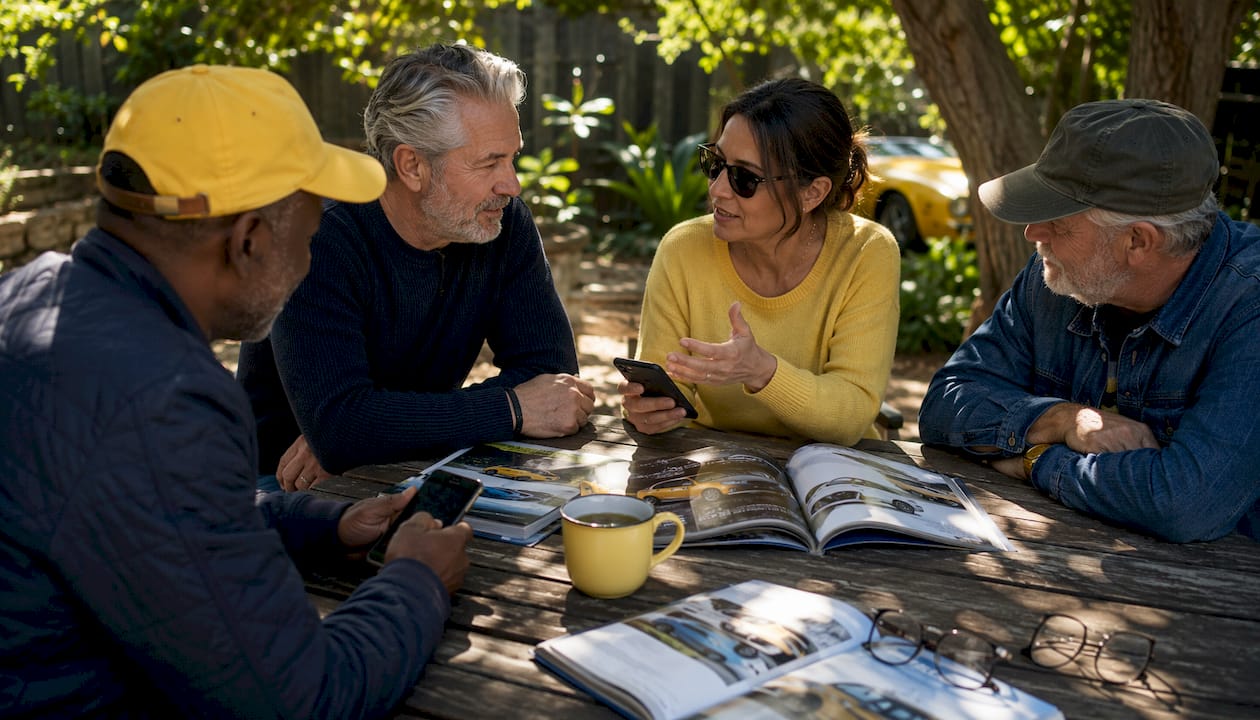
Car enthusiasts in the US have different priorities than the average social media switcher. Moderation policies shape whether a community stays on topic, and integration with tools like Google Calendar or SMS can make or break event coordination.
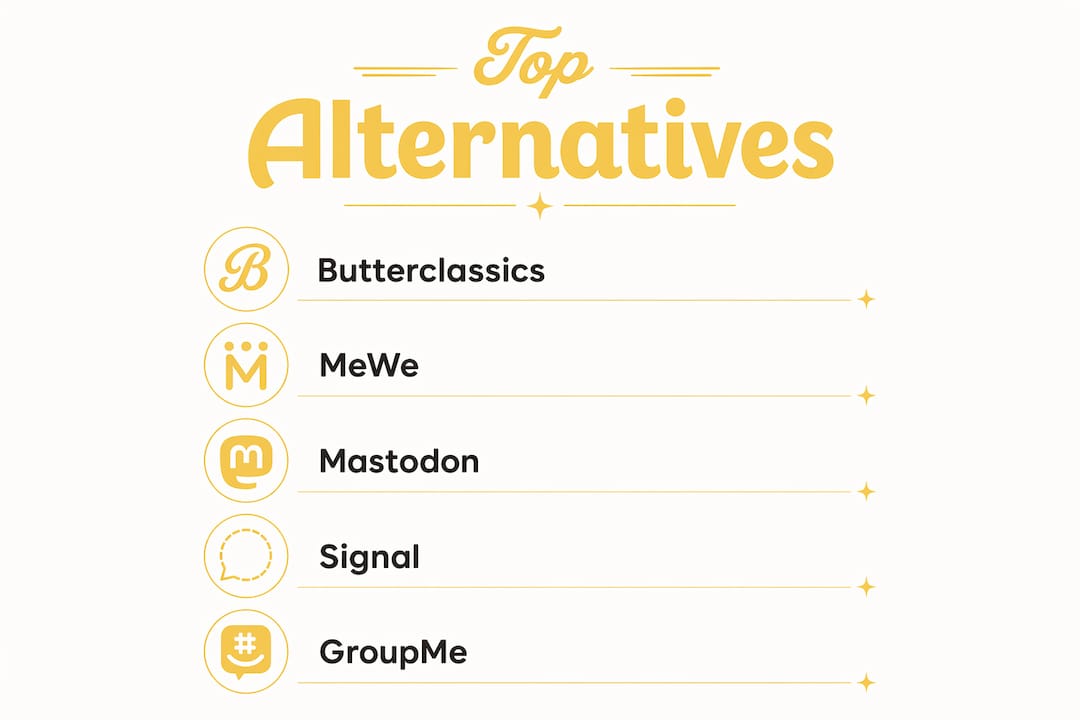
| Platform | Best For | Privacy Features | Community Size | Group/Chat Capabilities | User Experience |
|---|---|---|---|---|---|
| MeWe | Close-to-Facebook group experience | No ads, no data selling, user-owned content | Moderate; active niche communities | Full groups, private chats, cloud storage | Familiar, easy to learn |
| Mastodon | Privacy advocates, decentralized control | No ads, server-level moderation, open source | Growing; server-dependent | Chronological feed, no group DMs natively | Requires server selection upfront |
| Minds | Algorithm-free content, free speech focus | Open source, community moderation, no tracking | Smaller; requires deliberate network building | Groups, messaging, token-based boosts | Intuitive for Facebook users |
| Signal | Secure private club chats | End-to-end encryption, minimal data retention | Small by design | Group chats, voice, video | Clean, minimal, fast |
| GroupMe | Event coordination, meetup planning | Owned by Microsoft; basic privacy | Moderate; event-focused | Group chat, SMS fallback, event tools | Simple, works on any device |
| Butterclassics | Dedicated classic vehicle marketplace and community | Focused platform, no social tracking | Niche collector audience | Listings, consignment, financing tools | Purpose-built for collectors |
Some premium MeWe features, including encrypted chat and live video, require a paid subscription. Minds uses a token system where members can pay to boost content visibility. Signal and GroupMe are free. Mastodon is free on public servers; self-hosting carries server costs.
For classic car forums and dedicated hobby spaces, a hybrid approach works well: use Signal or GroupMe for tight club communications, and a platform like MeWe or Mastodon for broader community building.
What classic car communities say about switching platforms
Real collector communities have made the move and found it worth the effort. Clubs that shifted their primary group chat to Signal report cleaner conversations with fewer off-topic posts. GroupMe's SMS fallback proved especially useful for older members who prefer texting over app notifications, keeping everyone connected during show season without anyone falling through the cracks.
Mastodon's server model suits regional car clubs well. A group focused on vintage car meets can join or create a server with rules tailored to their events and standards, rather than fighting Facebook's broad content policies. The learning curve is real, but clubs that commit report a noticeably higher signal-to-noise ratio in their feeds.
The consistent theme across communities that switched: the first two weeks feel quiet, and then the right people show up.
Butterclassics is where classic car collectors go next
Every platform above helps you connect and communicate. Butterclassics gives you something none of them do: a curated marketplace built entirely around classic and vintage vehicles.
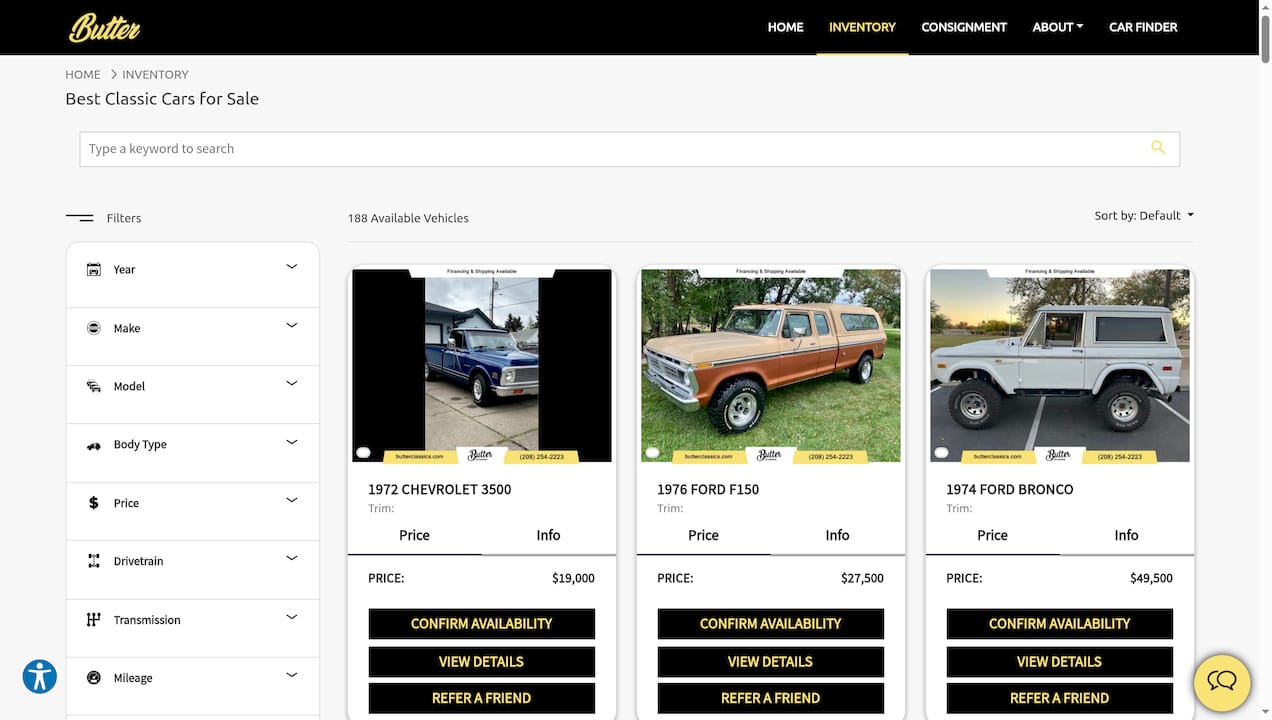
Browse expert-curated listings of muscle cars, Corvettes, Broncos, trucks, and pre-war collectibles, with high-quality photos and full specs on every vehicle. Financing pre-qualification, consignment services, and scheduled test drives make the buying process smooth as butter. While your club chats on MeWe or GroupMe, Butterclassics is where you actually find your next car. Search the inventory today and see what's available right now.
Key Takeaways
The strongest Facebook alternatives for classic car enthusiasts combine privacy controls, focused group features, and a community culture that rewards niche passion over broad reach.
| Point | Details |
|---|---|
| Best overall alternatives | MeWe, Mastodon, Minds, Signal, and GroupMe each serve different collector needs. |
| Migration strategy | Clubs that move together maintain engagement; solo moves rarely sustain a group. |
| Photo preservation | Store high-resolution car photos in dedicated cloud storage, not on social platforms. |
| Hybrid approach | Use Signal or GroupMe for club chats and MeWe or Mastodon for broader community building. |
| Butterclassics | The dedicated marketplace for buying, selling, and consigning classic vehicles beyond social platforms. |