Not every old car is a classic. And not every rare car will become one. Understanding what is a future classic car separates smart collectors from disappointed speculators. The term "future classic" is really an enthusiast shorthand for what market professionals call an "appreciation-ready collector vehicle." These are cars that haven't yet reached full classic status but show every sign of getting there. Age alone won't do it. Rarity alone won't either. What you're really looking for is a specific combination of traits that the collector market consistently rewards over time.
Table of Contents
- Key takeaways
- What is a future classic car: the core criteria
- Real-world future classic car examples right now
- What ownership of a future classic actually costs
- How to identify and evaluate a future classic
- My honest take on future classics
- Find your next future classic at Butterclassics
- FAQ
Key takeaways
| Point | Details |
|---|---|
| Rarity plus culture wins | A car needs both limited production and cultural significance to earn future classic status. |
| Provenance drives value | Complete service history and verified originality can dramatically separate two identical-looking cars at auction. |
| Ownership costs add up | Maintenance, insurance, and parts availability must be budgeted before you buy, not after. |
| Younger buyers set trends | Demand from Gen X, millennials, and Gen Z is a leading indicator of which cars will appreciate. |
| Passion beats pure speculation | Buying a car you genuinely love protects you if the market moves against you. |
What is a future classic car: the core criteria
The short answer is that a future classic is a modern or recently produced vehicle that shows strong signals of long-term collector desirability. But the real answer is more interesting than that.
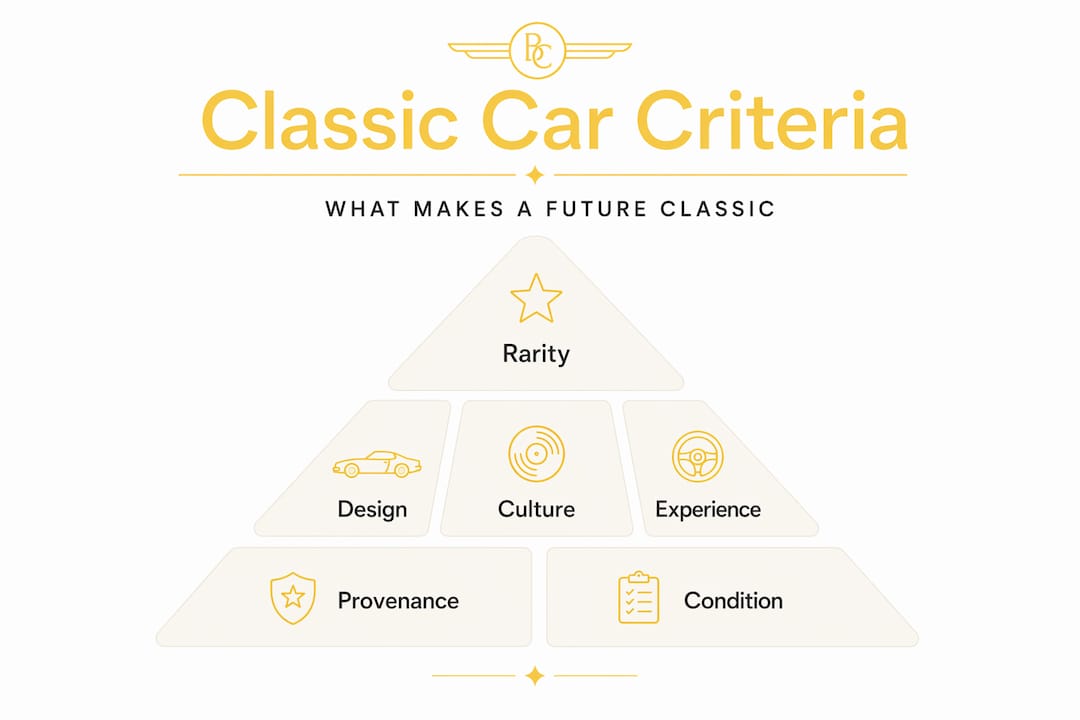
According to valuation experts, core criteria include rarity, standout design, an engaging driving experience, cultural impact, and technological significance. What makes this framework so useful is that it forces you to think beyond the surface. Two cars can share nearly identical specs and production numbers, yet one becomes a legend while the other gets forgotten. The difference almost always comes down to the softer factors.
Here is what each criterion actually means in practice:
- Rarity and limited production. Cars built in small numbers create natural scarcity. But scarcity alone isn't enough. A niche trim level that nobody wanted when new is still a niche trim level. Rarity needs to be paired with genuine demand to matter.
- Design with staying power. Great automotive design ages differently than trendy design. The Porsche 911 has looked right for 60 years. Future classics tend to have proportions and details that hold up decade after decade, not just the hot style of their moment.
- Driving engagement. Horsepower figures fade. The feeling of a perfectly weighted steering rack or a naturally aspirated engine at full song does not. Cars that create a physical connection between driver and machine consistently outperform those that are merely fast.
- Cultural and nostalgic impact. This is where cultural nostalgia outweighs mechanical superiority almost every time. Think about how the Toyota AE86 became a global icon through motorsport culture and anime before collectors even noticed the price charts moving.
- Technological milestones. "Last of a kind" status is powerful. The final generation of a naturally aspirated sports car engine, the last manual transmission in a performance sedan, the first production hybrid hypercar. These moments get remembered.
Pro Tip: When evaluating a potential future classic, ask yourself whether the car would still be interesting to talk about at a car meet ten years from now. If the honest answer is no, keep looking.
Real-world future classic car examples right now
Let's get specific, because theory only takes you so far.
Hagerty's 2026 Bull Market List is one of the most data-driven attempts to identify upcoming classic cars before they fully appreciate. Their methodology draws on public and private sales records, historic price trends, and insurance valuation data. Critically, they look for cars in good, usable condition rather than concours showpieces, which makes their picks realistic for everyday collectors.
A few types of vehicles that frequently appear on expert lists for future classic car examples include:
- Late-model manual sports cars. As automakers phase out manual transmissions, any enthusiast vehicle still offered with a third pedal gains immediate "last of its kind" appeal. The Honda Civic Type R and the Porsche 718 Cayman GT4 are cited by multiple sources as candidates.
- Performance SUVs from the first wave. Early iterations of performance SUVs, before the segment became crowded, represent a cultural moment that collectors will look back on. Think original Ford SVT Lightning or the first-generation Porsche Cayenne Turbo.
- Final-generation internal combustion icons. As electrification accelerates, the last naturally aspirated versions of legendary nameplates are attracting serious attention. The BMW E46 M3 and the Dodge Viper ACR have already crossed into recognized collector territory.
- Limited editions with genuine performance credentials. Not every "special edition" qualifies. But cars like the Ford GT or Acura NSX second generation, built with real engineering purpose behind the badge, carry weight.
One thing the data makes clear: demand from younger generations including Gen X, millennials, and Gen Z is a leading indicator Hagerty uses to flag future appreciation. If a car is generating excitement among people in their 30s and 40s today, watch it carefully.
Pro Tip: Check auction results, not just asking prices. Sales data tells you what people actually paid, which is a far more honest signal than what sellers hoped to get.
What ownership of a future classic actually costs
Buying a future classic is the easy part. Owning one intelligently is where most first-time collectors get surprised.
- Specialist servicing. Many future classics require mechanics who know the specific model. A BMW E46 M3 with a high-revving S54 engine is not the same job as a typical shop oil change. Budget for a specialist shop, and find one before you buy.
- Parts availability. This shifts dramatically depending on the car and its era. Popular models often have strong aftermarket support. Rare limited editions can have parts that are nearly impossible to source within a decade of going out of production.
- Insurance structure. Standard auto insurance undervalues collector cars. Agreed value classic car policies protect you by locking in a specific payout figure rather than depreciated market value. Total cost of ownership is crucial, and insurance is a bigger line item than most buyers anticipate.
- Condition and originality. Two cars with matching VINs and production dates can sell for vastly different prices depending on their paperwork and history. Provenance and originality are what collectors pay premiums for, and what buyers scrutinize most heavily at resale.
- The restoration versus reproduction question. New replacement body shells for classic models like the AE86 and 240Z are now available, which is practically helpful but philosophically complicated. Replacing most original parts shifts a car from a genuine future classic toward a reproduction, regardless of how good the restoration work is. Track every part you replace and keep documentation.
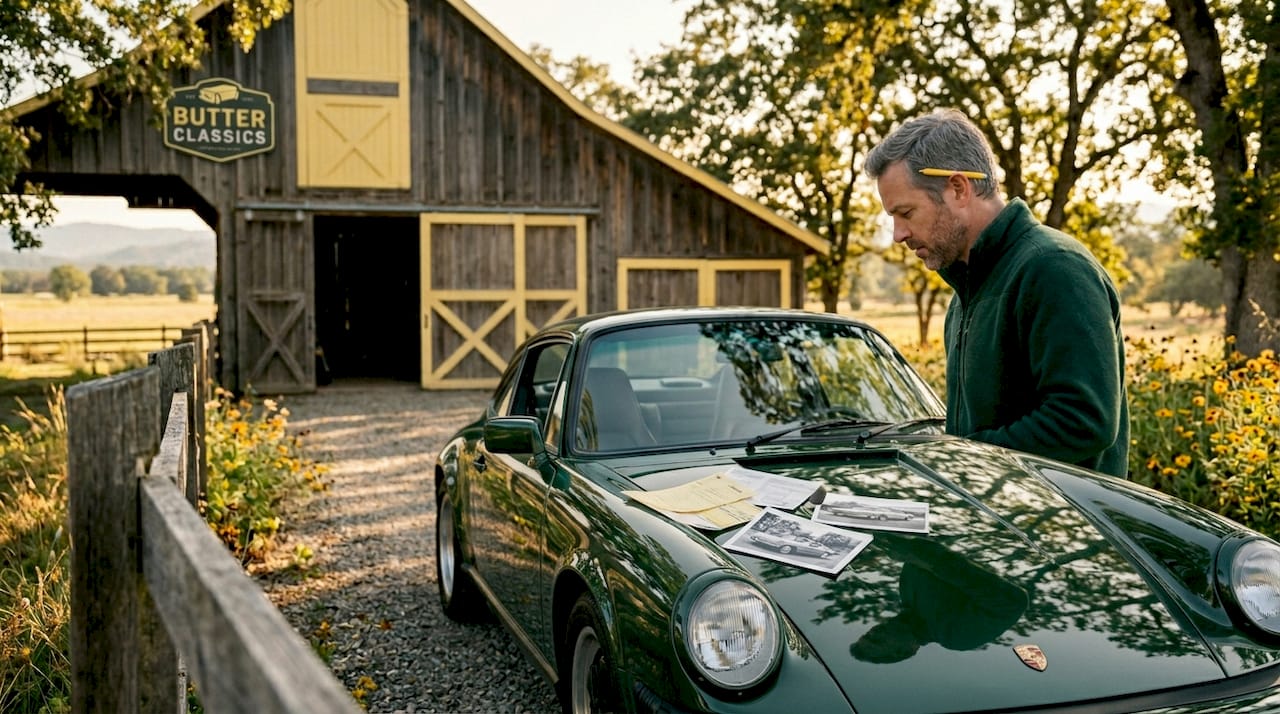
Pro Tip: Before purchasing, ask for a complete folder of receipts, service records, and any restoration documentation. A seller who cannot produce paperwork is a seller whose car will be worth less when you try to sell it.
How to identify and evaluate a future classic
Here is a practical framework you can actually use when you are standing in front of a car deciding whether it belongs in your garage.
Start with the research before you visit.
Check production numbers through marque registries, owner clubs, and manufacturer records. Cross-reference the VIN against known databases for the model. Look at recent auction results on platforms that track collector sales. If there is active insurance interest and rising valuations in the data, that is a meaningful signal.
Use this checklist when you evaluate any potential buy:
- Verify the VIN against title, registration, and any available build sheet
- Confirm all major components are original to the car, not swapped from a donor vehicle
- Check for evidence of unreported accident damage, especially in structural areas
- Review the service history for consistent, documented maintenance
- Assess condition honestly against a tiered scale: driver, good, show, concours
Consider the legal and registration angle. Registration rules for reconstructed vehicles require period-correct components and, in many jurisdictions, official club authentication to maintain collector status. A car that has been substantially rebuilt from new parts may fall into a different registration category, which affects both its legal standing and its resale value. Know this before you commit.
Match the car to your actual life. The criteria for future classic cars include things that matter to you personally, not just the market. A sports car that you will park for nine months a year because you are afraid to drive it is not a future classic investment. It is an expensive storage unit. Buy the car you want to use, care for, and actually know. The passion you bring to ownership is part of what makes a car worth owning.
| Evaluation area | What to look for | Red flag |
|---|---|---|
| Production numbers | Low build count with documented rarity | No registry or club support |
| Provenance | Full service history, matching numbers | Gap years in documentation |
| Condition | Honest assessment against tiered scale | Mismatched paint, poor gaps, hidden rust |
| Cultural relevance | Enthusiast community activity, media coverage | Model ignored by clubs and media |
| Market signals | Rising auction results, insurance interest | Stagnant or declining sales data |
My honest take on future classics
I've watched plenty of buyers get burned chasing future classics based on hype, and I've watched others make genuinely smart purchases that looked boring at the time. Here is what I've learned.
Rarity alone is one of the most overrated criteria. I've seen deeply rare cars sit unsold at auction while more common models from the same era trade hands in minutes. What moves markets is not scarcity by itself. It's scarcity combined with genuine desire. People have to want the car, not just acknowledge that there aren't many of them.
The provenance point cannot be overstated either. In my experience, two apparently identical cars can have values that are 30 to 40 percent apart purely because of paperwork. Complete documentation reduces risk for every buyer downstream, and smart collectors have figured this out. When you skip the paper trail to save a few thousand dollars upfront, you are trading a small saving now for a much bigger problem later.
I'm also cautious about technology-driven hype cycles. The collector market has repeatedly overestimated how quickly electric vehicles would become desirable as classics, and underestimated how long internal combustion cars would hold their appeal. I do think first-generation EVs with cultural weight will eventually earn collector status. But the timeline is longer and the path is less direct than the enthusiast press tends to suggest.
The collectors I respect most buy cars they genuinely love and then apply rigorous standards to condition, provenance, and pricing. That combination, passion plus discipline, is what actually creates good outcomes over time.
— Tony
Find your next future classic at Butterclassics
If this guide has you thinking seriously about adding a future classic to your collection, Butterclassics is the place to start your search.
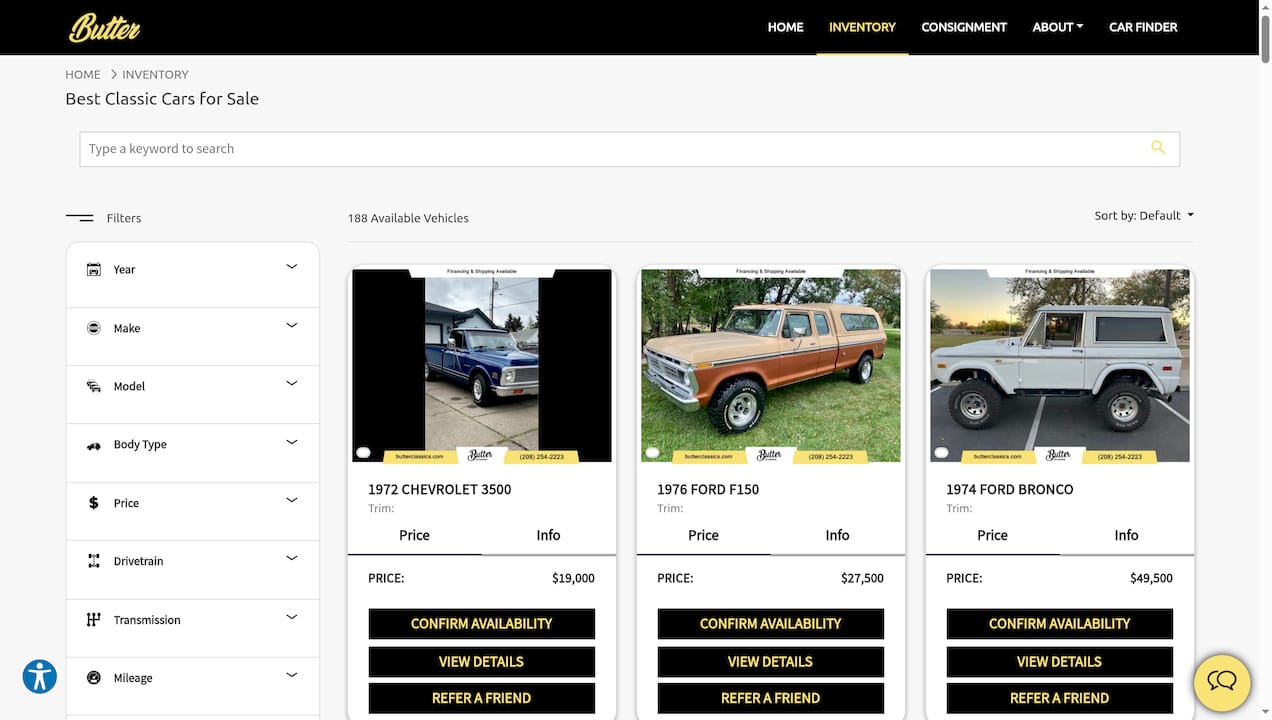
At Butterclassics, you will find a hand-picked inventory of classic and collector vehicles, from muscle cars and Corvettes to vintage trucks and rare specialty models. Every car is presented with detailed specs, high-quality photos, and honest condition descriptions so you know exactly what you are getting. For buyers who want extra peace of mind, the Butter Certified program verifies provenance and condition before a vehicle ever hits the listing page. That means less guesswork and more confidence when you are ready to pull the trigger. Browse the inventory, get pre-qualified for financing, and find the car that makes you genuinely excited to own it.
FAQ
What makes a car a future classic?
A future classic typically combines limited production, distinctive design, an engaging driving experience, cultural significance, and some form of technological milestone. Valuation guides consistently cite these five traits as the core criteria separating future classics from ordinary used cars.
How do I know which cars will become classics?
Track auction results, insurance valuation trends, and enthusiasm from younger collectors. Hagerty's research shows demand from Gen Z and millennials is one of the strongest leading indicators of future appreciation.
Does a future classic car have to be rare?
Rarity helps, but it is not enough on its own. Cultural impact and community desirability carry more weight than production numbers alone. A relatively common car with strong enthusiast support will often outperform a genuinely rare car that nobody cares about.
How does restoration affect a future classic's value?
Extensive restoration using new parts can shift a car from original to reproduction status, which reduces its collector value. Tracking replaced components with thorough documentation is the best way to protect authenticity and maintain investment potential.
Is buying a future classic a good investment?
It can be, but only if you also genuinely enjoy the car. Passion-driven ownership means you benefit from the experience regardless of market movements. Buying purely for speculation, without personal connection to the vehicle, is how most collector car investments go sideways.