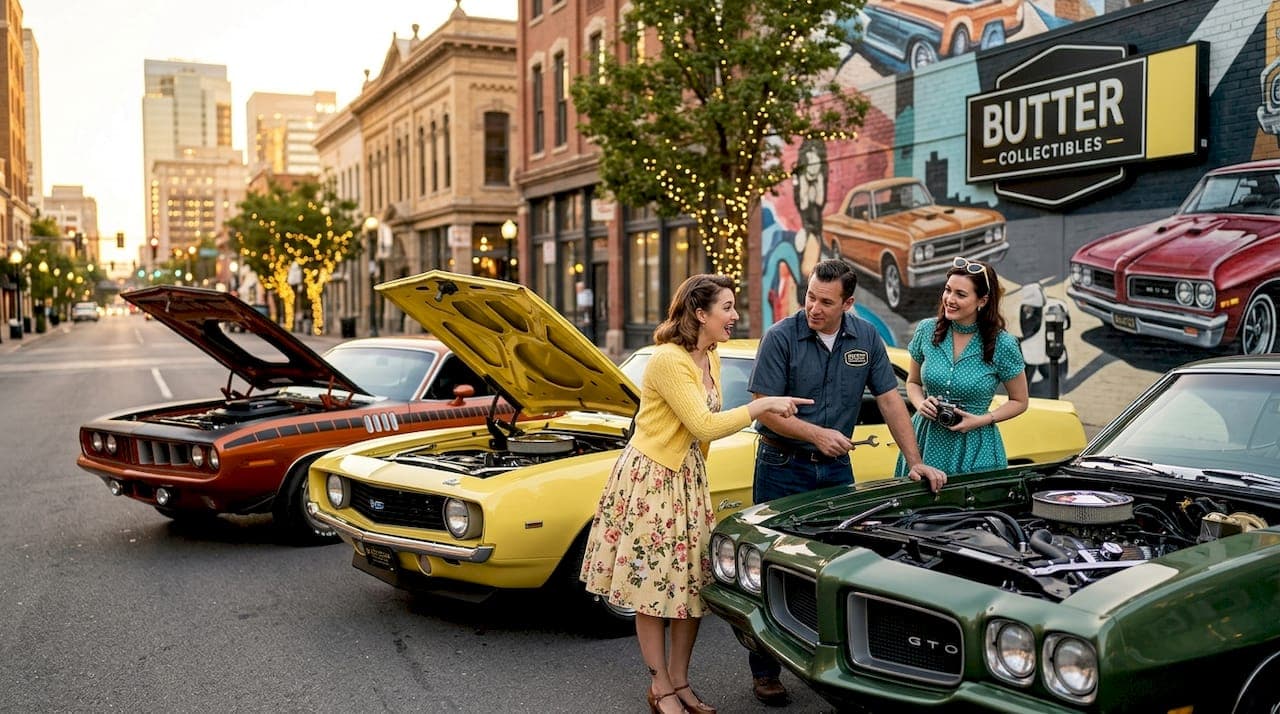
Not every muscle car is created equal, and if you've spent any time seriously collecting, you already know that. The challenge isn't finding a muscle car you love — it's knowing which types of collectible muscle cars are worth your money, your garage space, and your long-term attention. Production numbers, engine authenticity, size class, and market timing all shape whether a car appreciates or just sits there looking pretty. This guide breaks down the major classifications, the rarest models, real valuation data, and the investment angles most collectors overlook.
Table of Contents
- Muscle car classification: understanding full-size, mid-size, compact, and pony cars
- Rare muscle cars every collector dreams of
- Muscle car valuation insights: mid-range vs. premium investment picks
- Comparing muscle car options: size, rarity, and performance trade-offs
- Why the 1970s muscle car market offers real investment opportunities
- Find your collectible muscle car with Butter Classics
- Frequently asked questions
Key Takeaways
| Point | Details |
|---|---|
| Muscle car categories | Muscle cars classify into full-size, mid-size, compact, and pony cars, each with unique collector appeal. |
| Rarity drives value | Low-production rare muscle cars achieve the highest collector prices and investment returns. |
| Affordable entry points | Quality Mopar muscle cars under $60,000 offer accessible options for new collectors. |
| 1970s market potential | 1970s muscle cars are increasingly sought for their appreciation potential versus pricier 1960s icons. |
| Condition matters | Matching-numbers and factory-correct restorations maximize muscle car collectible value. |
Muscle car classification: understanding full-size, mid-size, compact, and pony cars
Before you can make a smart buying decision, you need a clear picture of what you're actually buying. The term "muscle car" gets thrown around loosely, but muscle car classification follows a fairly consistent framework based on platform size, engine displacement, and performance intent.
Muscle cars fall into four main categories: full-size, mid-size, compact, and pony cars, each with distinct examples and collector profiles. Here's how they break down:
- Full-size muscle cars are the heavyweights. Think the 1961 to 1964 Chevrolet Impala SS or the 1964 Pontiac Grand Prix. These cars carried big-block V8s in large body platforms. They're imposing, often undervalued, and increasingly interesting to collectors who want presence without paying pony car premiums.
- Mid-size muscle cars are the sweet spot. The 1964 to 1972 Chevrolet Chevelle, Pontiac GTO, and Dodge Charger all live here. Mid-size platforms gave engineers room for massive engines without the bulk of a full-size car, which is exactly why these models dominate collector wish lists.
- Compact muscle cars bring serious power in a smaller package. The Chevrolet Nova SS and Plymouth Duster are prime examples. These were often the working-class muscle car, priced lower new and still accessible today, which makes them excellent entry-level collector picks.
- Pony cars are a distinct category that often gets confused with muscle cars. The Ford Mustang, Pontiac Firebird, and Chevrolet Camaro are pony cars. They're built on smaller, lighter platforms and prioritize handling and agility over raw straight-line speed. A Mustang fastback and a Chevelle SS are not the same animal, even if both have V8s under the hood.
The distinction matters for collecting because pony cars and muscle cars attract different buyers, command different prices, and appreciate at different rates. Knowing which category a car belongs to tells you a lot about its market ceiling.
Now that we know how muscle cars are classified by size and style, let's explore some of the rarest models collectors prize.
Rare muscle cars every collector dreams of
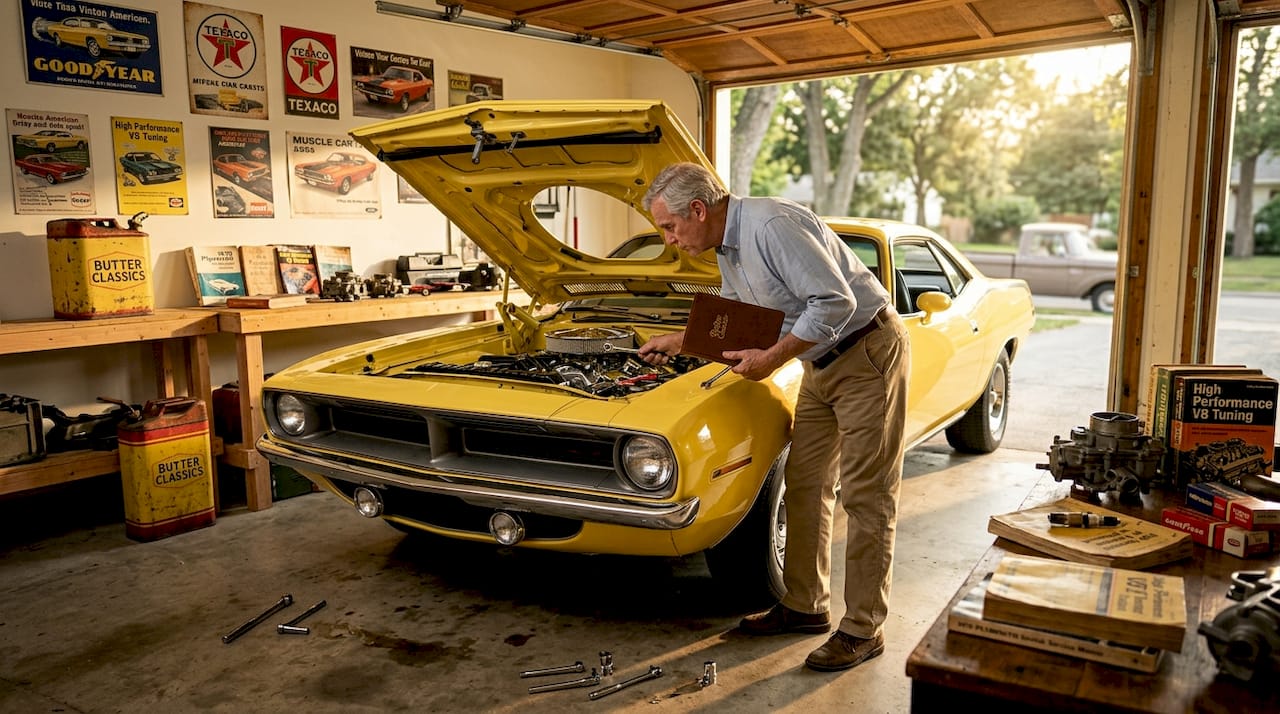
Rarity is the single biggest driver of extreme muscle car valuations. A common Chevelle in great shape is a joy to own. A numbers-matching, ultra-low-production variant of that same car is a financial asset. Some muscle cars have extremely low production numbers, making them the kind of finds that define a collection.
Here are the models that get serious collectors genuinely excited:
- 1970 Plymouth Barracuda Hemi Convertible: Between 14 and 30 were ever built, depending on the source. A 426 Hemi engine in a convertible body on the E-body platform is the rarest combination Mopar ever produced. One sold for $3.5 million at auction.
- 1971 Pontiac GTO Judge Convertible: Only 8 were made. The Judge package was already a limited run, and the convertible variant is practically a unicorn. If one surfaces at auction, expect a bidding war.
- 1966 Dodge Coronet W023 Super Stock: Just 55 units were built, stripped down and purpose-built for drag racing. No back seat, lightweight components, and a massive engine. These weren't meant to last, which is exactly why survivors are worth serious money.
- 1969 Camaro ZL1: Only 69 were produced, each with an all-aluminum 427 big-block. The engine alone cost more than most cars of the era.
- 1970 Boss 429 Mustang: Ford built just over 500 of these for homologation purposes. The 429 engine was designed for NASCAR, and the street version is one of the most collectible pony cars ever made.
"Rarity isn't just about low production numbers. It's about the combination of powertrain, body style, and documentation that makes a car irreplaceable. The rarest muscle cars aren't just scarce — they're historically significant."
Explore rare muscle car insights to understand how provenance and documentation affect these valuations in the real market. Understanding rarity helps, but knowing market values clarifies investment potential — let's examine muscle car valuations next.
Muscle car valuation insights: mid-range vs. premium investment picks
The muscle car market has room for every budget. You don't need millions to get started, but you do need to understand where your money goes and what you're actually buying. Mopar muscle cars under $60,000 include solid options, while rare Hemi convertibles can push well past $3 million.
Here's a realistic look at the market across price tiers:
| Model | Typical price range | Horsepower | Rarity level |
|---|---|---|---|
| 1970 Plymouth Duster 318 | $25,000 to $45,000 | 230 hp | Common |
| 1972 Plymouth Road Runner 400 | $35,000 to $58,000 | 255 hp | Moderate |
| 1969 Chevelle SS 396 | $55,000 to $90,000 | 325 to 375 hp | Moderate |
| 1970 Dodge Challenger R/T 440 | $80,000 to $130,000 | 375 hp | Moderate to rare |
| 1969 Camaro ZL1 | $500,000 to $900,000 | 430 hp | Extremely rare |
| 1970 Plymouth Barracuda Hemi Conv. | $2,000,000 to $3,500,000+ | 425 hp | Ultra rare |
Condition plays a massive role in where a car lands within any price range. Hagerty's grading system uses a #2 "Excellent" rating for cars that are near-perfect in all respects. A #2 Duster and a #4 Duster can differ by $15,000 or more. Original, unrestored cars with intact factory finishes are increasingly preferred by serious collectors over heavily restored examples, because authenticity is verifiable and restoration quality is not always consistent.
Pro Tip: Always prioritize matching-numbers cars with documented provenance. A car with its original engine, transmission, and build sheet will hold value better and sell faster than a modified or numbers-mismatched alternative. Check the VIN, the partial VIN stamped on the engine pad, and the broadcast sheet if it's available.
With valuation context in place, let's compare muscle cars head-to-head to guide your selection.
Comparing muscle car options: size, rarity, and performance trade-offs
Choosing the right muscle car means weighing several factors at once. Price, power, rarity, and long-term muscle car market trends all interact. Here's a side-by-side look at how the main types stack up:
| Car type | Example model | Production numbers | Horsepower range | Collector demand | Investment stability |
|---|---|---|---|---|---|
| Full-size | 1964 Impala SS 409 | ~8,700 | 340 to 425 hp | Moderate | Steady |
| Mid-size | 1970 Chevelle SS 454 | ~4,500 (LS6) | 450 hp | Very high | Strong |
| Compact | 1970 Nova SS 396 | ~3,700 | 350 to 375 hp | High | Strong |
| Pony car | 1969 Camaro Z/28 | ~20,300 | 290 hp | Very high | Strong |
| Ultra-rare | 1971 GTO Judge Conv. | 8 | 335 hp | Extreme | Premium |
The muscle car market differentiates by rarity and specs, with low-production models holding value better even during periods of overall market softness. The broader collector car market saw a pullback from pandemic-era highs, but muscle cars with documented rarity have held their ground.
A few trade-offs worth keeping in mind:
- Big-block full-size cars offer the most power for the money but can feel undervalued compared to their mid-size counterparts. The upside is that they're often overlooked, which means room for appreciation.
- Mid-size muscle cars are the most liquid. A clean Chevelle SS or Dodge Charger R/T will always find a buyer. The trade-off is that good examples aren't cheap anymore.
- Pony cars attract the widest buyer pool, including non-collectors, which supports resale. But the market is crowded, and separating a truly special example from a clone or tribute car requires homework.
- Ultra-rare models are the best stores of value but require deep capital, expert authentication, and patience. These are not quick-flip cars.
Having weighed your options, it's time to consider expert perspectives on selecting collectible muscle cars for your collection.
Why the 1970s muscle car market offers real investment opportunities
Here's the take most collectors don't want to hear: the obsession with 1960s muscle cars is creating a blind spot. Everyone chases the 1969 Camaro or the 1968 Charger, and prices reflect that demand. But the 1970s models show the most consistent appreciation as collectors seek alternatives to pricier 1960s icons.
Think about what that actually means. A 1970 Plymouth Road Runner or a 1971 Dodge Challenger is still attainable at prices that feel reasonable compared to their 1960s equivalents. But they're not staying that way. The collectors who bought 1960s cars 20 years ago at "reasonable" prices are the ones sitting on the biggest gains today. The 1970s cars are in that same early window right now.
The other advantage of 1970s muscle cars is documentation. Factory build sheets, window stickers, and dealer records survived in greater numbers for early 1970s cars than for 1960s models. That means it's actually easier to verify authenticity on a 1971 car than a 1967 car in many cases. Authenticity is the foundation of investment-grade collecting.
"The collectors who consistently outperform the market are the ones who buy what's next, not what's already famous. Right now, early 1970s muscle cars are what's next."
Pro Tip: When evaluating a 1970s muscle car, verify the date-code on the engine block. The casting date should precede the car's build date by a few weeks. A mismatched or post-build date engine is a red flag that the original powerplant has been replaced, which significantly affects value.
The muscle car investment perspective is shifting, and collectors who move early on 1970s examples are likely to look very smart in a decade.
Find your collectible muscle car with Butter Classics
Ready to put this knowledge to work? At Butter Classics, we specialize in exactly the kind of cars this guide covers: verified, investment-grade collectibles with documented provenance and honest condition assessments. Whether you're after an accessible compact muscle car or hunting for something rarer, we've got you covered.
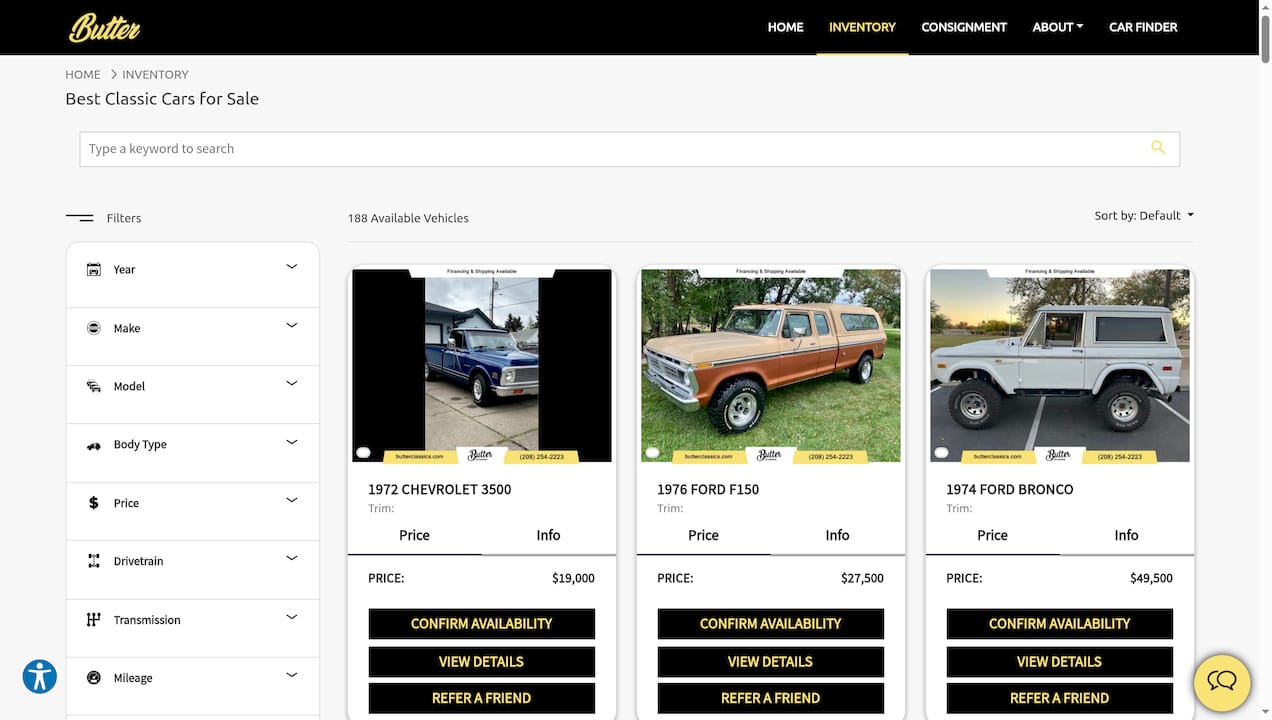
Our Butter Classics inventory includes a rotating selection of classic muscle cars across all size classes and price points. Every listing comes with detailed specs, high-quality photos, and the kind of transparency that makes buying smooth as butter. We also offer financing pre-qualification and consignment services if you're looking to move a car from your current collection. Check our terms of use for full details on how we operate. Come find the car you've been looking for.
Frequently asked questions
What defines a muscle car versus a pony car?
Muscle cars are typically mid- or full-size vehicles with large V8 engines built for straight-line speed, while pony cars are smaller and lighter, prioritizing handling on compact platforms like the Ford Mustang. The distinction matters for collecting because they attract different buyers and appreciate differently.
Which muscle cars are considered the rarest and most valuable?
Ultra-rare models like the 1970 Plymouth Barracuda Hemi Convertible (14 to 30 built), 1971 Pontiac GTO Judge Convertible (8 built), and 1966 Dodge Coronet W023 Super Stock (55 built) command the highest prices due to scarcity and historical significance. Documented provenance is what separates a high-value example from an unverifiable claim.
Are there affordable collectible muscle cars to consider?
Yes, Mopar muscle cars under $60,000 such as the 1970 Plymouth Duster 318 or 1972 Plymouth Road Runner 400 offer solid entry points in excellent condition. These compact and mid-size options give you genuine muscle car ownership without the six-figure commitment.
How does muscle car market value fluctuate?
The muscle car market fell nearly 15% from pandemic highs as of early 2026, but demand remains stable with muscle cars making up 45% of the top 100 insured classics. Low-production models have held their value better than common examples during this correction.
What should collectors prioritize when buying muscle cars?
Focus on matching-numbers cars with documented provenance and excellent mechanical condition, as these consistently hold value better than modified or project vehicles. A build sheet, original title history, and verifiable VIN stamps are the three things that separate a great investment from an expensive gamble.