Buying a classic car feels like the finish line. It isn't. The purchase price is only one slice of what you'll actually spend, and classic car ownership costs explained properly reveal a financial picture most enthusiasts don't see until they're already in it. Storage, insurance, maintenance, and restoration can add up to tens of thousands of dollars per year on top of what you paid at the auction or dealership. This guide breaks down every major cost category so you can budget realistically, protect your investment, and actually enjoy the ride.
Table of Contents
- Breaking down the annual costs of owning a classic car
- Understanding classic car insurance: agreed-value and coverage essentials
- Classic car restoration costs: what to expect for driver-quality and show-quality projects
- Mechanical rebuilds: engine restoration expenses and influencing factors
- Hidden costs and expert advice: what most enthusiasts overlook about classic car ownership
- Why classic car ownership requires balancing passion with financial discipline
- Explore classic cars and services at Butter Classics
- Frequently asked questions
Key Takeaways
| Point | Details |
|---|---|
| Total annual costs | Classic car ownership can cost $8,300 to $14,000 yearly including maintenance, storage, insurance, and consumables. |
| Insurance specifics | Agreed-value insurance protects asset worth but requires limited mileage and secure storage. |
| Restoration variance | Restorations range from $30,000 driver-quality to $200,000+ show-quality dependent on labor and parts. |
| Engine rebuild factors | Costs for engine rebuilds depend on damage, engine type, machining, and performance goals, spanning $2,500 to over $20,000. |
| Hidden expenses | Storage and unforeseen restoration discoveries add substantially to ownership costs beyond visible repairs. |
Breaking down the annual costs of owning a classic car
To understand how much a classic car really costs to own each year, you need a clear classic car ownership cost breakdown across all expense categories, not just the ones that show up on your first invoice.
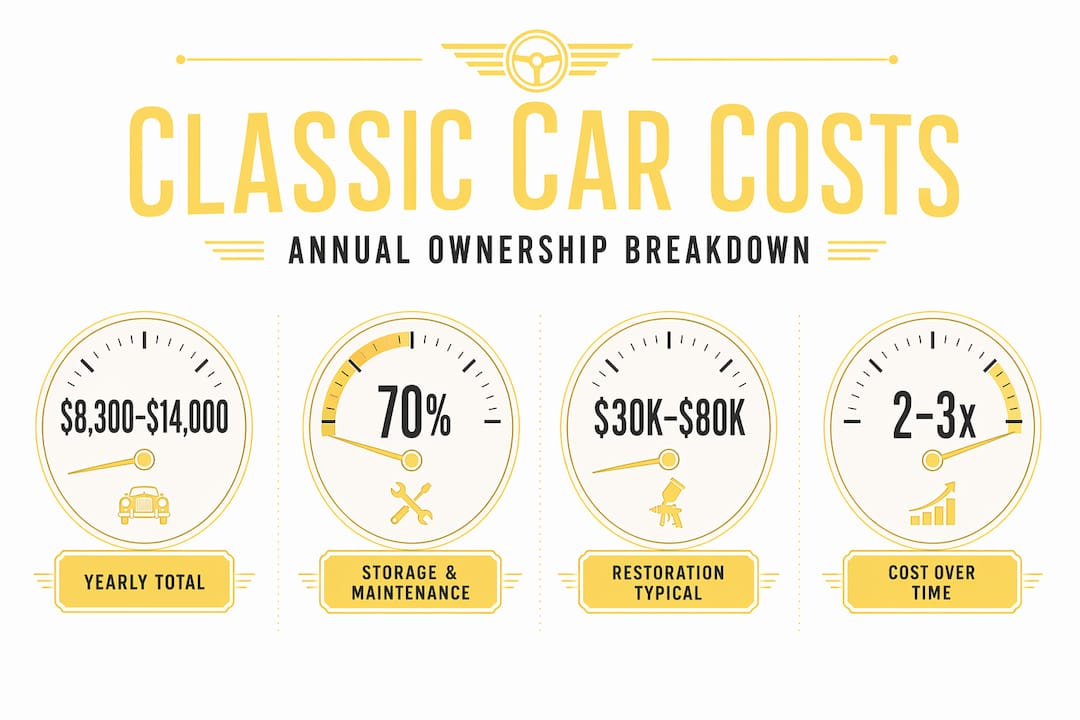
According to real-world data, annual ownership costs for a classic car valued around $150,000 typically run between $8,300 and $14,000 per year. That number surprises a lot of people. Here's how it breaks down:
| Expense category | Share of annual budget | Typical annual cost range |
|---|---|---|
| Climate-controlled storage | ~45% | $3,700 to $6,300 |
| Mechanical maintenance | ~40% | $3,300 to $5,600 |
| Agreed-value insurance | ~12% | $1,000 to $1,680 |
| Consumables (tires, fluids) | ~3% | $250 to $420 |
A few things stand out here. Storage is actually the single largest fixed cost, not maintenance. And insurance, while relatively small as a percentage, carries enormous consequences if you get it wrong.
Here's what falls inside each category:
- Mechanical maintenance: Tune-ups, brake work, cooling system flushes, carburetor rebuilds, gasket replacements, and electrical troubleshooting. Classic cars don't have onboard diagnostics, so finding problems takes more time and more expertise.
- Storage: Monthly fees for a climate-controlled unit with security. Expect $300 to $500 per month in most metro areas.
- Insurance: Agreed-value specialty policies tailored for collector vehicles. More on this in the next section.
- Consumables: Period-correct tires, specialty oils, brake fluid, and coolant. These seem minor but add up over a full year of driving season use.
Pro Tip: When you're budgeting for classic car ownership, add a 15 to 20 percent contingency buffer on top of your projected annual costs. Unexpected repairs, parts delays, and price increases hit classic car owners harder than modern car owners because parts are rarer and labor is more specialized.
Understanding classic car insurance: agreed-value and coverage essentials
Classic car insurance costs work very differently from what you pay on a daily driver. Standard auto policies pay out actual cash value after depreciation, which can leave you thousands short on a total loss. Agreed-value policies are the standard for serious collectors, and understanding how they work protects your investment.
With an agreed-value policy, you and the insurer lock in a specific dollar amount upfront. If the car is totaled, you receive that full amount with no depreciation argument. Agreed-value coverage locks in a payout if the car is declared a total loss, but the terms depend on mileage limits, storage conditions, and documentation.
Most policies come with conditions you need to take seriously:
- Annual mileage limits: Typically 1,000 to 5,000 miles per year. Exceeding the limit can void your coverage or reduce your payout.
- Secure storage requirements: Many insurers require limited mileage and secured storage as conditions for coverage validity. A locked garage or climate-controlled facility usually qualifies. Street parking does not.
- Documentation: Appraisals, photos, maintenance records, and incident reports all matter at claim time. Keep a dedicated folder, physical or digital, updated every year.
- Exclusions and endorsements: Racing, track days, and some organized rallies may not be covered under a base policy. Read the fine print and ask about endorsements if you plan to participate in events.
Pro Tip: Get a professional appraisal every two to three years and update your agreed value accordingly. Classic car values have risen significantly in recent years, and an outdated insured value means you're underinsured even with an agreed-value policy.
Classic car restoration costs: what to expect for driver-quality and show-quality projects
Beyond annual maintenance, restoration is where the real money moves. The cost of owning a classic car that needs work depends heavily on what level of restoration you're targeting and how honest the shop is with you upfront.
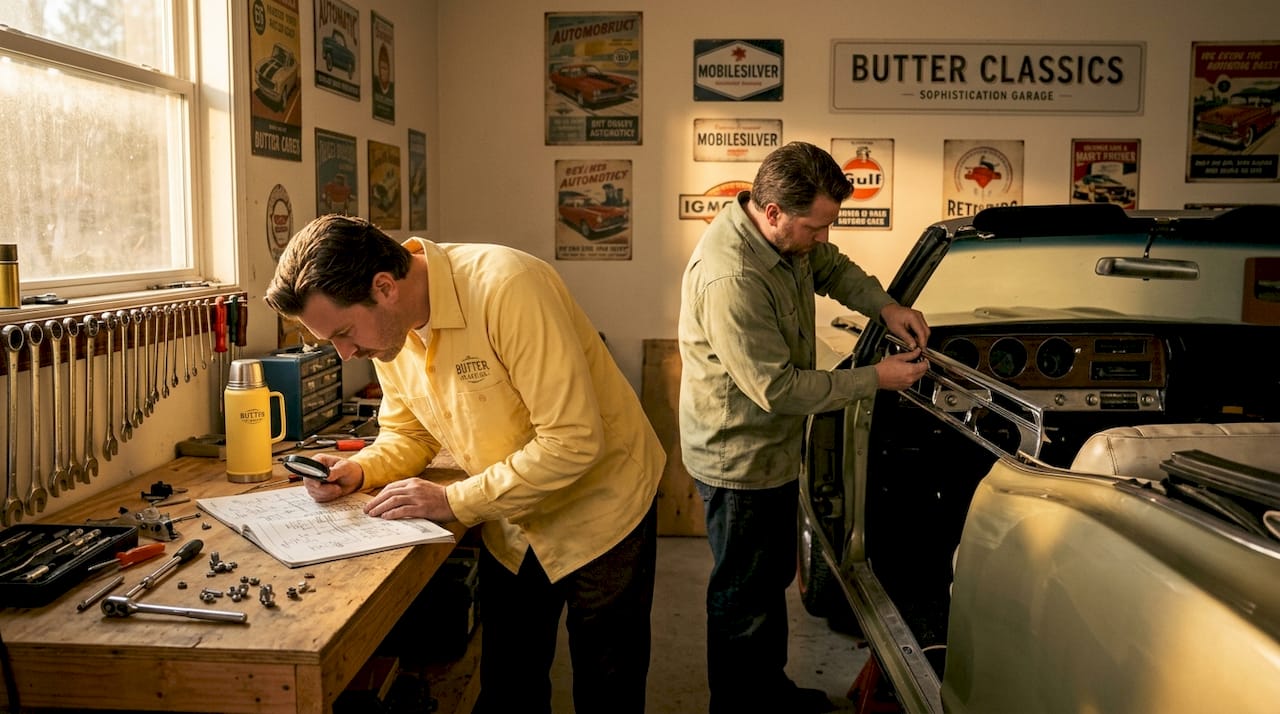
Driver-quality restorations typically run $30,000 to $80,000 and take 12 to 24 months. Concours-level restorations run $80,000 to $200,000 or more and can take 3 to 5 years, with overruns common due to parts delays and hidden rust.
Here's a side-by-side comparison:
| Restoration level | Typical cost range | Timeline | Labor hours |
|---|---|---|---|
| Driver-quality | $30,000 to $80,000 | 12 to 24 months | 800 to 1,500 hours |
| Show-quality (concours) | $80,000 to $200,000+ | 3 to 5 years | 3,000+ hours |
Labor is the dominant cost driver in both cases. Shop rates for experienced classic car restorers typically run $75 to $150 per hour, and the hours pile up fast once disassembly begins.
Here's how a typical restoration project unfolds:
- Initial assessment: The shop evaluates the car's condition, documents known issues, and provides a written estimate.
- Disassembly: The car is stripped down, often revealing rust, rot, or damage not visible during the assessment.
- Metalwork and bodywork: Rust repair, panel replacement, and body prep are often the biggest labor sinkholes.
- Mechanical rebuild: Engine, transmission, suspension, and brakes are rebuilt or replaced.
- Paint and trim: Color-matching, chrome work, and interior restoration.
- Reassembly and testing: Final assembly, alignment, and road testing.
Pro Tip: Before signing a restoration contract, ask the shop for a contingency clause that requires written approval before they exceed the estimate by more than 10 percent. It protects you from runaway costs and keeps communication open throughout the project.
Mechanical rebuilds: engine restoration expenses and influencing factors
The engine is the heart of any classic, and rebuilding one is a significant line item in any classic car restoration budget. Knowing what drives the cost helps you evaluate quotes and avoid surprises.
Most classic car engine rebuilds cost $5,000 to $10,000 for standard rebuilds and $10,000 to $20,000 or more for full restoration or performance builds. Basic rebuilds start near $2,500 in some cases, but that typically covers only the most essential work.
What moves the number up or down:
- Engine type and complexity: A small-block V8 is far more affordable to rebuild than a rare DOHC six-cylinder from a European classic. Parts availability and machinist familiarity both factor in.
- Wear level: A high-mileage engine with scored cylinder walls, worn crankshaft journals, and damaged valve seats needs far more machine work than one that's simply tired.
- Machining requirements: Boring, honing, line boring, and decking the block all add cost. Each operation requires specialized equipment and expertise.
- Performance goals: A stock rebuild using factory specs costs less than a performance build with forged internals, a performance camshaft, and upgraded fuel delivery.
- Post-teardown discoveries: Cracked heads, damaged bores, and broken studs found after disassembly are common and can add $1,000 to $5,000 or more to the final bill.
Getting a detailed written quote that separates parts from labor is the single best way to manage engine rebuild costs. Ask the shop to specify what machining operations are included and which are estimated pending teardown.
Hidden costs and expert advice: what most enthusiasts overlook about classic car ownership
Now that you know the visible costs, let's talk about the ones that catch people off guard. The hidden costs of classic cars are real, and they're often what turn a rewarding hobby into a frustrating money pit.
Here are the four most commonly overlooked expenses:
- Storage is not optional. Climate-controlled storage is a major recurring expense and an insurance requirement. Skipping it increases wear and can void your coverage. Humidity alone causes rust, mold in upholstery, and corrosion in electrical connections.
- Parts and labor inflation. Classic car parts and specialty labor costs have been rising faster than general inflation for years. A part that cost $200 in 2020 may cost $350 today. Budget for this trend when projecting long-term ownership costs.
- Mid-restoration discoveries. Restoration timelines and costs often increase due to discoveries during disassembly. Hidden rust, previous amateur repairs, and missing hardware are extremely common. A 20 percent contingency fund is not excessive.
- Specialty maintenance time and tools. Classic cars require carb synchronization tools, timing lights, vacuum gauges, and other equipment most modern shops don't own. Finding a qualified mechanic takes time, and their rates reflect their rarity.
"Many owners underestimate ongoing expenditures, leading to negative net appreciation and 'money pit' situations without careful financial planning." — Classic car ownership cost guide
Pro Tip: Build a dedicated classic car ownership expense tracker from day one. Log every dollar spent on maintenance, storage, insurance, and parts. It keeps your budget honest and gives you real data when evaluating whether the car is appreciating faster than it's costing you.
Why classic car ownership requires balancing passion with financial discipline
Here's the honest truth that most classic car content glosses over: passion alone is not a financial strategy.
We've seen collectors fall in love with a car, buy it on emotion, and then spend years slowly bleeding money without a clear plan. The joy is real. The costs are also real. And when the costs outpace the appreciation, ownership stops feeling like a reward and starts feeling like an obligation.
The collectors who sustain ownership long-term share one trait. They treat their classics like a portfolio asset, not just a hobby. That means tracking appreciation against annual burn rate, setting restoration budgets with hard ceilings, and making storage and insurance non-negotiable line items rather than optional expenses.
Is classic car ownership worth it? For most enthusiasts, yes, but only if you go in with clear eyes. A car that appreciates 5 percent annually on a $150,000 value gains $7,500 per year. If your annual costs run $12,000, you're net negative by $4,500 before you even count the purchase financing. That math changes if you own a car with stronger appreciation, lower maintenance needs, or both.
The smarter play is to choose your car carefully before you buy. Vehicles with strong collector communities, available parts, and documented service histories cost less to maintain and hold value better. Buying a car that's already in excellent condition beats buying a project that spirals. As first-time buyer guidance notes, even "excellent condition" cars may need work once driven regularly, so the starting condition still matters.
Contingency planning isn't pessimism. It's what keeps the passion alive when reality shows up.
Explore classic cars and services at Butter Classics
With a clear picture of ownership costs and strategies in hand, you're ready to find a classic that fits both your passion and your budget.
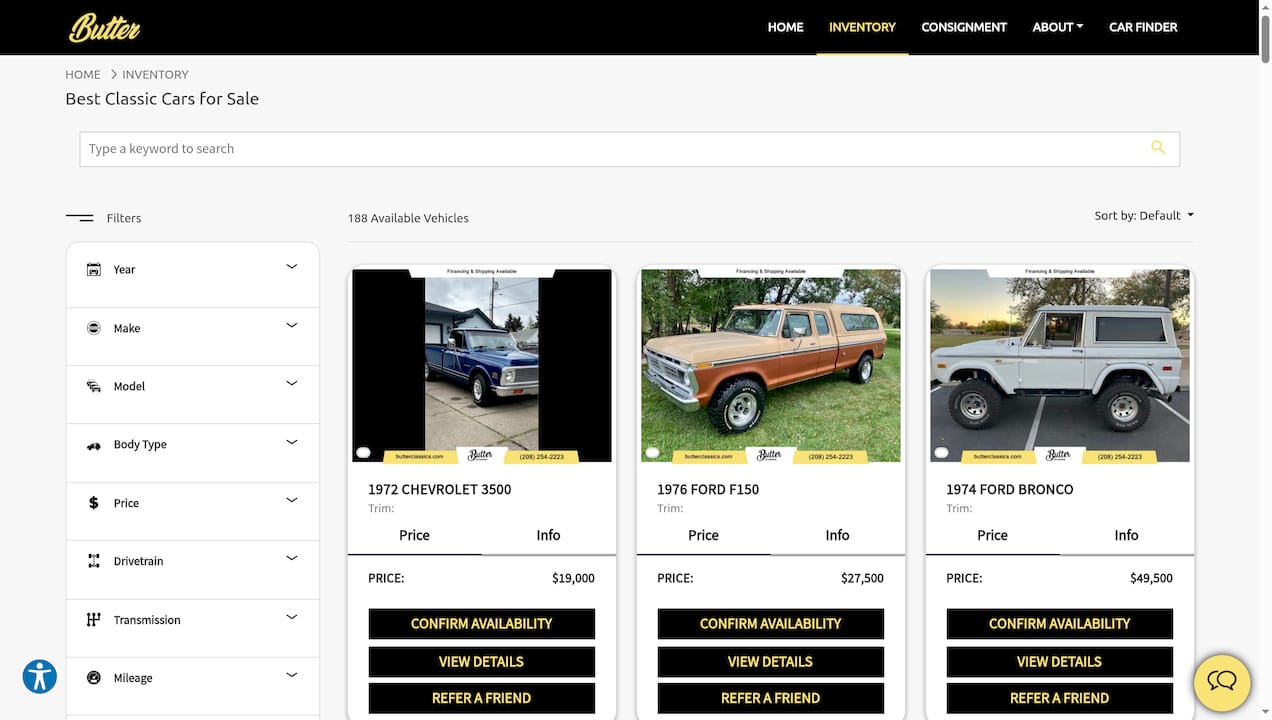
At Butter Classics, we've built our inventory around vehicles that are vetted for condition, history, and collector appeal. We know that buying right is the first step toward keeping costs manageable and enjoyment high. Whether you're searching for a muscle car, a vintage Bronco, or a pristine Corvette, our team is here to help you make a confident, informed decision. Browse our classic car listings and find the one that makes you want to call dibs. We'll make the whole process smooth as butter.
Frequently asked questions
What are the biggest cost components of owning a classic car?
The largest expenses are climate-controlled storage and mechanical maintenance, together accounting for roughly 85% of annual costs for a typical collector vehicle.
Why do classic car insurance policies require mileage limits and secure storage?
Mileage limits and secure storage help insurers minimize risk, and insurers often require both conditions to keep agreed-value coverage valid under policy terms.
How much does a typical classic car restoration cost?
Driver-quality restorations run $30,000 to $80,000, while concours-level show restorations can exceed $200,000 depending on the car and scope of work.
What factors influence the cost of an engine rebuild for a classic car?
Engine type, wear level, machining requirements, parts availability, and build goals all affect the price, with typical rebuild costs ranging from $5,000 to over $20,000.
Why is climate-controlled storage essential for classic cars?
Climate-controlled storage prevents rust, mold, and electrical corrosion caused by humidity and temperature swings, and skipping it can void your insurance coverage entirely.